 Lorraine Williamson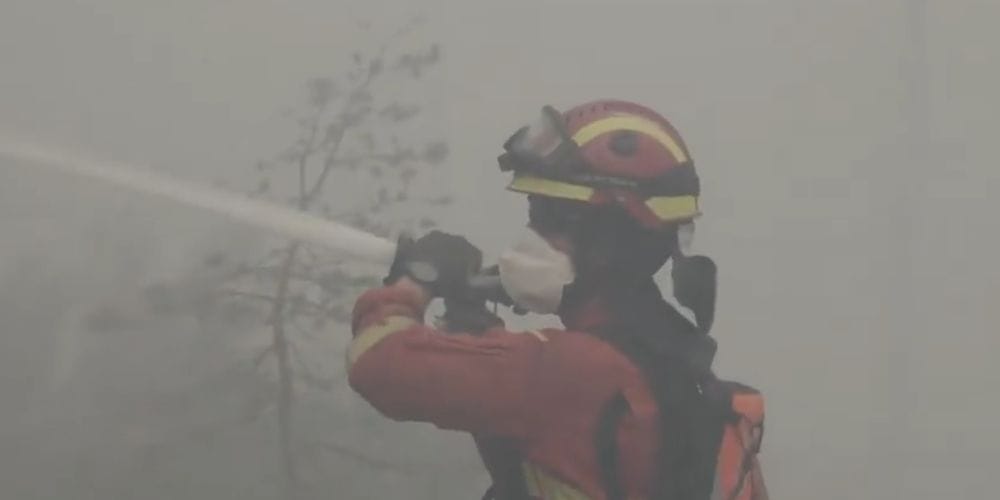
Residents from several communities evacuated during the La Mierla wildfire have begun returning home after authorities said the vast Guadalajara blaze had entered a phase of stabilisation. The improving conditions bring the first significant relief since the fire began last Thursday, although emergency officials continue to stress that it is not yet controlled and changing winds could still cause further problems.
The fire is now estimated to have affected around 32,000 hectares, making it the largest wildfire in the history of Castilla-La Mancha and Spain’s biggest blaze so far this year. It has spread across a perimeter of approximately 120 kilometres, affected the area around almost 50 small population centres and forced around 1,400 people to leave their homes or take other protective measures.
Five communities allowed to return home
Evacuation orders have been lifted for Riofrío del Llano, Cardeñosa, Santiuste, Angón and Rebollosa de Jadraque. Authorities were also considering whether residents of La Mierla itself could return as conditions continued to improve.
The return is being managed cautiously because some communities remain without normal water supplies or other essential services. Temporary water tanks are being installed where fire damage has disrupted local infrastructure.
Officials have warned residents that smoke, emergency vehicles and firefighting operations will remain visible. Returning home does not mean the fire has been extinguished, and people may still be asked to follow restrictions or leave again if conditions deteriorate.
Castilla-La Mancha President Emiliano García-Page described the development as a reason for cautious optimism but warned that stronger winds forecast for Thursday could test the progress made by firefighters.
What does ‘stabilisation’ mean?
A fire described as being in a phase of stabilisation is no longer advancing freely across its entire perimeter. Firefighters have begun containing the most active sections and reducing the likelihood of uncontrolled expansion.
It does not mean that the fire is controlled or extinguished. Flames and hotspots may remain inside the affected area, while wind can carry burning material across containment lines and start new outbreaks.
Large fires can continue burning underground, inside tree roots or beneath layers of vegetation for days. Crews therefore need to patrol the perimeter, cool hotspots and strengthen control lines before the incident can progress to the next official stage.
The immense scale of La Mierla means this work could continue for some time. The affected area covers forests, pasture, agricultural land, roads and difficult mountain terrain across the Sierra Norte de Guadalajara.
Spain’s largest wildfire of 2026
The La Mierla fire began on Thursday 16 July and grew extraordinarily quickly during several days of high temperatures, low humidity and changing winds. On Sunday night alone, one section reportedly advanced around ten kilometres.
The fire crossed defensive lines and spread through areas where access for ground crews was extremely difficult. At different stages, emergency planners focused less on directly attacking the most intense flames and more on preventing the fire from reaching villages.
Around 34 communities were evacuated or subjected to precautionary measures as the emergency expanded. Despite the scale of the fire, no deaths or serious injuries have been reported.
More than 200 firefighters, supported by aircraft, heavy machinery, the Military Emergency Unit and resources from several public administrations, have worked on the blaze.
International reporting has placed La Mierla among Spain’s largest recent wildfires, with the destruction coming as southern Europe experiences another period of exceptional heat and dangerous fire conditions.
Sierra Norte faces extensive damage
The fire has burned through a significant part of the Sierra Norte de Guadalajara Natural Park, an area known for its forests, mountain villages, wildlife and rural tourism.
The final environmental damage will not be known until authorities can inspect the entire perimeter. Some areas included within the 32,000-hectare estimate may contain sections that were not completely burned, while others may have suffered severe damage to trees, soil and wildlife habitats.
The fire has also affected roads, tracks, water supplies and other rural infrastructure. Livestock farmers, forestry businesses, guesthouses and tourism operators could face losses extending well beyond the immediate emergency.
Soil exposed after an intense fire can become vulnerable to erosion, particularly when heavy autumn rain arrives. Restoration work may therefore include stabilising slopes, clearing dangerous trees and protecting watercourses as well as replanting vegetation.
Recovery plan already being prepared
The Castilla-La Mancha Government has begun developing a recovery plan for the Sierra Norte rather than waiting until the fire is completely extinguished.
The plan will focus on three main areas: restoring the natural environment, repairing damaged infrastructure and supporting the local economy. Roads, rural tracks and water systems are among the services likely to require attention.
Economic measures are expected to support businesses and residents whose income depends on forestry, livestock farming, agriculture or rural tourism. Officials have said the affected area includes close to 50 population centres with a combined population of approximately 1,400 people.
The full cost will depend on the final assessment of homes, public infrastructure, agricultural land and environmental damage.
National wildfire total passes 100,000 hectares
Prime Minister Pedro Sánchez said on Wednesday that 22 major wildfires have already burned more than 100,000 hectares across Spain this year. That is almost the same area as Spain lost to fire in an average full year during the past decade.
Sánchez said the Government would continue mobilising all available resources both to extinguish the active fires and to support the recovery of affected areas.
He also renewed his call for Spain’s political parties to reach a national agreement on the climate emergency, describing it as a common threat that requires coordinated action.
Other fires remain active across Spain
Although La Mierla remains the largest incident, firefighting operations are continuing in several other parts of the country.
A second Guadalajara fire near Selas has affected approximately 2,600 hectares and required the evacuation of several communities. Officials have reported progress on parts of its perimeter, although emergency measures remain in place.
In Segovia, residents evacuated because of the Brieva fire have begun returning after the blaze affected more than 3,000 hectares. Crews are continuing to watch for possible reignitions.
The Ejulve fire in Teruel has also shown signs of improvement after burning around 1,400 hectares and forcing the evacuation of Molinos. Firefighters remain deployed because heat and dry vegetation can reactivate apparently quiet sections.
New incidents and evacuations have also been reported elsewhere, including areas of Toledo, Huelva and other provinces. The national situation remains unstable despite progress around some of the largest fires.
Heat and wind remain a serious threat
The current heatwave continues to produce temperatures above 40°C across parts of Spain. These conditions dry vegetation rapidly and make firefighting physically demanding, even where flames have already weakened.
Night-time temperatures are also important. Firefighters usually make their greatest progress overnight, when the air becomes cooler and more humid. However, warm nights reduce that advantage and allow fires to remain more active until morning.
Thursday’s forecast winds are a particular concern around La Mierla. A sudden change in wind direction can push flames towards an unburned section of forest, carry embers across a control line or threaten a community that had previously appeared safe.
Residents returning home are therefore being asked to remain alert to official notifications. Emergency plans may need to change again if the perimeter becomes more active.
People should not enter closed areas
Roads, forest tracks and natural areas inside the fire perimeter may remain closed even where nearby villages are reopening.
Members of the public should not attempt to enter these areas to inspect damage, collect belongings or take photographs. Fire-damaged trees can fall without warning, and apparently cold ground may conceal burning roots or unstable surfaces.
Additional traffic can also obstruct emergency crews and heavy machinery. Anyone returning to an authorised area should follow the routes and times established by local authorities.
People should continue checking regional emergency services, municipal notices and 112 information rather than relying on unverified messages or videos circulating online.
Relief tempered by the scale of the loss
The controlled return of the first residents marks an important change after almost a week dominated by evacuations and rapidly expanding flames. It suggests that the huge emergency operation has begun to limit the fire’s spread.
However, the figure of 32,000 affected hectares indicates the recovery challenge ahead. For many residents, returning home will be the beginning of assessing damaged land, interrupted businesses and changes to the surrounding landscape rather than the end of the emergency.
Firefighters still need to secure a perimeter stretching for approximately 120 kilometres while temperatures and winds remain unfavourable. Officials are therefore describing the situation with two words: optimism and caution.
La Mierla may be entering a more stable phase, but both the fire itself and the wider wildfire danger across Spain remain far from over.