 Lorraine Williamson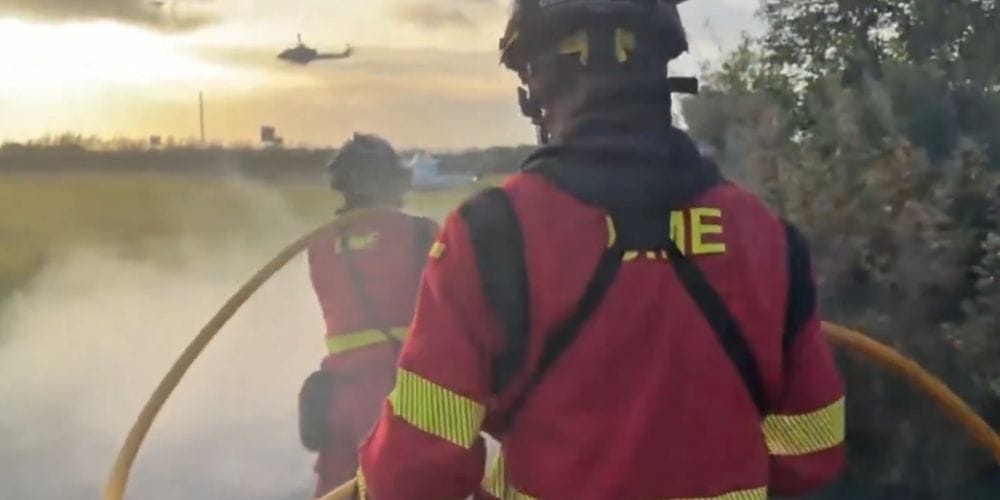
Spain’s wildfires have burned an estimated 264,656 hectares since the beginning of 2026, according to provisional figures released by the Ministry for Ecological Transition (MITECO) on Monday.
Despite a summer marked by destructive and, in some cases, deadly fires, the area affected is currently almost 31% lower than at the same point last year. But officials are warning against complacency as temperatures are expected to climb again during the first week of September.
The latest provisional balance covers the period from 1 January to 31 August. According to figures supplied by MITECO to Europa Press, 264,656 hectares have burned, compared with 346,443 hectares by the equivalent point in 2025.
That represents a reduction of 81,787 hectares, or 30.9%, year on year. The figures may still change as individual fires are assessed, and the final affected areas are calculated.
Spain has nevertheless experienced an exceptionally difficult fire season. Forty-four large forest fires, defined as those affecting more than 500 hectares, have been recorded so far this year.
Earlier this month, MITECO reported that 42 large fires had already burned more than 223,000 hectares between them by 17 August. At that point, more than 127,000 hectares of the total area affected consisted of wooded land.
A devastating summer despite lower overall figures
However, the national total does not tell the whole story of Spain’s 2026 wildfire season.
The year began particularly badly. By 5 July, approximately 50,750 hectares had already burned, more than double the area recorded at the same stage of 2025.
July then brought a succession of serious fires, including the devastating Los Gallardos blaze in Almería, which claimed 13 lives, as well as major fires affecting Madrid, Ávila and Toledo.
The comparison with last year changed during August. In 2025, Spain suffered its most severe wave of fires during that month, with the area burned rising dramatically in a matter of weeks. As a result, the cumulative 2026 total has now fallen below last year’s figure despite the severity of several individual fires this summer.
Firefighting aircraft clock up thousands of hours
The scale of this year’s response can also be seen in the deployment of Spain’s aerial firefighting resources.
MITECO aircraft had accumulated 9,532 hours of flight time by 28 August. Almost a quarter of those hours, 23.8%, were flown in Aragón, while 22.5% were in Castilla y León and 9.5% in Castilla-La Mancha.
Earlier in August, the ministry said its aircraft had already flown substantially more hours than during the equivalent period in 2025, reflecting the intensity of the fires and the demands placed on national resources supporting regional firefighting teams.
Spain warned not to lower its guard
Third Deputy Prime Minister and Ecological Transition Minister Sara Aagesen chaired a meeting of the ministry’s environmental management committee on Monday to review the wildfire situation.
Her warning was clear: the end of August does not mean the end of Spain’s wildfire danger.
Aagesen said the fire season was not over and warned that rising temperatures expected during the coming week, potentially exceeding 40°C, meant prevention measures and public caution remained essential.
The warning is particularly relevant in southern Spain. AEMET’s regional representative in Andalucía expects temperatures to exceed 40°C in parts of the Guadalquivir and Genil valleys during the opening days of September, with Córdoba and Sevilla potentially reaching 42°C or 43°C on Thursday.
Fire danger also remains elevated elsewhere. Aragón placed Jiloca-Gallocanta, Turia and Rodeno under red-level wildfire risk on Monday, with wind expected to be an important factor in the potential spread of any fires.
September begins with the risk still present
The latest figures offer an unusual contrast. Spain has endured a succession of destructive fires this summer, yet the total area burned remains substantially below the equivalent figure for 2025.
However, that does not mean the danger has passed. With another period of intense heat approaching and vegetation across many areas left extremely dry after summer, authorities are urging continued caution as Spain moves into September.
MITECO’s wildfire figures remain provisional during the season. Final statistics are compiled after detailed information from individual incidents has been processed.