 Lorraine Williamson
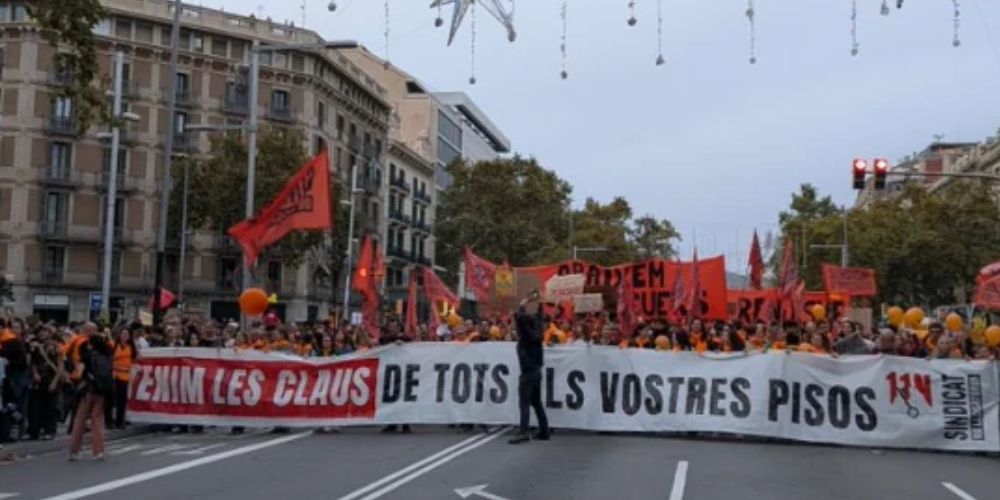
Spain’s nationwide general strike on Wednesday, 11 November, has caused widespread disruption to transport, businesses and public services, with dozens of arrests and demonstrations across the country. The 24-hour stoppage, organised by major trade unions over wages, housing costs and public services, has also exposed sharp disagreements over how many workers supported the action.
Roads were blocked in Madrid, Barcelona and other major cities as pickets disrupted access to ports, industrial estates, wholesale markets and bus depots. Police intervened at several locations, with reports of injuries among protesters and officers as tensions rose during the morning.
According to the EFE news agency, police recorded hundreds of strike-related incidents across the country, with arrests reported in several regions. Later reporting indicated that more than 40 people had been detained nationwide, although a final official figure had not been established by Wednesday evening.
Road blockades and clashes with police
Some of the most significant disruption occurred around major transport routes and distribution centres, particularly during the morning rush hour. In Madrid, protesters obstructed access to several important roads, including the M-30, A-5, A-42 and A-6, causing delays for commuters and commercial vehicles.
At Mercamadrid, one of Spain’s largest wholesale food markets, confrontations developed between police and demonstrators attempting to block access to the site. Officers used pepper spray during the intervention, while unions reported injuries among members of the picket. Further incidents occurred around municipal bus depots, where police were called to maintain access for vehicles and staff.
Catalonia also experienced extensive disruption, with more than 30 road blockades reported during the morning. The AP-7, A-2 and Barcelona’s Ronda Litoral were among the routes affected, while demonstrations restricted access to industrial estates and transport facilities. The disruption extended beyond the roads, affecting commuter services and the movement of goods.
According to RTVE’s coverage of the strike, police interventions and transport problems continued throughout the day. The broadcaster also reported that demonstrators entered its Barcelona studios during the morning, temporarily interrupting the live programme Cafè d’Idees.
Hundreds of flights cancelled as rail services disrupted
Air passengers faced considerable uncertainty as airlines adjusted their schedules to comply with minimum-service requirements and respond to staffing difficulties. By 10.00 am, EFE reported that 234 flights had been cancelled across Spanish airports, representing approximately 5.2% of the 4,529 operations originally scheduled for Wednesday.
Barcelona-El Prat was particularly affected, accounting for 85 cancellations in the morning figures, while Madrid-Barajas recorded a smaller number of cancellations at that stage. Some airlines had already removed flights from their schedules or transferred passengers to alternative services before the strike began, meaning the disruption was not fully reflected in the cancellations recorded on the day.
Rail passengers also faced reduced services, with Renfe operating under government-established minimum-service arrangements. High-speed, long-distance, regional and commuter trains were affected to varying degrees, while local difficulties caused additional delays and cancellations beyond those already anticipated.
In Catalonia, the Rodalies commuter network experienced particular problems when some scheduled trains failed to depart because staff were unable to reach their workplaces. Barcelona’s metro network also operated with reduced services, adding to the difficulties faced by people travelling to work or attempting to reach the city’s main transport connections.
Strike disruption reaches Andalucia
The industrial action was also felt across Andalucia, with incidents reported in Málaga, Granada, Almería and the Campo de Gibraltar. Police intervened at transport facilities and wholesale markets as pickets attempted to prevent normal operations, while several arrests were reported during the morning.
In Málaga, officers were called to municipal bus depots and Mercamálaga, the city’s principal wholesale food market, where demonstrators had gathered. Police interventions were also reported in Granada and Almería, reflecting the wider disruption to commercial and transport activity across the region.
At the Port of Algeciras, one of Europe’s most important freight gateways, container terminal operations were disrupted as the strike affected access and activity at the facilities. The interruption created additional difficulties for freight movements through the Strait of Gibraltar, a major connection between Spain, North Africa and international shipping routes.
The strike coincided with severe weather associated with Storm Charles, which was already affecting parts of southern Spain. Strong winds, heavy rain and emergency warnings complicated an already difficult day for transport operators and travellers, although weather-related incidents must be distinguished from disruption directly attributable to industrial action.
Unions and employers dispute the scale of participation
The number of workers who supported Wednesday’s stoppage has become one of the most contentious aspects of the strike. Organisers CCOO and UGT described the mobilisation as a success, pointing to disruption in transport, industry, public services and distribution networks as evidence of widespread participation.
Union representatives reported particularly strong support in some industrial sectors and regions, although their estimates varied considerably. Employers’ organisations offered a different assessment, suggesting that participation was much lower in many workplaces and that most businesses continued operating despite localised disruption.
These contrasting accounts make it difficult to establish a reliable national participation figure. Road blockades and cancelled services demonstrate the impact of the action, but they do not necessarily indicate how many employees withdrew their labour, particularly where small groups of demonstrators prevented others from reaching their workplaces.
The disagreement reflects a familiar feature of major industrial disputes in Spain, where unions, employers and government bodies frequently publish different assessments of participation. A fuller picture will depend on subsequent official information, sector-by-sector reporting and the final assessments of transport operators and public authorities.
Why workers called the nationwide strike
Wednesday’s action was organised against a backdrop of growing concern about living costs, housing affordability and wages. Although Spain has experienced economic growth and employment gains in recent years, many households continue to face pressure from rising rents, mortgage payments and everyday expenses.
Trade unions argue that wage increases have not adequately compensated workers for the higher cost of living, particularly in cities and coastal areas where housing has become increasingly expensive. They are also demanding stronger protection for public services and measures to improve employment conditions, placing the dispute within a wider debate about how economic growth is shared.
Housing campaigners joined demonstrations in several cities, highlighting the difficulties faced by younger workers and families attempting to rent or buy a home. The issue has become increasingly prominent in Spain, where limited affordable housing supply and strong demand in major urban centres have placed additional pressure on household budgets.
The strike has also taken place against a politically sensitive backdrop, with competing parties offering different explanations for the country’s economic difficulties. While unions insist their demands concern wages, housing and workers’ rights, political opponents have questioned the timing and motivation of the action.
Attention turns to the aftermath of the strike
As the 24-hour stoppage draws to a close, attention is turning to the full extent of the disruption and the response from employers and government. Final figures for arrests, injuries, cancelled services and participation will help establish a clearer picture of the day’s events, although disagreements over the strike’s success are likely to continue.
For travellers, the immediate concern is whether transport networks return to normal or face further interruptions. Separate industrial action affecting railway services has also been scheduled this week, making it important for passengers to check directly with Renfe and other operators before travelling.
Beyond the immediate disruption, Wednesday’s demonstrations have brought Spain’s continuing disputes over wages, housing and public services back into the national spotlight. Whether the mobilisation leads to negotiations or policy changes will depend on the response from employers, unions and the government in the coming days.