 Lorraine Williamson
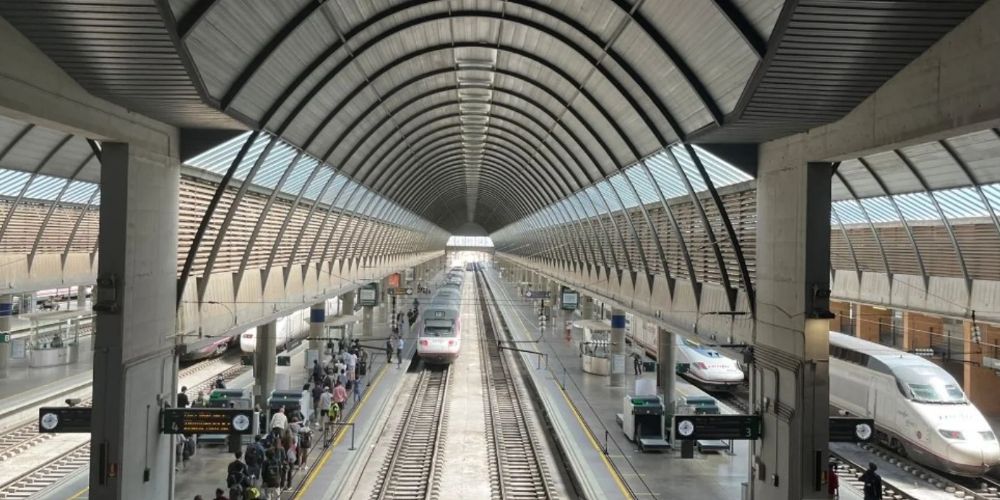
Rail passengers across Spain are being urged to check their journeys ahead of planned strikes at Renfe on Tuesday 10 and Thursday 12 November. The action remains scheduled after further talks between the train drivers’ union Semaf and the government failed to produce an agreement on Friday.
The dispute centres on railway safety commitments, staffing concerns and working conditions, with further industrial action planned later in November. High-speed, commuter and regional passengers could all be affected, although the extent of cancellations will depend on minimum-service arrangements and staffing.
The Sindicato Español de Maquinistas Ferroviarios (Semaf) has maintained its strike notice following two meetings with Carlos Cuerpo, who has taken responsibility for the Transport Ministry following Óscar Puente’s resignation. The union says the government and railway authorities have failed to deliver agreed safety improvements, while Renfe maintains that it has fulfilled the commitments within its responsibilities.
According to EFE, Friday’s discussions ended without an agreement to call off the action. The government says it is working to meet its railway safety commitments, but passengers should prepare for disruption unless further negotiations lead to a settlement.
When are the train strikes in Spain?
The first stoppage is scheduled for Tuesday 10 November, when Semaf has called a 24-hour strike across the Renfe group. This could affect AVE and other long-distance services, Media Distancia trains, Cercanías commuter networks, and regional services, including Rodalies in Catalonia.
A second day of industrial action is planned for Thursday 12 November, with partial stoppages at three different times. The announced strike periods are 6.20 am to 9.20 am, 2.20 pm to 5.20 pm and 9.20 pm to 11.20 pm, making the morning and afternoon commuting periods particularly vulnerable.
| Date | Planned industrial action |
|---|---|
| Tuesday 10 November | Renfe train drivers’ strike lasting 24 hours |
| Wednesday 11 November | Separate general strike activity may affect transport and other services |
| Thursday 12 November | Renfe stoppages: 06.20–09.20, 14.20–17.20 and 21.20–23.20 |
| Tuesday 17 November | Further railway-sector industrial action planned |
The dates reflect strike announcements available on Saturday 7 November and could change if negotiations progress. Passengers should not assume that every train will be cancelled, as some services may operate under legally required minimum-service arrangements.
Which train services could be affected?
The strikes on 10 and 12 November are directed at the Renfe group, which operates Spain’s national high-speed, long-distance, regional and commuter rail services. Passengers travelling between major cities, as well as those using Cercanías and Rodalies for everyday journeys, should check their individual trains rather than relying on general network information.
The effect will vary according to the route, operator and minimum services established for each strike. A train may be cancelled, rescheduled or operated as normal, and disruption can also extend beyond the announced stoppage periods where trains or crews are out of position.
Ouigo passengers should note an important change. The company and Semaf reached an agreement that resulted in the cancellation of previously announced Ouigo strikes, including stoppages scheduled for 6 and 9 November and 4 and 8 December. Those cancelled dates should not be confused with the continuing Renfe dispute.
Why are Spanish train drivers striking?
The dispute centres on an agreement reached in February between Semaf, the Transport Ministry, Renfe and Adif. The union says the agreement was intended to deliver new operational procedures, stronger safety standards and coordinated measures to address risks across Spain’s railway network.
Semaf argues that progress has been too slow and that important negotiations have repeatedly been delayed. Its demands include clearer emergency and adverse-weather procedures, improved protection for railway workers, changes to driving-time arrangements, and solutions to technical problems affecting some trains.
Renfe disputes the suggestion that it has failed to meet its own obligations. The company says it has implemented the measures within its authority and that other outstanding commitments depend on government departments or railway bodies outside its direct control.
The disagreement has grown in significance after recent fatal railway accidents and rising public concern about infrastructure safety. However, the strike is part of a wider dispute over working conditions and safety procedures, and the industrial action itself does not establish that any particular railway service is unsafe.
EU prosecutors investigate possible fraud in Spain’s rail safety funding
Further railway action planned for 17 November
The industrial dispute may extend beyond next week’s Renfe stoppages. Railway unions have announced further action for Tuesday 17 November, including a planned 24-hour strike involving Adif workers and calls for broader participation across the sector.
The latest reporting on the proposed Adif action describes concerns over staffing, maintenance, workloads, outsourcing and safety procedures. Because different unions and employers are involved, the scope of the 17 November stoppage should be treated separately from the confirmed Renfe strike notices for 10 and 12 November.
A separate general strike is also planned for Wednesday 11 November, potentially creating additional difficulties for travellers. Its impact will depend on participation and the services affected in each region, so it should not be described as another nationwide Renfe drivers’ strike.
What should passengers do if they have tickets?
Anyone booked to travel on 10 or 12 November should check their reservation directly with the operator before leaving home. Renfe’s website and app should provide the most relevant information about individual services, cancellations and any arrangements made for affected passengers.
Travellers should also monitor email and text notifications associated with their bookings, particularly if they have connecting trains, flights or other time-sensitive arrangements. Where a service is cancelled, passengers should consult the operator about available alternatives, ticket changes or refunds rather than assuming that every ticket is subject to the same conditions.
For commuters, checking the first and last available services may be especially important during Thursday’s partial stoppages. Regional networks can have different operating arrangements, and minimum-service levels may vary depending on the location and type of train.
Passengers can consult Renfe’s official website for booking information and service notices. Those using Rodalies in Catalonia should also check the relevant regional service updates, while travellers booked with Ouigo or Iryo should follow communications from their own operators.
Could the strikes still be cancelled?
Further negotiations could result in changes to the planned action, but no agreement cancelling the Renfe stoppages had been confirmed by Saturday afternoon. The government and unions remain divided over the implementation of railway safety commitments, making the coming days important for both negotiations and passenger planning.
For anyone travelling next week, the immediate advice is to check the status of their train regularly and allow extra time where alternatives are available. The most useful updates will be confirmation of minimum services, specific cancellations, and any agreement that changes the strike timetable.