 Lorraine Williamson
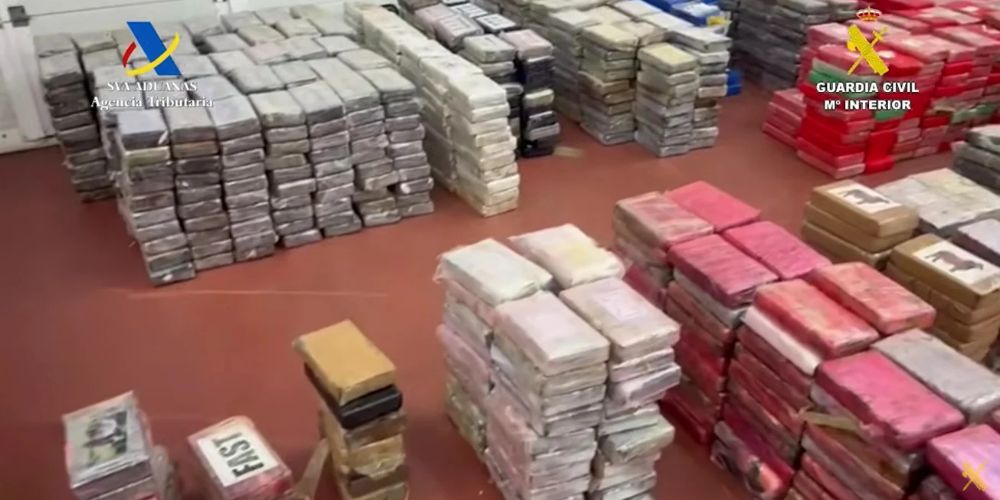
Spanish authorities have seized 2,600 kilos of cocaine concealed beneath false bottoms in wooden boxes carrying coconuts from Ghana. The joint operation by the Guardia Civil and Customs Surveillance Service led investigators from the Port of Valencia to a warehouse in Almería, where two people were arrested in connection with the shipment.
The operation was made public on Wednesday, 11 November, following an investigation into two shipping containers that arrived in Valencia during August. Officers discovered the drugs during a targeted customs inspection before following the remaining cargo to its intended destination in Andalucia.
According to the official announcement from Spain’s Tax Agency, the containers had been selected for examination after customs officials identified them as presenting a high risk. What initially appeared to be an ordinary shipment of coconuts was found to contain a substantial quantity of cocaine concealed within the packaging.
Cocaine discovered beneath false bottoms in wooden boxes
The two containers were loaded onto a cargo vessel at the Port of Tema in Ghana on 2 August 2026. They arrived at the Port of Valencia on 22 August, where officers from the Customs Surveillance Service carried out an inspection as part of routine controls on international trade.
Investigators examining the cargo noticed that the wooden boxes used to transport the coconuts had been modified. Hidden beneath false bottoms were layers of packages resembling those commonly used by drug traffickers to transport cocaine.
When officers opened the concealed packages, they found a white powder consistent with cocaine hydrochloride. Subsequent field tests confirmed that the substance was cocaine, with the total quantity recovered from the two containers amounting to approximately 2.6 tonnes.
The concealment method allowed the packages to remain hidden beneath the declared agricultural produce, rather than inside the coconuts themselves. By incorporating compartments into the wooden boxes, those responsible had attempted to disguise the drugs within an otherwise legitimate commercial shipment.
Investigators followed the shipment to Almería
Rather than ending the operation when the drugs were discovered, investigators continued monitoring the movement of the remaining cargo. Once the cocaine had been seized and the necessary customs procedures completed, the containers were allowed to leave the Port of Valencia under surveillance.
During the journey, the merchandise was transferred into two refrigerated lorries, which continued towards Andalucia. Officers tracked the vehicles to a warehouse on the La Juaida industrial estate in the municipality of Viator, Almería.
Investigators then monitored the unloading operation at the warehouse, allowing them to identify individuals allegedly connected with the shipment. The surveillance culminated in the arrest of two people, described by the authorities as the importer of the merchandise and the person responsible for unloading it.
The Guardia Civil has not publicly identified the two suspects or provided further details about their nationalities or ages. The official statement also does not specify whether additional arrests are expected or whether the investigation has uncovered other people involved in organising the shipment.
Joint operation between customs officers and Guardia Civil
The seizure was carried out through cooperation between the Guardia Civil and the Customs Surveillance Service, which operates under Spain’s Tax Agency. Both organisations are responsible for investigating smuggling and drug trafficking, particularly when criminal activity involves international cargo movements.
The Entry Summary Unit of the Customs Surveillance Service initially detected the shipment, examining information about goods entering Spain and flagging shipments for additional scrutiny. In this case, its assessment led officers to inspect the two containers arriving from Ghana.
The operation involved Customs Surveillance units in Valencia and Almería, alongside specialist organised crime and border investigation officers from the Guardia Civil. Their coordinated investigation led to the seizure of 2.6 tonnes of cocaine and the arrest of two people suspected of involvement in importing and receiving the shipment.