 Lorraine Williamson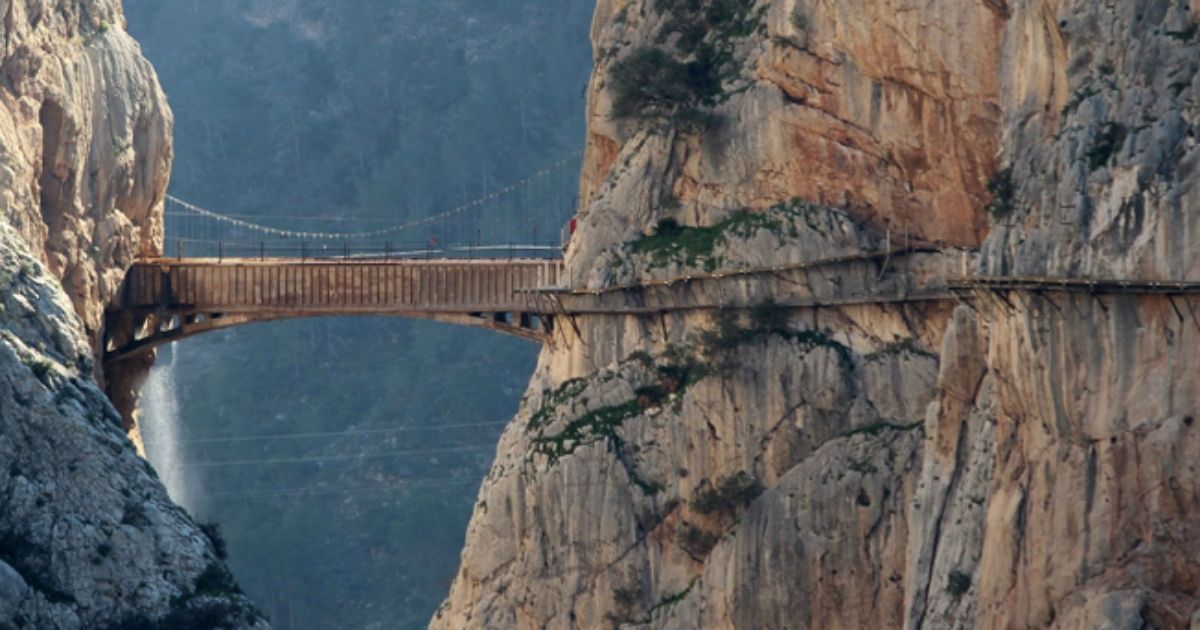
One of Spain’s most dramatic walking routes is about to gain a new attraction, with a 110-metre suspension bridge opening to visitors at the Caminito del Rey in Málaga province.
The new Caminito del Rey bridge will open to the public on Wednesday, 10 June, adding what has been described as the longest pedestrian suspension bridge of its kind in Spain. The structure sits near the end of the route, close to El Chorro, and is designed to improve safety while giving visitors a new way to experience the gorge.
The official opening ceremony is expected the day before, on 9 June, before walkers are able to cross it as part of the visitor route.
What readers need to know
The new bridge is 110 metres long and reaches a maximum height of around 50 metres above the ground.
It has a narrow pedestrian walkway, around 1.2 metres wide, with a metal grid surface, steel cables and protective mesh. The bridge itself weighs around 17 tonnes, while the wider structure and associated elements weigh about 38 tonnes.
It is located near the final stretch of the Caminito del Rey, before the railway bridge and the El Chorro tunnel. This is one of the most dramatic parts of the Desfiladero de los Gaitanes landscape.
A new option, not a compulsory crossing
The bridge does not remove the existing route completely.
Visitors who prefer the original final path will still be able to use it. The new bridge gives walkers an alternative and avoids a steep stretch of almost a kilometre near the end of the trail.
That matters because the Caminito del Rey is spectacular, but it is still an active tourism route in a mountain and gorge setting. Improving visitor flow and safety has been one of the main reasons for the project.
Why the bridge was built
The bridge forms part of a wider improvement project costing around €1.5 million, funded from revenue generated by the Caminito del Rey itself.
The works include around 300 metres of new path, safety cameras, fibre optic cabling, railings, a control post and environmental improvements. The location was chosen after geological studies pointed to the benefits of creating an alternative route at that point.
The structure was installed using complex mountain engineering, including helicopter work and specialist access techniques during the construction phase. Earlier reports described the project as one of the most ambitious upgrades since the route reopened.
From dangerous walkway to visitor landmark
The Caminito del Rey runs through the Desfiladero de los Gaitanes, around 60 kilometres from Málaga city.
The original route was built in the early 20th century for workers linked to hydroelectric infrastructure in the area. Its name came after King Alfonso XIII walked part of the route in 1921.
After decades of neglect, the path gained international notoriety as one of the world’s most dangerous walkways. It was later closed, restored and reopened in 2015 as a controlled visitor attraction.
Since then, more than 3.2 million people have visited, according to local reporting on the project. The route has also become a major economic driver for nearby towns including Álora, Ardales and Antequera.
Economic boost for inland Málaga
The Caminito del Rey has become far more than a walking trail.
Cadena SER reports that the route generated 685 jobs and had an economic impact of more than €64 million in 2024. Visitor stays, accommodation supply and spending in nearby towns have all grown since the route reopened.
That is important for inland Málaga, where tourism has often been overshadowed by the Costa del Sol. The Caminito has helped draw visitors away from the coast and into rural areas, reservoirs, villages and mountain landscapes.
What visitors should check before going
The Caminito del Rey is a controlled route, not an ordinary open footpath.
Tickets should be booked in advance through the official platform, especially during weekends, holidays and peak travel periods. The official website describes the route as running through a unique natural setting of gorges, canyons, boardwalks and forest paths.
Visitors should also check weather conditions before travelling. Strong wind, heat, rain, or safety concerns can affect access.
The route is linear, so walkers usually need to arrange a return shuttle or plan transport between the northern access area and El Chorro.
Who should think carefully before crossing
The new bridge is designed for visitors, but it may not suit everyone.
People with severe vertigo may find the metal grid walkway and height difficult, even with safety barriers. Those travelling with children should also make sure they understand the route rules before booking.
The Caminito del Rey’s own recommendations remind visitors that the route is an active tourism experience in a natural environment, with a degree of physical effort and risk accepted by those who choose to do it.
A stronger reason to visit this summer
The opening of the new bridge gives the Caminito del Rey another headline attraction just as Spain moves into the summer travel season.
For first-time visitors, it adds a dramatic final moment to a route already known for cliffside walkways and views across the gorge. For those who have walked it before, it offers a reason to return.
The bridge is also another sign of how the Caminito has evolved. What was once a deteriorated industrial path is now one of Spain’s most recognisable inland tourism experiences.
A landmark route adds another landmark
The new Caminito del Rey bridge is not simply a photo opportunity.
It is intended to improve safety, ease the final section of the route and strengthen one of Andalucia’s most successful inland attractions. From 10 June, visitors will have a new way to cross one of Spain’s most striking landscapes.
For anyone planning to go, the advice is simple: book ahead, check official route information and be ready for a very different ending to the walk.