 Lorraine Williamson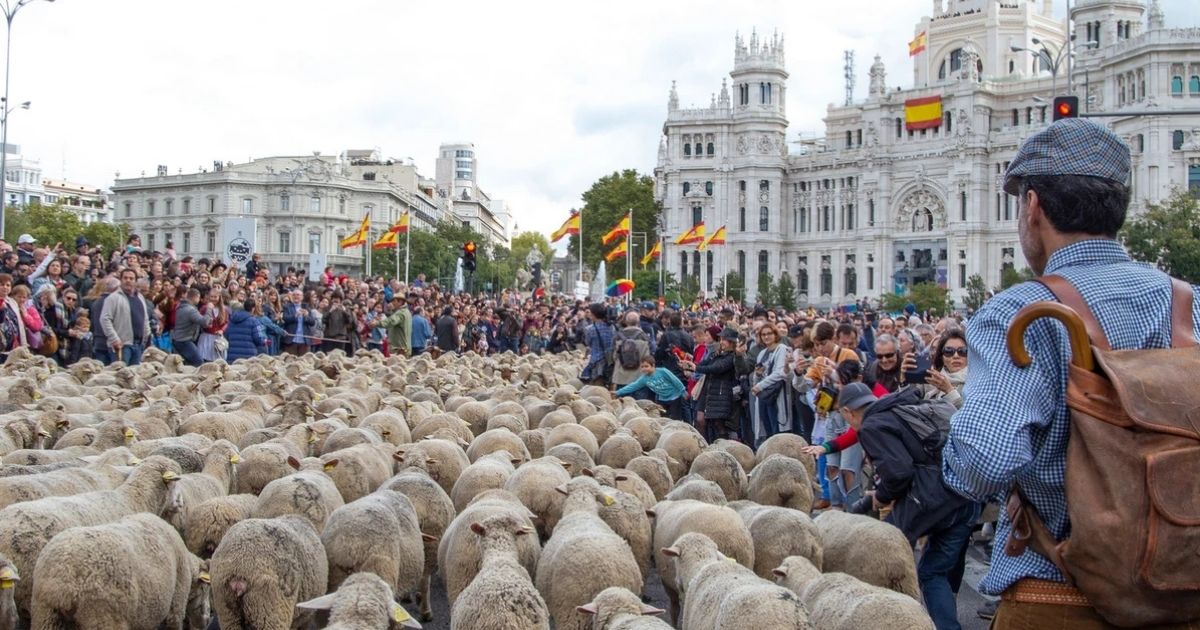
A flock of merino sheep crossing the streets of Soria may look, at first glance, like a charming rural scene. But this year, the bells, dogs and slow-moving animals carried something far heavier: the farewell of one of Spain’s oldest ways of life.
The Pérez brothers, from Navabellida in the Tierras Altas of Soria, have guided what is being described as the last great merino transhumance in the province. Around 1,200 sheep set off from Soria towards the highlands in a journey that has marked the end of a family tradition kept alive for generations.
It was not just another livestock movement. It was a public goodbye.
For centuries, transhumance shaped parts of rural Spain. Shepherds moved their flocks between seasonal pastures, following ancient livestock routes known as cañadas, cordeles and veredas. The practice built local economies, kept villages alive and created a culture of movement, hardship, knowledge and adaptation.
Now, in Soria, one of its last living chapters is closing.
What is transhumance?
Transhumance is the seasonal movement of livestock between different grazing areas.
In Spain, that often meant moving animals from cooler mountain pastures in summer to warmer southern or lowland pastures in winter, then back again when the seasons changed.
It was never simply a way of transporting animals. It was a whole rural system. Families, shepherds, dogs and flocks followed routes known through memory, repetition and experience. The journey depended on weather, water, pasture, animal health and a deep understanding of the land.
Spain’s Ministry of Culture describes transhumance as a living heritage, although one that has been greatly reduced in recent decades. It was declared a Representative Manifestation of Spain’s Intangible Cultural Heritage in 2017.
In 2023, UNESCO inscribed transhumance, the seasonal droving of livestock, on the Representative List of the Intangible Cultural Heritage of Humanity through a multinational nomination that included Spain. S
That recognition matters. But for the people who still do it, transhumance is not museum heritage. It is work, weather, tired legs, early mornings and animals that must be cared for every hour of the journey.
The Pérez brothers and a final journey
The brothers José María, Basilio and Ricardo Pérez have spent much of their lives linked to merino sheep and the seasonal movement between Soria and warmer grazing lands.
Their family tradition reaches back generations. In the past, Soria was one of the great livestock provinces of Castilla y León, and the movement of merino sheep helped shape the identity of the Tierras Altas.
Cadena SER reported that, in the 1940s, 1950s and 1960s, as many as 50,000 sheep could be moved from Soria in seasonal journeys. By the 1990s, that practice had already declined sharply, mainly because younger generations were no longer taking it on.
The latest journey, held as part of the “Somos Trashumantes” programme, allowed around 70 people to accompany the flock and experience part of the old route.
The Mancomunidad de Tierras Altas promoted the event as a way of bringing people closer to pastoral culture, transhumance and the environmental value of extensive livestock farming.
The route ran through some of the landscapes most closely associated with northern Soria, including areas near Numancia, the Zarranzano oak woods, the Garagüeta holly forest and the Sierra de Alba before reaching Navabellida.
For those watching, it was picturesque. For those walking, it was memory.
A tradition built on hardship
It is easy to romanticise transhumance from the outside.
The image is beautiful: sheep moving through old tracks, bells ringing, dogs working, people walking behind them under a wide Spanish sky.
But the life itself was hard.
Older shepherds remember journeys of many days or even weeks, with long walking stages, basic food, nights outdoors and constant responsibility for the flock. Animals had to be counted, guarded, guided, rested and protected.
There were no apps, no modern logistics and no easy backup if something went wrong. Routes were learned by doing them, year after year. Watering points, safe places to rest, weather changes and difficult crossings were part of a knowledge passed down through families.
The Pérez brothers’ parents and grandparents knew a world in which these journeys were normal. For many rural families, transhumance was not nostalgia. It was income, survival and identity.
That is why this final journey matters. It is not simply about sheep. It is about the end of a lived memory.
Why the tradition is disappearing
The reasons are familiar across much of rural Spain.
The work is demanding. The income is uncertain. Younger people often leave villages for study, work or a different kind of life. Small livestock farming struggles against costs, bureaucracy, low margins and competition from more industrial food systems.
There is also the physical reality of the job. Shepherding is not something done from behind a desk. It demands presence, endurance and an ability to live around the rhythm of animals rather than clocks.
In many places, the problem is not that people do not value the tradition. It is that very few can afford, or want, to live it. Cadena SER reported that lack of generational replacement is the main reason why the practice is disappearing in Soria.
That pattern is repeated in many parts of inland Spain, where rural depopulation has left villages older, quieter and more fragile.
Why sheep routes still matter
Spain’s old livestock routes are not just historical lines on a map.
The national Vías Pecuarias law recognises these routes as public domain and highlights their role not only for livestock movement, but also as ecological corridors and spaces that can support biodiversity, public use and rural connectivity.
The Ministry for Ecological Transition also notes that livestock routes can help maintain underused grazing resources, preserve native breeds and support ecological connectivity. That gives transhumance a modern meaning beyond heritage.
Extensive grazing can help maintain open landscapes, reduce scrub build-up, support biodiversity and keep rural land in active use. In a country increasingly affected by drought, heat and wildfire risk, those old relationships between animals and landscape are gaining new relevance.
The irony is clear. Just as Spain is rediscovering the ecological importance of traditional land management, some of the people who know how to do it are reaching retirement age.
From living work to cultural memory
Events such as “Somos Trashumantes” help keep the story visible.
They allow visitors to walk with the flock, meet shepherds, taste pastoral food, see shearing demonstrations and understand that rural heritage is not only found in castles, monuments or museums.
It is also found in gestures: how a shepherd moves a flock through a narrow place, how a dog reads a signal, how bells help locate animals, how a route is remembered.
But there is a delicate balance.
Turning transhumance into a visitor experience can help protect memory and bring income to rural areas. Yet it cannot fully replace the everyday reality of people still making a living from livestock.
Once the last working shepherds retire, the tradition risks becoming something Spain celebrates after it has already lost.
A farewell that belongs to more than Soria
This story begins in Soria, but it reaches much further.
Across Spain, many rural traditions are facing the same question: what happens when the last generation to live them disappears? There are villages where the school has closed. There are trades with no apprentices. There are fields no longer worked, paths no longer used, and words for rural tools, animals and weather that younger generations may never need.
The farewell of the Pérez brothers is therefore more than a local story. It is part of a wider conversation about rural Spain, depopulation, food systems, heritage and the value placed on people who work with the land.
The sight of 1,200 merino sheep moving through Soria is beautiful. It is also a warning.
What Spain loses when a flock stops moving
When a flock stops moving, something practical is lost first. Pastures are no longer used in the same way. Routes fall quiet. Local knowledge becomes less necessary. Dogs are no longer trained for the same work. Wool, meat, grazing and seasonal rhythms detach from the places that shaped them.
Then something less visible is lost.
A way of reading the countryside disappears. A family language fades. A village memory becomes a story told at festivals rather than something children see on the road. Spain has protected transhumance on paper. UNESCO has recognised its global value. Visitors still gather to watch the sheep pass. But the hardest part is keeping the tradition alive as work, not only as heritage.
The Pérez brothers’ final journey through Soria is moving because it is both beautiful and sad. It reminds Spain of what still exists, and of what is slipping away. For one last time, the sheep moved slowly towards the highlands. The bells sounded. The dogs worked. People followed. And an old Spain, still breathing but growing quieter, passed through the landscape.