 Lorraine Williamson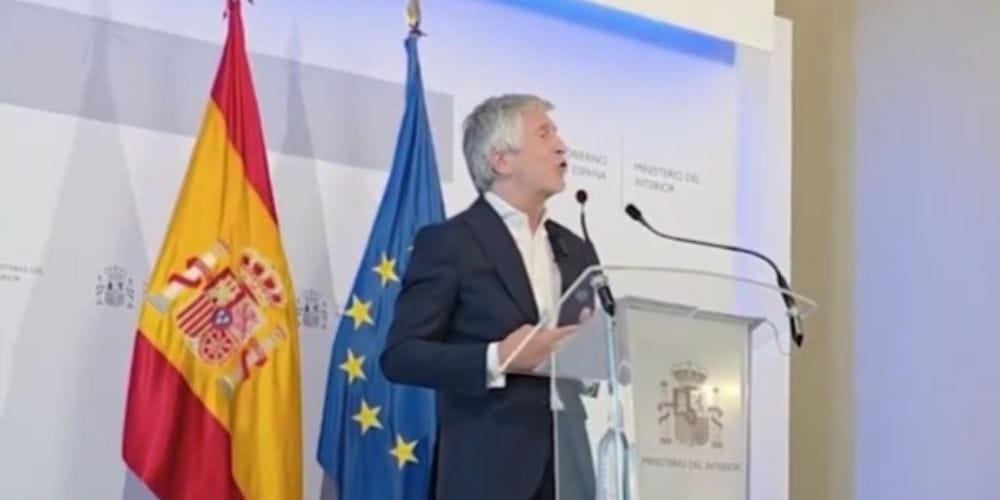
European governments are pressing for tougher border controls, faster returns and closer monitoring of migrant-smuggling networks after the unprecedented mass arrival in Ceuta sent political shockwaves across the continent.
Spain has defended its handling of the emergency, saying most of the estimated 72,000 people who entered the autonomous city have now returned to Morocco and that the wider Schengen area was never compromised.
EU justice and home affairs ministers held an emergency videoconference on Tuesday, 4 August, after the sudden movement across the Moroccan border exposed weaknesses in Europe’s ability to detect and respond to mass crossings.
The meeting ended with broad calls for stronger intelligence-sharing, more effective return procedures and deeper cooperation with countries outside the European Union. Ministers also discussed the need to identify social media campaigns and false information capable of encouraging thousands of people to move towards a border within hours.
European Commissioner for Internal Affairs and Migration Magnus Brunner said the influx had been fuelled by criminal networks and misinformation circulating online. He praised Moroccan cooperation in accepting returns, but stopped short of saying whether Rabat had deliberately relaxed its border controls, according to Reuters’ report on the emergency EU talks.
Spain says Schengen was never at risk
Spanish Interior Minister Fernando Grande-Marlaska said all EU member states had praised Spain’s handling of the emergency and the effectiveness of the authorities’ response. In a statement issued after the extraordinary meeting, the Interior Ministry said European governments had recognised the work carried out by Spain during a migration crisis of this scale.
Marlaska put the total number of arrivals at approximately 72,000 and said around 70,000 had already left Ceuta. He also rejected claims that those who entered the autonomous city had obtained free access to mainland Spain or the rest of Europe.
“The Schengen space was never compromised,” the minister said after the meeting.
Identity and document checks remain in place for journeys from Ceuta to mainland Spain. Entering the city irregularly does not provide an automatic right to cross the Strait of Gibraltar, move freely through Europe or claim residence in another member state.
Marlaska said Spain’s intelligence services had received no specific warning that a crossing on such a scale was imminent. He maintained that the authorities responded as soon as the situation developed, although the absence of advance warning is likely to face further political scrutiny.
EU governments demand stronger deterrence
While the meeting produced solidarity with Spain, it also revealed continuing divisions over how Europe should handle sudden increases in irregular migration.
Italy used the talks to renew its support for asylum and return centres in safe countries outside the EU. Interior Minister Matteo Piantedosi called for “new hub models” that would allow some procedures to be handled beyond European territory, an approach Spain has previously opposed because of legal and practical concerns.
Denmark called for additional European funding for external border security, while Greece has advocated an emergency mechanism that could accelerate procedures during a mass arrival. In exceptional circumstances, Athens wants governments to have greater flexibility over the registration of new asylum claims.
These proposals go beyond the immediate situation in Ceuta and reopen one of Europe’s most divisive political arguments. Member states agree broadly that the EU’s external borders must be protected, but remain divided over asylum processing, returns, responsibility-sharing and agreements with third countries.
Spain has traditionally supported cooperation with countries of origin and transit while opposing offshore processing as a simple answer to migration pressure. Marlaska told Reuters earlier this year that external asylum centres were not a “magic solution” and could create legal problems while damaging relations with partner countries.
Brussels challenges Spain over regularisation
The Ceuta meeting also developed into a wider argument over Spain’s recent immigration policies. Brunner criticised the government’s large-scale regularisation programme, describing it as a poor signal to other European countries.
However, the commissioner acknowledged that Brussels had found no direct link between the programme and the mass entry into Ceuta. Reports from Morocco and Spain have instead pointed towards false claims that the border was open, misunderstandings about a Spanish court ruling and messages suggesting that reaching Ceuta would provide access to the mainland or wider EU.
Brussels therefore separated its criticism of Spain’s regularisation policy from the causes of last week’s crossing. El País reported that the Commission saw no direct connection between the two issues, despite describing the policy as a negative message for Europe.
The distinction is important because much of the commentary surrounding Ceuta has confused separate legal issues. A person entering Ceuta irregularly does not automatically qualify for regularisation, asylum, Spanish welfare benefits or freedom of movement through the EU.
Social media rumours under investigation
The scale and speed of the movement have placed renewed attention on social media platforms, encrypted messaging services and the groups used to organise or encourage attempted crossings.
Spanish and Moroccan officials have said messages circulated claiming that the border had effectively opened or that people reaching Ceuta could not be returned. Other posts reportedly suggested that arrivals would receive documentation, accommodation or permission to continue towards mainland Europe.
The misinformation was not confined to private messaging groups. Some commentators and media coverage also drew misleading connections between the crossings and Morocco’s Throne Day, when King Mohammed VI issued a customary royal pardon to 1,788 people convicted by Moroccan courts. Claims that this amounted to a general amnesty, or that those pardoned were released to enter Ceuta, are unsupported.
Throne Day may have affected staffing and movement because it is a major Moroccan public holiday, and the heaviest crossings coincided with the celebration. However, the pardon itself neither opened the border nor gave anyone permission to enter Spanish or EU territory.
Morocco has blamed trafficking networks, online misinformation and confusion surrounding a Spanish Supreme Court decision. Madrid has not accepted that the judgment alone explains why tens of thousands of people gathered at the border almost simultaneously.
The July ruling concerned the treatment of people who reached Spanish territory by swimming around the end of the border structure. It did not create a right to enter Ceuta or prevent Spain from carrying out lawful return procedures once individual circumstances had been considered.
Spain subsequently installed a floating maritime barrier off the Tarajal area. The structure is intended to close the gap around the end of the land fence while allowing Civil Guard vessels to patrol between sections, according to details reported when the barrier was deployed.
Morocco’s role remains politically sensitive
The crisis has once again demonstrated how heavily Spain and the EU depend on Morocco to control one of Europe’s most sensitive external borders.
Rabat insists that it did not deliberately reduce security and says it continues to deploy thousands of officers across northern Morocco. It has also highlighted the number of attempted crossings prevented in recent years as evidence of its cooperation with Spain and the EU.
Nevertheless, questions remain over how such a large crowd was able to reach the frontier and why Spanish authorities received no advance warning. Ceuta’s regional president, Juan Jesús Vivas, has publicly questioned Morocco’s handling of the events. Meanwhile, some European officials have warned against allowing migration to be used as a source of diplomatic pressure.
The accusation is particularly sensitive because Spain and Morocco rebuilt their relationship after a damaging diplomatic dispute that culminated in another Ceuta migration crisis in 2021. Cooperation improved after Madrid changed its position on Western Sahara, but the latest events have revived doubts about the durability of that partnership.
Brunner avoided directly assigning responsibility during Tuesday’s press conference. The EU’s immediate priority appears to be preserving cooperation with Rabat while seeking clearer early-warning systems and stronger guarantees that the border will remain controlled.
Human cost rises as political argument intensifies
At least 75 people are reported to have died during the crossing, many after drowning or being caught in the crush around the border installations. The disaster has become one of the deadliest incidents recorded at Spain’s North African frontier.
Thousands entered without food, shelter or any clear plan for what would happen next. Many subsequently returned to Morocco after finding that they could not travel onwards to mainland Spain and that Ceuta’s reception capacity had been overwhelmed.
The autonomous city has had to care for hundreds of unaccompanied minors, who are subject to different legal protections from adults and cannot simply be returned without safeguarding procedures. Reception services, emergency workers and local charities have faced intense pressure since the crossings began.
The humanitarian consequences risk being overshadowed by the wider political fight. Governments are now arguing over who failed, what message Europe should send and whether the crisis justifies tougher asylum restrictions, while families in Morocco continue searching for people who remain missing.
Ceuta crisis reshapes Europe’s migration debate
Tuesday’s meeting did not produce a single new EU policy, but it established the direction of travel. Stronger returns, additional border funding, intelligence cooperation and greater pressure on smuggling networks are likely to dominate the next phase of the European response.
There will also be demands for improved monitoring of online mobilisation. Detecting a viral message is not the same as predicting that tens of thousands of people will act on it, but governments are likely to seek faster ways of sharing warnings when border-related rumours begin spreading.
Spain, meanwhile, will face continued pressure to explain why its agencies did not foresee the crossing and how it intends to prevent another attempt. The government will also need to manage the people who remain in Ceuta, including minors and those whose individual legal circumstances must still be assessed.
The immediate influx has subsided, but its consequences are moving far beyond the autonomous city. What began at one of Europe’s smallest borders has reopened arguments over asylum, returns, relations with North Africa and the credibility of the EU’s migration system.