 Lorraine Williamson
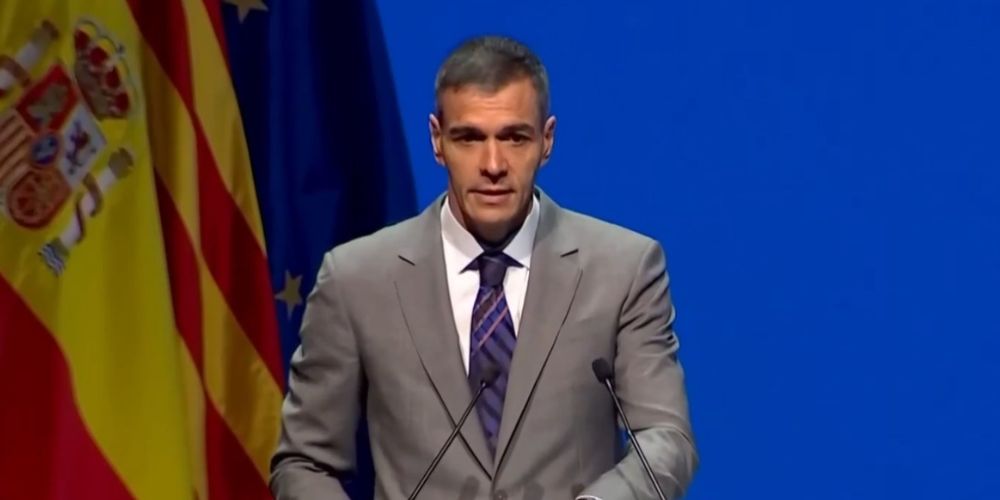
Spain’s transport minister, Óscar Puente, has announced his resignation following two catastrophic railway accidents that have claimed 115 lives this year. His decision, revealed during a parliamentary appearance on Tuesday evening, comes just days after the high-speed train collision near Urda, Toledo, in which 69 people died.
Puente also confirmed that he would withdraw from the Socialist Party’s candidate list for Spain’s general election on 29 November. Prime Minister Pedro Sánchez announced on Wednesday morning that Deputy Prime Minister and Economy Minister Carlos Cuerpo would temporarily assume responsibility for Transport and Sustainable Mobility.
Why Óscar Puente resigned
The announcement came at the end of Puente’s appearance before the Spanish parliament’s Permanent Deputation on Tuesday, 3 November, where he had been questioned about the Urda disaster and the government’s response to concerns over railway safety.
Puente explained that he had decided to step down shortly after learning of the collision on Wednesday, 28 October. However, he chose to remain in office until he had addressed parliament and provided an initial account of the accident and the measures being taken.
He described his resignation as a matter of political dignity, consistency and empathy towards the victims. Although he acknowledged that the two disasters were different and that his direct responsibility for either had not been established, he said he could not continue as transport minister after accidents of such severity.
Two railway disasters in less than a year
The immediate backdrop to Puente’s departure is the collision near Urda, in the province of Toledo, on 28 October. The accident killed 69 people and left many others injured, prompting a major emergency response and renewed scrutiny of Spain’s high-speed rail network.
It followed the railway disaster at Adamuz, Córdoba, on 18 January, which claimed 46 lives. Together, the two accidents have resulted in 115 deaths, making railway safety a central issue for the government and the public.
During Tuesday’s parliamentary appearance, Puente outlined measures intended to strengthen the railway system, including additional technical resources, improvements to operating procedures and further safety work. The causes of the Urda collision remain under investigation, and the resignation does not establish legal or technical responsibility for either disaster.
Carlos Cuerpo to take temporary responsibility
Sánchez confirmed on Wednesday, 4 November, that Carlos Cuerpo would assume the transport portfolio on a temporary basis alongside his existing responsibilities as deputy prime minister and economy minister.
In a statement published on Wednesday afternoon, Prime Minister Pedro Sánchez said restoring confidence in Spain’s railway system was only part of the challenge facing the government. He argued that public trust in the country’s political institutions also needed to be rebuilt, while thanking Óscar Puente for his work and confirming Carlos Cuerpo’s temporary appointment.
Sánchez also reiterated the government’s commitment to the victims of the railway disaster. His comments, published in a statement on X, underline the wider political significance of Puente’s departure as questions continue over railway safety and government accountability.
The arrangement is intended to provide continuity at the ministry as the government responds to the railway emergency and prepares for the general election later this month. Puente’s resignation takes formal effect following publication in Spain’s official state gazette, the BOE.
A resignation ahead of Spain’s general election
Puente’s departure also has political consequences for the PSOE, which had planned to put him forward as its leading candidate in Valladolid for the 29 November election. He has now withdrawn from that contest as well as from his ministerial position.
Earlier on Tuesday, government sources had publicly ruled out his resignation or dismissal. His announcement later that evening therefore marked a significant change in the government’s position, although Puente said the decision had been his own.
Sánchez has acknowledged Puente’s decision, while political parties have responded differently to the resignation and the government’s handling of the railway disasters. The investigations into both accidents, and the measures needed to restore confidence in the rail network, remain unresolved.
Railway safety remains the immediate priority
Puente’s resignation changes the leadership of Spain’s Transport Ministry, but the practical challenges facing the railway network remain. The government must oversee the investigation into the Urda collision, support those affected and determine what further safety improvements are necessary.
For passengers, the most immediate questions concern the restoration of disrupted high-speed services, the reliability of the network and the measures being introduced to prevent further accidents. Those responsibilities now fall temporarily to Carlos Cuerpo and the transport authorities.