 Lorraine Williamson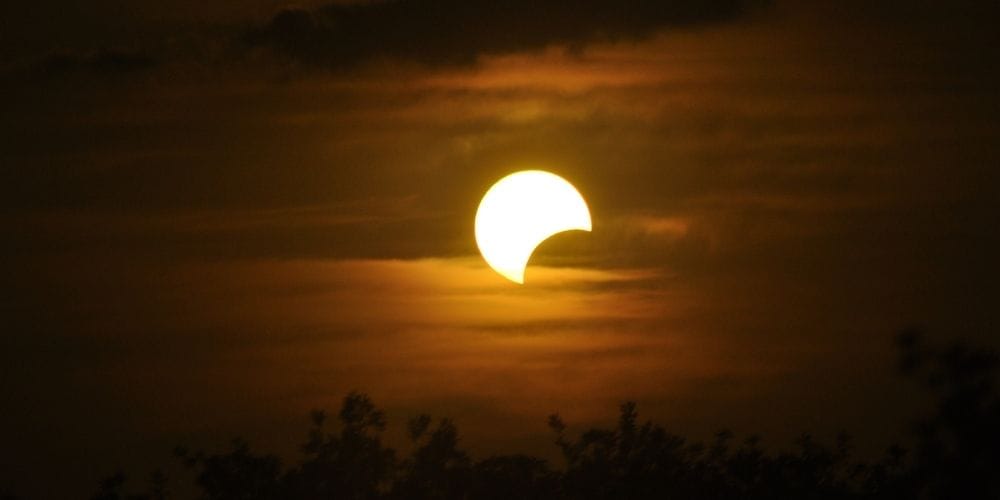
Spain is entering the final countdown to its first total solar eclipse visible from the Iberian Peninsula in more than a century, with millions of residents and visitors now watching the weather as closely as the sky.
The path of totality will cross much of northern Spain from Galicia to the Mediterranean before reaching the Balearic Islands on Wednesday, 12 August. Elsewhere in the country, the Sun will be almost—but not completely—covered shortly before sunset.
AEMET has announced that it will begin issuing a special daily eclipse forecast from Friday, 7 August. The bulletin will cover expected cloud conditions, temperatures, possible adverse weather and the level of wildfire danger in the areas where large crowds are likely to gather.
Cloud will be the decisive factor for many viewers. Although the eclipse itself can be calculated with extraordinary precision, even a small area of cloud moving across the Sun at the wrong moment could hide totality completely.
AEMET has cautioned that the most useful forecasts will emerge during the final five days. Conditions remain particularly uncertain along Galicia and the Cantabrian coast, where small changes in the position of the Atlantic anticyclone can determine whether the evening is clear, cloudy or affected by local showers.
Totality will cross Spain from Galicia to Mallorca
The band of totality will enter the peninsula through Galicia and move eastwards across the northern half of Spain. It will pass through parts of Asturias, Cantabria, Castilla y León, the Basque Country, La Rioja, Navarra, Aragón, Catalonia and the Valencian Community before crossing the Balearic Islands.
The National Geographic Institute’s official eclipse map allows people to enter their location and check whether they are inside the totality zone, when the eclipse will begin and how high the Sun will be above the horizon.
Among the provincial capitals and major cities inside or close to the central path are A Coruña, Oviedo, León, Santander, Bilbao, Burgos, Logroño, Zaragoza, Castellón, València and Palma. However, the experience will differ considerably from west to east because the eclipse will take place so close to sunset.
In A Coruña, the eclipse will begin at approximately 7.31 pm and reach totality at around 8.28 pm. The Sun will still be relatively high above the western horizon, giving Galicia one of the better viewing angles if the Atlantic weather remains favourable.
Totality will occur later as the shadow moves east. By the time it reaches València and the Balearic Islands, the Sun will be extremely low, increasing the risk that buildings, mountains, trees or coastal terrain could block the view even under clear skies. The IGN’s detailed guide to the 12 August eclipse provides local timings and explains how the path will cross Spain.
Inland regions may offer the clearest skies
Historical weather patterns suggest that the best astronomical position and the best likelihood of clear skies may not occur in the same place. Galicia and the Cantabrian coast will see totality while the Sun remains comparatively high, but those areas normally carry a greater August cloud risk than inland Spain and the Mediterranean coast.
Castilla y León and Aragón may therefore offer some of the strongest overall prospects. Provinces including León, Palencia, Burgos, Soria, Valladolid and Zaragoza combine a position within the band of totality with historically drier and clearer August conditions.
The Mediterranean side of the path, including Castellón, northern Valencia and the Balearic Islands, also has a relatively high historical frequency of clear skies. However, viewers there face the additional complication of a very low Sun and will need a completely unobstructed western horizon.
AEMET’s analysis uses weather observations collected over the previous 16 years to show how frequently skies have been clear or lightly clouded around the date and time of the eclipse. The agency stresses that the historical map is not a forecast, but it indicates that the northern coast normally has a higher cloud risk while inland and eastern areas often enjoy clearer August evenings. The official meteorological comparison can be viewed through Spain’s eclipse portal.
Choosing the right location will be crucial
Being inside the totality zone will not be enough on its own. The Sun will be setting in the west, so viewers need a location without buildings, mountains, dense trees or raised ground obstructing that part of the horizon.
The problem will be greatest in eastern Spain and the Balearic Islands, where the Sun will sit only a few degrees above the horizon during totality. A beach does not automatically guarantee an open view if it faces east, while a city square surrounded by buildings could leave spectators unable to see the final phases.
People are being encouraged to visit their intended location at a similar time of day before 12 August and check exactly where the Sun appears. The IGN advises observers to avoid obstacles in the direction of sunset and to select a safe viewing area rather than stopping on roads or entering restricted land at the last moment. Its practical eclipse recommendations explain how to assess the horizon in advance.
Large movements of traffic are expected before and immediately after the event. The Basque Country has already introduced special traffic restrictions for 12 August, including a temporary ban affecting heavy vehicles on roads across the autonomous community.
The rest of Spain will see a major partial eclipse
Areas south of the totality zone will not experience complete darkness, but most of Spain will still see a substantial proportion of the Sun obscured. That includes Madrid, Castilla-La Mancha, Extremadura, Murcia, Andalucia, southern areas of the Valencian Community, Ceuta, Melilla and the Canary Islands.
The further a location lies from the band of totality, the more of the Sun will remain visible. Nevertheless, the light may become noticeably weaker, shadows may sharpen and temperatures could dip briefly around the maximum phase.
Catalonia presents a mixed picture, with some western and southern areas closer to or inside the totality zone while other locations will experience a deep partial eclipse. Residents should use the IGN viewer rather than relying on a broad regional description, as small distances can make the difference between complete and partial coverage.
The Canary Islands will see the event as a partial eclipse and will use a different local time from mainland Spain and the Balearic Islands. Local timings for every municipality can be checked through the official Spanish eclipse visualisation tool.
Wildfire danger could restrict rural viewing
The eclipse will take place during the height of Spain’s summer wildfire season, when forest access and rural parking may already be restricted. AEMET’s special bulletin will therefore include the daily fire-danger forecast alongside expected cloud and temperature conditions.
Authorities are concerned that large numbers of people could gather in remote areas with limited road access, particularly if late forecast changes encourage crowds to switch destinations. Vehicles parked on dry grass, discarded cigarettes and blocked emergency routes could create additional risks.
Viewers should use established car parks and organised observation areas wherever possible. Entering closed woodland, lighting fires or parking across tracks used by emergency vehicles could lead to fines and, more seriously, prevent crews from responding rapidly to an incident.
The eclipse will finish close to nightfall, so thousands of spectators may attempt to leave rural sites at the same time in fading light. Drivers should expect delays and carry water, suitable footwear, charged phones and basic supplies rather than assuming they will be able to leave immediately.
Ordinary sunglasses will not protect your eyes
Certified eye protection is essential throughout the partial stages of the eclipse. Ordinary sunglasses, no matter how dark they appear, do not block the harmful solar radiation capable of causing permanent retinal damage.
Viewers should use eclipse glasses meeting the ISO 12312-2 safety standard and inspect them carefully before use. Damaged, scratched or punctured filters should be discarded, while homemade alternatives such as CDs, exposed photographic film, X-rays or smoked glass are not safe.
People inside the band of totality may remove their glasses only during the brief period when the Sun is completely covered. They must put them back on immediately as soon as the first bright section of the solar surface returns.
Everyone watching from outside the totality zone must keep approved protection in place throughout. The IGN’s official eye-safety guidance also warns that cameras, telescopes and binoculars require specialist solar filters fixed to the front of the equipment; eclipse glasses alone cannot safely be used while looking through a magnifying device.
Spain begins a rare three-year eclipse sequence
The 12 August eclipse will be the first of three exceptional solar events visible from Spain in three consecutive years. It will also be the first total solar eclipse visible from the Iberian Peninsula in more than a century.
A second total eclipse will cross southern Spain on 2 August 2027, with Ceuta, Melilla, most of Cádiz and significant parts of Málaga lying inside the path. An annular eclipse, creating a bright “ring of fire”, will follow on 26 January 2028.
For now, attention is firmly focused on northern Spain and the Balearic Islands. From the Atlantic coast of Galicia to the plains of Castilla y León, the Ebro valley, the Valencian coast and Mallorca, the final decision on where to watch may come down to AEMET’s daily cloud forecast.
Those lucky enough to find clear skies, an open western horizon and a safe place inside the band of totality will witness something Spain has not experienced for generations.