 Lorraine Williamson
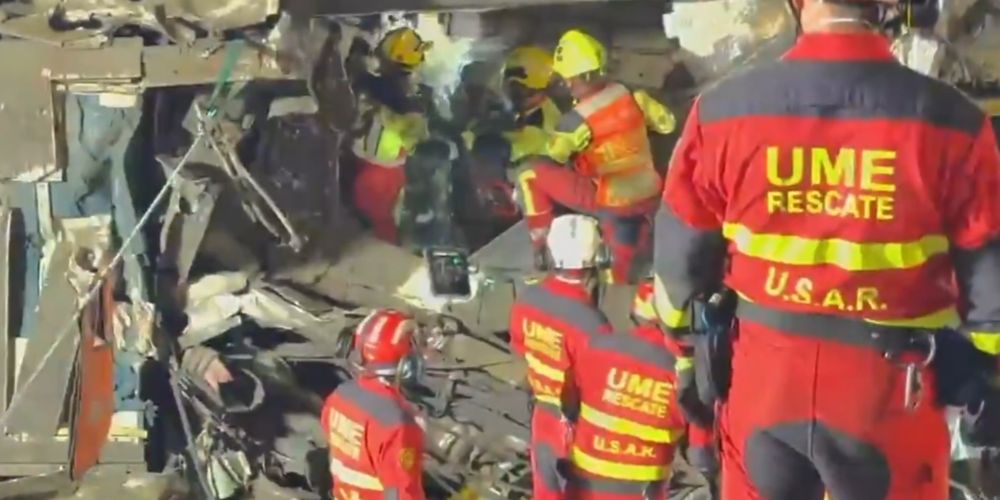
The death toll from Wednesday’s railway disaster in Urda, Toledo, remains at 69, with forensic teams working to identify victims and reunite families with reliable information about their loved ones. New official figures released on Friday reveal the scale of the identification operation, while the Guardia Civil has warned that fraudsters are sending fake messages to relatives claiming that missing passengers have been identified.
The latest update from the Centre for Integrated Data (CID), the official body coordinating forensic information, confirms that 65 autopsies have been completed and 12 identifications formally communicated to families. Although the bodies of the 69 confirmed victims have been received by the forensic authorities, the process of establishing their identities is continuing, with DNA specialists, forensic doctors and Guardia Civil officers working together.
Why are 67 people still reported missing?
One of the most confusing aspects of the disaster has been the number of missing-person reports, particularly when authorities have already confirmed 69 deaths. The Guardia Civil has received 72 reports from relatives and others seeking information about passengers, of whom five have subsequently been located alive.
That leaves 67 active reports, but this does not mean another 67 people are missing in addition to those who died. Some reports may relate to people whose bodies have already been recovered but whose identities have not yet been formally established or communicated to their families.
Of the 67 outstanding reports, 14 concern foreign nationals. The nationalities represented include Argentina, Australia, Canada, the United States, France, Japan, Mexico, the Czech Republic, Tunisia and Venezuela. This does not mean 14 additional deaths have been confirmed, and authorities are continuing to establish the circumstances of those reported missing.
The figures come from the Centre for Integrated Data, communicated through the High Court of Justice of Castilla-La Mancha and reported by Europa Press on Friday afternoon.
Guardia Civil warns families about fraudulent messages
As families wait for news, the Guardia Civil has warned that criminals are exploiting the tragedy by sending fraudulent text messages claiming that missing relatives have been identified among the dead. The messages falsely appear to come from the police and have caused additional distress to people already facing an exceptionally difficult situation.
The Guardia Civil has stressed that identification notifications are never delivered by SMS, WhatsApp or telephone. Instead, officers contact relatives personally, ensuring that the information is confirmed and communicated with appropriate support.
Anyone receiving such a message should avoid responding, opening links or providing personal information. Families who have already supplied DNA samples or registered a missing relative should wait for direct contact from the authorities.
Investigation examines signalling and operational decisions
Investigators are continuing to reconstruct the circumstances in which a Renfe high-speed train collided with a stationary Iryo service near Urda on Wednesday. The independent railway accident investigation is examining technical records, communications between railway personnel and the decisions made after problems were reported with the signalling system.
Preliminary findings have suggested that the Renfe train may have been travelling between 160 and 200 kilometres per hour when the collision occurred. However, the precise speed, sequence of failures and responsibility for the accident have not been definitively established.
The investigation is also examining how railway movements were managed after the normal signalling arrangements were disrupted. These questions are central to understanding why the safety procedures in place did not prevent the collision.
Transport Minister Óscar Puente addressed the investigation during an extended press conference on Friday, taking questions about railway operations, the actions of Adif personnel and the government’s response. His comments reflect the information available to the ministry at this stage and should not be treated as final investigative conclusions.
Black boxes recovered from both trains
Investigators have recovered the black boxes from the Renfe and Iryo trains involved in Wednesday’s fatal collision near Urda, Toledo. The recording devices were retrieved on Thursday by the independent accident investigation authority (AITAT), working alongside judicial police and the railway companies, and are now being held by the Guardia Civil.
The devices contain information that could help investigators establish the precise speed of the trains, their movements and the actions taken before the collision. AITAT has confirmed that the data will be extracted under conditions established by the investigating court in Orgaz, which is overseeing the judicial inquiry.
Although preliminary findings estimate that the Renfe train was travelling between 160 and 200 kilometres per hour at the time of impact, its exact speed has not yet been established. Investigators have stressed that all possible causes remain under examination.
Political pressure grows over railway safety
The accident has intensified scrutiny of Spain’s railway infrastructure and the government’s management of the network. Puente has faced calls to resign, while questions have been raised about signalling failures, operational procedures and whether existing safety arrangements were sufficient.
According to reports from EFE and Europa Press, the transport minister placed his position at the disposal of Prime Minister Pedro Sánchez, who did not accept his departure. Puente remains in office and has defended the importance of establishing the facts before concluding individual responsibility.
The minister is expected to face further parliamentary scrutiny as the investigation progresses. The disaster has also renewed concerns about railway safety following the deadly collision at Adamuz, Córdoba, earlier this year.
Official help for families and affected passengers
The Guardia Civil has established dedicated offices where immediate relatives of missing passengers can provide information and DNA samples to assist the identification process. These include facilities in Madrid, Sevilla, Córdoba and Toledo, with the authorities asking families who have already registered to wait for official contact.
The following assistance numbers are published by the Guardia Civil:
- Renfe: 900 101 020
- Iryo: 900 001 403
- Guardia Civil: 062
- Castilla-La Mancha emergency assistance: 900 122 112
Passengers affected by the continuing disruption to Madrid–Andalucía high-speed rail services should consult their operator directly for the latest travel arrangements, cancellations and ticket changes.
Full contact information and office locations are available from the Guardia Civil.
Identification work continues as families await answers
More than 60 specialists are involved in the forensic and identification operation, including doctors, DNA experts, technicians and Guardia Civil investigators. The Military Emergency Unit is also providing logistical support, while psychologists are assisting families awaiting confirmation about their relatives.
With the death toll remaining at 69, the immediate priorities are completing the identification process, establishing the circumstances of outstanding missing-person reports, and determining how the collision occurred. Further official updates are expected as investigators analyse the available evidence and the authorities continue notifying families.