 Lorraine Williamson
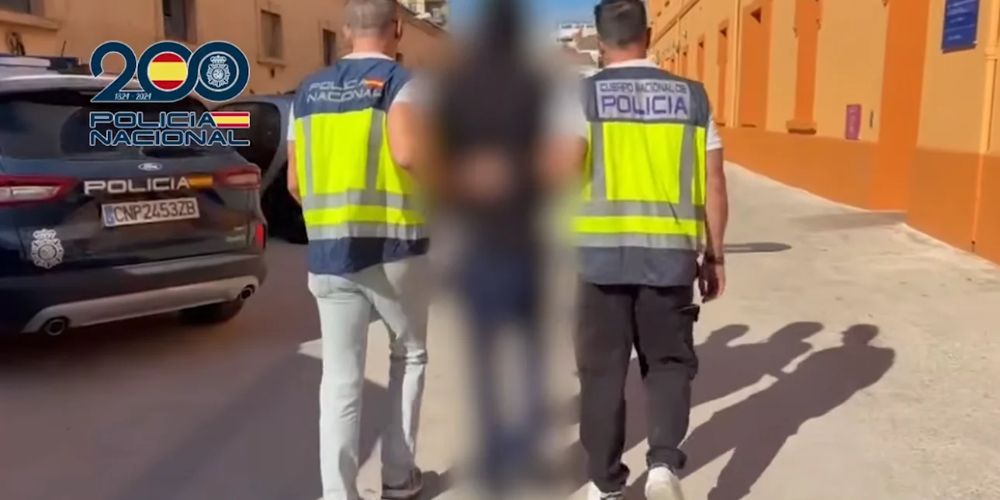
Spanish police have arrested a 17-year-old accused of organising plans to loot shops in Valencia on Halloween, amid growing concern over social-media campaigns calling for gatherings in cities across Spain and Europe.
The arrest follows serious disturbances in Barcelona and Bilbao, while online messages mentioning locations from the Costa del Sol to northern Spain have prompted police monitoring and precautionary warnings to families.
Police uncover alleged plans to loot Valencia shops
The Policía Nacional confirmed on Thursday 29 October that officers had arrested a 17-year-old suspected of creating two messaging channels called Blocus Vlc. The arrest took place on Wednesday in Valencia, following an investigation into messages encouraging people to target shops in the city centre on Saturday 31 October.
According to the police, the teenager allegedly directed other members of the channels, gave instructions about the planned attacks and encouraged participants to recruit more people through social media. Investigators also uncovered discussions about setting fires to distract police officers while shops were being looted.
One of the messaging channels attracted more than 400 users before police intervened. Both channels have now been closed, although the investigation remains ongoing.
The teenager is suspected of conspiracy to cause public disorder, conspiracy to commit offences against property and membership of an organised group. The Juvenile Prosecutor’s Office ordered his placement in a juvenile detention facility as a precautionary measure, not following a conviction.
Second teenager arrested over Blocus plans in Lleida
A second teenager was arrested on Thursday afternoon in Bellmunt d’Urgell, in the province of Lleida, as Catalonia’s Mossos d’Esquadra investigated separate messaging channels promoting alleged plans for violence and looting on Saturday 31 October.
The 16-year-old is suspected of creating and administering groups operating under the name Blocus Lleida. According to the Mossos, messages encouraged participants to vandalise property, loot shops and attack police officers during planned gatherings in the city of Lleida.
Investigators also found discussions about which businesses could be targeted, how participants might dress to avoid identification and the possible use of dangerous objects against officers. The teenager is suspected of conspiracy to cause public disorder and incitement to commit damage and looting.
The investigation remains open, and police have not ruled out further arrests. The Lleida detention is separate from the arrest in Valencia, and authorities have not established that the two teenagers were coordinating their activities.
What is the Blocus campaign?
The Valencia arrest comes amid a much wider series of online calls for demonstrations and gatherings promoted through TikTok and private messaging applications. Some accounts use the name Blocus, associated with student blockades and protests in France, while others have adopted similar names, graphics and slogans.
An investigation by Spanish fact-checking organisation Maldita.es identified calls for gatherings in 46 cities across at least nine European countries. This figure refers to the international spread of online announcements, not to 46 Spanish cities facing confirmed riots.
The content of the messages varies considerably. Some advertise demonstrations over political or social issues, while others encourage vandalism, theft or confrontation with police, making it important not to treat every advertised gathering as part of one organised criminal movement.
Maldita.es’s investigation into the Halloween social-media campaign found that public accounts sometimes directed users towards smaller private groups on messaging applications, where further instructions and discussions could take place.
Disturbances in Barcelona and Bilbao heighten concerns
The warnings follow serious disturbances in both Barcelona and Bilbao, although the circumstances and motivations behind the incidents were different.
In Barcelona, disorder on Saturday 24 October followed a mobilisation promoted through social-media accounts associated with Blocus. Shops were attacked and looted, fires were started, and police arrested at least 128 people, many of them minors.
Two days later, on Monday 26 October, Bilbao experienced violent disturbances following a protest against a planned appearance by political commentator Vito Quiles, which was subsequently cancelled. Vehicles and rubbish containers were set alight, businesses suffered damage, and the Ertzaintza arrested 19 people, with another three investigated.
The Bilbao incident has not been established as part of the Blocus campaign. Nevertheless, both incidents have contributed to concerns about the potential for gatherings to escalate into serious public disorder.
The incidents were documented in RTVE’s examination of the Blocus campaign and reporting from the Basque police, the Ertzaintza.
Online calls extend beyond Halloween
Although Saturday 31 October is the main focus of the current campaign, online announcements have appeared for other dates in late October and November. Messages mentioning Friday 30 October have also circulated, while Maldita.es has documented a separate call for 11 November in Salt, Girona.
The online activity is not confined to Madrid, Barcelona or Valencia. Gatherings have also been advertised in locations including Bilbao, Alicante, Almería and several towns on the Costa del Sol, although the credibility and organisation behind individual announcements vary.
Investigations by Maldita.es and Newtral have identified messages mentioning Fuengirola’s Puerto Deportivo, Puerto Banús in Marbella, San Pedro Alcántara and Algeciras. These are advertised locations rather than confirmation that disturbances will occur.
Some social-media accounts have circulated different times, dates or locations for apparently similar gatherings. This makes it difficult to establish who is organising them, how many people might attend or whether individual announcements are genuine.
Alongside Maldita.es’s investigation, Newtral has examined the spread of the campaign through dozens of TikTok accounts.
Businesses and families express concern
The online messages have prompted concern among business owners, particularly in shopping and nightlife areas that could attract large numbers of people over Halloween.
Reports have circulated locally about businesses considering additional security precautions, including removing valuable stock or protecting shopfronts. However, InSpain.news has not independently verified claims that particular businesses are boarding up their premises, and these reports should not be treated as confirmed closures.
Schools in parts of Spain have also been alerting families to online messages encouraging young people to join gatherings that could lead to public disorder. The warnings urge parents to discuss peer pressure, the dangers of following instructions from anonymous online groups and the possible legal consequences of becoming involved in vandalism or theft.
These communications are preventative measures intended to protect pupils. They do not mean that schools or police have confirmed that riots will take place in the locations mentioned.
Police monitoring online threats across Andalucía
The Spanish government’s delegation in Andalucía confirmed on Thursday that the Policía Nacional and Guardia Civil are monitoring social media ahead of Halloween, alongside the security operations normally organised for the celebrations.
Officers are prepared to respond where necessary to protect public safety, but the authorities have not announced that widespread disorder is inevitable. Anyone with information about specific threats or planned criminal activity is encouraged to contact the Policía Nacional on 091 or Guardia Civil on 062.
Are Halloween riots expected across Spain?
There is verified evidence of online calls for gatherings, and separate arrests in Valencia and Lleida show that police have uncovered specific alleged plans to commit crimes. However, this does not establish that every advertised gathering will take place, that violence is inevitable or that all the groups are part of one coordinated organisation.
The Policía Nacional’s announcement concerns the two Blocus Vlc channels and suspected plans targeting shops in Valencia. It does not establish that the arrested teenager created or directed the wider campaign across Spain and Europe.
The closure of the Valencia channels is an important police intervention, but it does not mean that every other online invitation has disappeared. Authorities continue investigating the case, while families and businesses are advised to rely on verified information rather than alarming forwarded messages.
National mourning affects Halloween celebrations
The warnings come as Spain observes three days of national mourning from 29 to 31 October following Wednesday’s devastating train collision near Urda, Toledo, which has claimed 69 lives.
Several councils have cancelled or postponed municipal Halloween celebrations out of respect for the victims and their families. Marbella, for example, has moved its municipal events in Marbella, San Pedro Alcántara, Nueva Andalucía and Las Chapas to Sunday 1 November.
These decisions are linked to the mourning period and should not automatically be interpreted as evidence of an imminent security threat. The coincidence has nevertheless created an unusually difficult weekend for communities already dealing with the shock of the railway tragedy.
Advice for families, residents and businesses
People planning to attend Halloween events should check the latest information from their town hall, local police and event organisers, particularly where municipal activities have been cancelled or moved to another date.
Parents may wish to discuss the circulating messages with teenagers, establish where they will be spending the evening and encourage them to leave immediately if a gathering becomes confrontational. Businesses concerned about online threats should report specific information to police rather than rely on unverified claims shared through messaging groups.
Anyone witnessing an immediate threat or serious disturbance should call 112, Spain’s emergency number. Information about suspected criminal activity can also be passed to the Policía Nacional on 091 or Guardia Civil on 062.
Residents can also use AlertCops, the Spanish Ministry of the Interior’s free public safety app, to contact the Policía Nacional or Guardia Civil and report suspicious activity or incidents. The app allows users to share their location and, where supported, send photographs or other information to help officers assess a situation. It is available in English and Spanish, making it particularly useful for foreign residents and visitors.
For emergencies requiring an immediate response, call 112. The Policía Nacional can also be contacted on 091 and the Guardia Civil on 062.
For now, the confirmed facts are that online calls are circulating, two teenagers have been arrested in separate investigations into alleged plans for looting and public disorder, and police investigations are continuing. The scale of any further gatherings remains uncertain.