 Lorraine Williamson
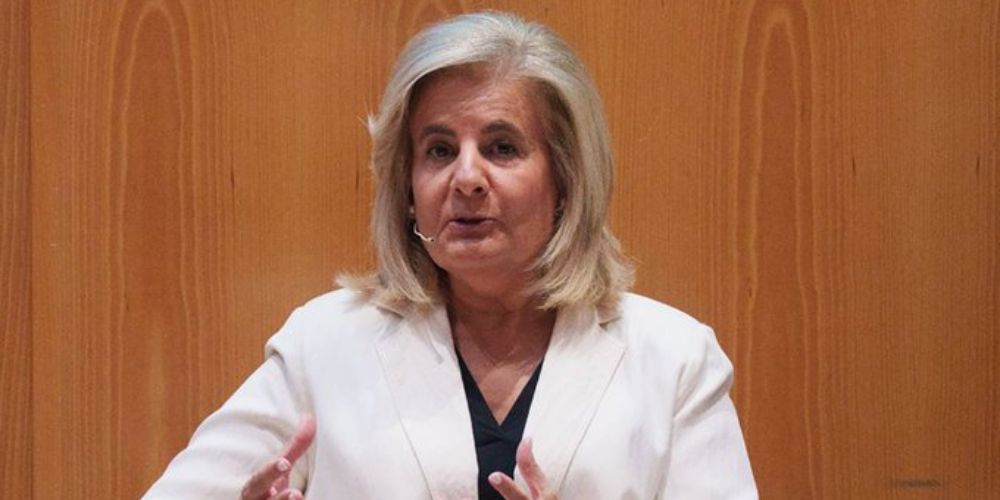
Former Spanish employment minister Fátima Báñez has died in the train collision in Toledo, according to reports citing confirmation from her family through San Juan del Puerto Town Hall.
The 59-year-old, who served in Mariano Rajoy’s government from 2011 to 2018, was travelling to Sevilla when the disaster occurred this morning. Her death has prompted tributes from political and business figures, particularly in her home province of Huelva.
The news follows hours of uncertainty over Báñez’s whereabouts. Huelva Información reports that her hometown council waited until it had received confirmation from her family before publicly acknowledging her death.
Fátima Báñez’s death confirmed after hours of uncertainty
San Juan del Puerto Town Hall initially issued a statement expressing concern for Báñez, confirming that she had been travelling on one of the trains involved in the accident near Urda, Toledo.
At that stage, the council said it had no reliable information about her condition. Mayor Rocío Cárdenas offered the municipality’s support to the former minister’s family while they awaited news.
The original statement published by San Juan del Puerto Town Hall reflected the uncertainty surrounding her whereabouts during the first hours of the emergency.
Later, according to Huelva Información’s report on the council’s response, confirmation from the family led the local authority to express its grief publicly and announce that official mourning would be observed in the municipality.
The council also joined the call for a minute’s silence at 8.00 pm, in memory of everyone who lost their lives in the disaster.
Who was Fátima Báñez?
Born in San Juan del Puerto, Huelva, on 6 January 1967, Fátima Báñez became one of the most prominent figures in Spain’s Partido Popular during Mariano Rajoy’s premiership.
She entered the Congress of Deputies in 2000 as a representative for Huelva and went on to serve as Minister of Employment and Social Security between December 2011 and June 2018.
Her time in government coincided with the aftermath of Spain’s financial crisis, when unemployment was exceptionally high, and the country’s employment legislation was undergoing major changes.
Báñez was closely associated with the 2012 labour reform, which introduced greater flexibility into employment contracts and collective bargaining arrangements. The measures were strongly contested by trade unions and became one of the defining economic policies of Rajoy’s administration.
After leaving government, Báñez remained active in business and employment affairs, becoming president of Fundación CEOE in July 2020. The foundation is the charitable and social initiatives arm of the Confederación Española de Organizaciones Empresariales (CEOE), Spain’s main employers’ organisation, broadly comparable to Britain’s CBI. Its work includes education, employment, innovation and social inclusion, bringing businesses together to support economic and social development.
Travelling to Sevilla for a business event
Báñez was travelling to the Andalucian capital to participate in a business event organised by the Confederación de Empresarios de Andalucía (CEA).
Her involvement with business organisations had continued well beyond her years in government, and she remained a familiar figure within the Andalucian business community.
The Federación Onubense de Empresarios (FOE) has expressed its grief at her death, remembering her connection with Huelva and her involvement in employment and economic development in the province.
FOE president José Luis García-Palacios Álvarez described the loss as a deeply sad moment for Huelva and paid tribute to her public service and longstanding relationship with local businesses.
Feijóo spoke of concern before her death was confirmed
Earlier today, Partido Popular leader Alberto Núñez Feijóo had spoken publicly about the uncertainty surrounding Báñez’s whereabouts.
During a press conference following the disaster, he acknowledged that the party was particularly concerned about its former minister, while making clear that no confirmed information about her condition was available at that time.
His remarks were made before the subsequent reports of her death emerged and should be understood in that context. Feijóo also confirmed the suspension of the party’s pre-election campaign events and called for an immediate investigation into the railway collision. He urged an independent review of Spain’s railway network and its safety systems, while saying that the immediate priority should remain the victims, those injured and their families.
Huelva mourns as Spain confronts the railway tragedy
The death of Fátima Báñez has brought particular sorrow to San Juan del Puerto, where she retained close personal and professional connections throughout her political career.
The town council has announced its intention to observe official mourning, while local businesses and institutions have joined the tributes to the former minister.
Her death comes amid a much wider national tragedy. At least 68 people have been reported killed in the collision between two high-speed trains near Urda, Toledo, with emergency personnel continuing their work at the scene.
The circumstances of the accident remain under investigation. As Spain mourns those who have died, attention remains focused on the families awaiting news, the treatment of those injured, and the efforts to establish how the disaster happened.