 Lorraine Williamson
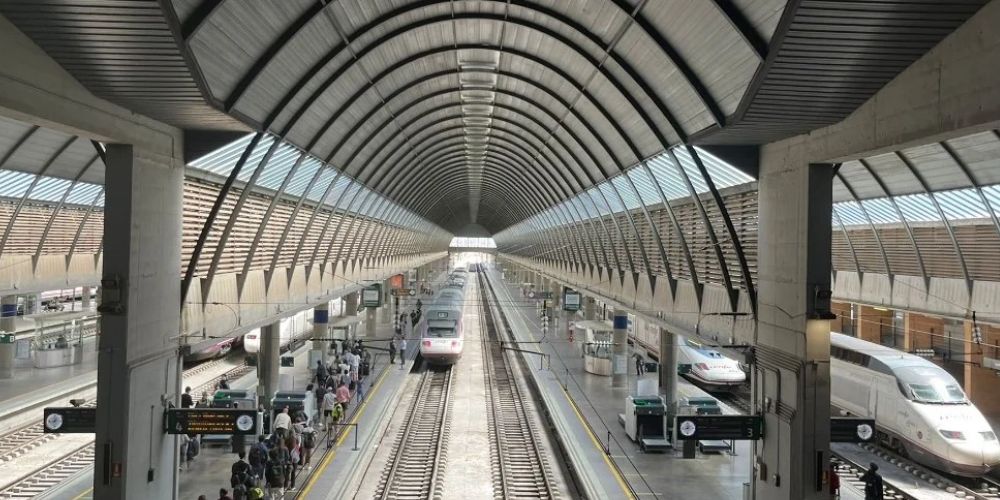
Travellers across Spain face major disruption as the All Saints holiday weekend begins, with Ouigo cancelling 40 trains, Renfe delaying alternative transport arrangements between Madrid and Andalucía, and the DGT forecasting 5.34 million long-distance road journeys.
Almost 20,000 Ouigo passengers are affected by the cancellations on Friday 30 October and Monday 2 November, while the continued closure of the Madrid–Andalucía high-speed railway is expected to put additional pressure on roads as people head away for the long weekend.
Ouigo cancels 40 trains affecting almost 20,000 passengers
High-speed rail operator OUIGO has cancelled all 40 of its scheduled services for Friday 30 October and Monday 2 November following industrial action by train drivers belonging to the Semaf union. The decision affects approximately 20,000 passengers and comes after Spain’s Audiencia Nacional provisionally suspended the minimum-service arrangements established by the Ministry of Transport. With uncertainty over which trains could operate during the stoppages, the company decided to cancel the affected services rather than leave passengers facing confusion at stations.
OUIGO has confirmed that affected passengers are being contacted through the email addresses associated with their bookings. Customers can change their tickets without charge or request a full refund, and the company says additional compensation will be provided in either case. Services scheduled for Saturday 31 October and Sunday 1 November remain programmed to operate normally, although passengers travelling on the Madrid–Andalucía corridor should check the separate restrictions resulting from the Toledo railway accident.
Madrid–Andalucía high-speed services remain suspended
The Ouigo cancellations come on top of the continuing closure of the Madrid–Andalucía high-speed railway following Wednesday’s devastating collision between a Renfe AVE and an Iryo train near Urda, in the province of Toledo. The accident, which has claimed 69 lives, has interrupted one of Spain’s busiest rail corridors and left passengers travelling between Madrid and destinations including Córdoba, Sevilla and Málaga facing cancellations, lengthy delays and uncertainty over alternative routes.
Renfe had originally planned to introduce replacement transport arrangements from Friday 30 October to help passengers continue their journeys while the high-speed line remained closed. However, the company confirmed on Thursday evening that the plan could not begin as scheduled after the train drivers’ union Semaf required the statutory 96-hour notice period for changes to working schedules. This means the alternative arrangements cannot begin before Tuesday 3 November, although Renfe has not confirmed that services will definitely start on that date.
The operator says it is continuing to work on replacement arrangements and will announce the routes, timetables and confirmed starting date before 3 November. Passengers are advised not to assume that a replacement service will be available for their particular journey and should check directly with Renfe before travelling.
Although the high-speed corridor remains closed, not every railway service in Andalucía has been suspended. Some conventional services continue to operate, including connections involving Madrid, Ciudad Real and Puertollano, although journey times may be considerably longer than usual. Renfe has warned that certain journeys using conventional lines could take approximately 90 minutes longer, depending on the route and available connections.
DGT forecasts 5.34 million journeys over the holiday weekend
Spain’s Directorate-General for Traffic has announced a special traffic operation for the All Saints weekend, beginning at 3.00 pm on Friday 30 October and continuing until midnight on Monday 2 November in regions where Monday is a public holiday. The DGT expects about 5.34 million long-distance road journeys across Spain, along with shorter trips to cemeteries, family gatherings, second homes, and holiday destinations. The authority has warned that disruption to the Madrid–Andalucía railway could increase traffic on roads connecting central Spain with the south as passengers seek alternative ways to travel.
Extra Guardia Civil traffic officers and road-management teams will be deployed, supported by helicopters, drones and roadside monitoring equipment. Depending on conditions, the DGT may introduce additional or reversible lanes, restrict certain heavy vehicles and suspend roadworks to improve traffic flow. Drivers are being encouraged to plan their journeys carefully, particularly on routes towards Andalucía and other popular holiday destinations.
When will Spain’s roads be busiest?
The first major increase in traffic is expected on Friday afternoon as people leave cities for coastal destinations, rural areas and second homes. According to the DGT, the busiest period on Friday is likely to be between 4.00 pm and 10.00 pm, with particularly heavy traffic on roads leaving Madrid and other major urban centres. Further congestion is expected on Saturday morning, especially between 8.00 am and 2.00 pm, as holidaymakers continue their journeys.
Return traffic will depend on whether Monday 2 November is a public holiday in the region concerned. In Andalucía, Aragón, Asturias, the Canary Islands, Castilla-La Mancha, Castilla y León, Extremadura and Madrid, the holiday weekend extends through Monday, meaning the heaviest return traffic is expected that afternoon and evening. In regions where Monday is a normal working day, including the Balearic Islands, Cantabria, Galicia, Murcia, La Rioja and the Valencian Community, the main return period is expected on Sunday afternoon and evening.
The DGT has also highlighted ongoing repairs to three viaducts on the A-1 motorway near Venturada and Cabanillas de la Sierra, north of Madrid. Restrictions between kilometres 51 and 59 have reduced road capacity and could create additional delays during the return period, particularly on Monday. Traffic authorities may introduce an additional lane towards Madrid from kilometre 74 if conditions allow, although drivers should check the latest information before setting off.
What should passengers do if their train is cancelled?
Passengers booked on Ouigo services for Friday 30 October or Monday 2 November should check the email address associated with their reservation for details of cancellations, refunds and ticket changes. Anyone travelling between Madrid and Andalucía with Renfe, Iryo or Ouigo should also verify their individual booking, as the high-speed line closure is separate from the industrial action affecting other services. A train operating normally elsewhere in Spain does not necessarily mean that a journey involving the Madrid–Andalucía corridor can go ahead.
Travellers should use the operators’ official websites rather than rely on previously published timetables or information circulating through social media. The latest booking and service information can be found through Renfe, Iryo and Ouigo. Passengers considering alternative journeys by coach or car should allow additional time, as demand for other forms of transport may increase while the railway remains closed.
DGT advice for drivers heading away this weekend
For those travelling by road, the DGT recommends avoiding the busiest departure and return periods where possible, allowing extra time and checking traffic conditions shortly before leaving. Motorists should also be prepared for autumn weather, including sudden rain, fog and reduced visibility, particularly on longer journeys and when driving after dark. Maintaining a safe distance from other vehicles, adjusting speed to conditions and taking regular breaks are especially important when traffic is heavy.
Drivers can check live traffic information through the DGT website or telephone 011 for details of road conditions, restrictions and incidents. With rail cancellations, the continuing Madrid–Andalucía line closure and millions of road journeys expected over the holiday weekend, checking arrangements before departure could help passengers and motorists avoid unnecessary delays.