 Lorraine Williamson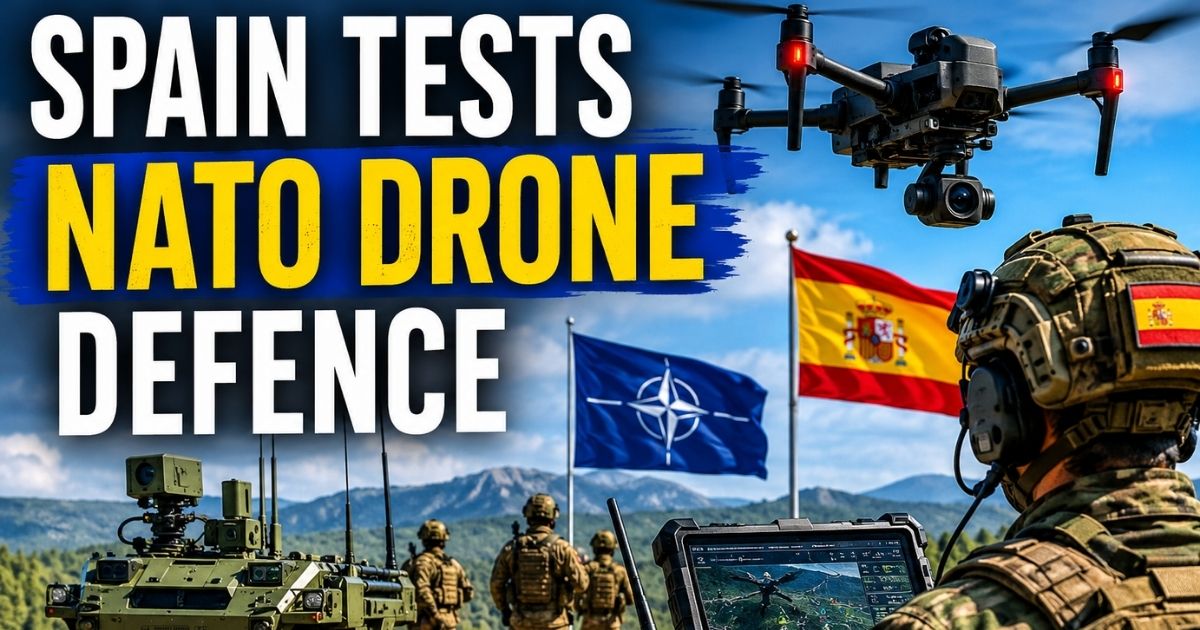
Spain has led a major NATO test of new military technology in Slovakia, using drones, robotic vehicles and anti-drone systems to strengthen the Alliance’s eastern flank near Ukraine.
The exercise took place at the Lešť military training area, around 300 kilometres from the Ukrainian border. Spanish troops tested a highly technological “deterrent strip” designed to detect, monitor and neutralise aerial threats, including hostile drones.
The test reflects NATO’s growing concern over the use of drones in modern warfare, particularly after Russia’s full-scale invasion of Ukraine and repeated drone incursions close to Alliance territory.
What was tested in Slovakia?
The exercise, known as Task Force X Pilot 5, brought together drones, unmanned ground vehicles, loitering munitions, sensors, electronic-warfare systems and anti-drone technology.
The aim was to test how these systems can work together in a realistic military environment, rather than being demonstrated separately in a controlled setting.
Europa Press reported that Spanish soldiers used kamikaze drones, unmanned vehicles and electronic-warfare systems as part of the trial, to reduce the time it takes to bring new technology into NATO armies.
NATO wants some of these systems to move from testing to operational use much faster than traditional defence procurement normally allows.
A robotic buffer before soldiers
One of the central ideas behind the trial is the creation of a robotic buffer zone.
Commander Joaquín Peralta, from the Spanish Army’s Future Force Centre, said the aim is for an enemy’s first contact to be with a machine rather than a manned unit.
In practical terms, that means robots, drones and sensors would operate closer to the potential threat, while soldiers remain further back. The goal is to reduce risk to troops while improving surveillance, response time and battlefield awareness.
This approach reflects lessons from Ukraine, where drones and low-cost unmanned systems have changed how armies detect movement, attack targets and defend positions.
Spain leads NATO force in Slovakia
Spain is the framework nation for NATO’s multinational force in Slovakia, meaning it plays a leading role in organising and commanding the deployment there.
The Spanish-led multinational brigade is based around NATO’s Forward Land Forces, deployed on the eastern flank as part of the Alliance’s deterrence posture after Russia invaded Ukraine.
According to Europa Press, Spain currently leads a permanent contingent in Slovakia of around 1,100 troops, including about 800 Spanish personnel. Slovakia, Slovenia, Portugal, Romania and the Czech Republic also contribute to the formation.
For the wider exercise, Spain also tested its ability to reinforce the mission quickly, scaling up its presence from around 800 troops to nearly 2,400 in 10 days during Strong Lineage 26.
Why NATO is moving faster
Traditional military procurement can take years. NATO is trying to shorten that cycle because drones, sensors and electronic-warfare systems are evolving quickly.
The Task Force X concept is part of NATO’s wider push to use autonomous systems, artificial intelligence and emerging technologies more quickly across different military domains. NATO Allied Command Transformation has described Task Force X as a way to integrate uncrewed systems and new technologies to improve surveillance, threat detection and situational awareness.
The Slovakia test is part of that shift. Rather than waiting for perfect long-term systems, NATO wants to see whether useful commercial and military technology can be tested, improved and adopted in far shorter timeframes.
According to Europa Press, allied sources said one aim of Task Force X Pilot 5 is for NATO to be able to buy and integrate new technologies within 24 months, instead of relying on procurement cycles that can take up to a decade.
Spanish companies get real battlefield feedback
The exercise also gives Spanish defence and technology companies a chance to test systems alongside soldiers in operational conditions.
This matters because a drone, sensor or robotic vehicle may perform well in a demonstration but face very different challenges in a military training area with real terrain, movement, electronic interference and tactical pressure.
Spanish Defence Staff reported earlier this year that the Spanish-led NATO brigade in Slovakia had been working to integrate unmanned aerial systems in a multinational environment, including tactical procedures, interoperability and urban-combat exercises.
The feedback from troops can help companies adjust their equipment quickly, while also helping commanders understand what can realistically be used in future operations.
Defence spending debate continues in Spain
The exercise comes as Spain’s defence spending remains under political scrutiny.
NATO has been urging allies to increase defence investment, while Spain’s government has argued that its planned spending levels are sufficient to meet Alliance commitments. The debate is expected to continue ahead of future NATO meetings, especially as the war in Ukraine keeps European security high on the agenda.
The Slovakia trial gives Spain a visible role in NATO’s technological adaptation, but it also highlights the pressure on European countries to modernise their forces quickly.
A signal to Russia and a test for the future
For NATO, the message of the Slovakia exercise is deterrence. The Alliance wants to show that its eastern flank is not only defended by troops and traditional equipment, but also by rapidly improving systems designed for modern threats.
For Spain, the test is also a demonstration of military leadership, industrial capability and operational readiness far beyond its own borders.
The war in Ukraine has shown how quickly battlefield technology can change. In Slovakia, Spain, and NATO are trying to make sure the Alliance changes quickly enough with it.