 Lorraine Williamson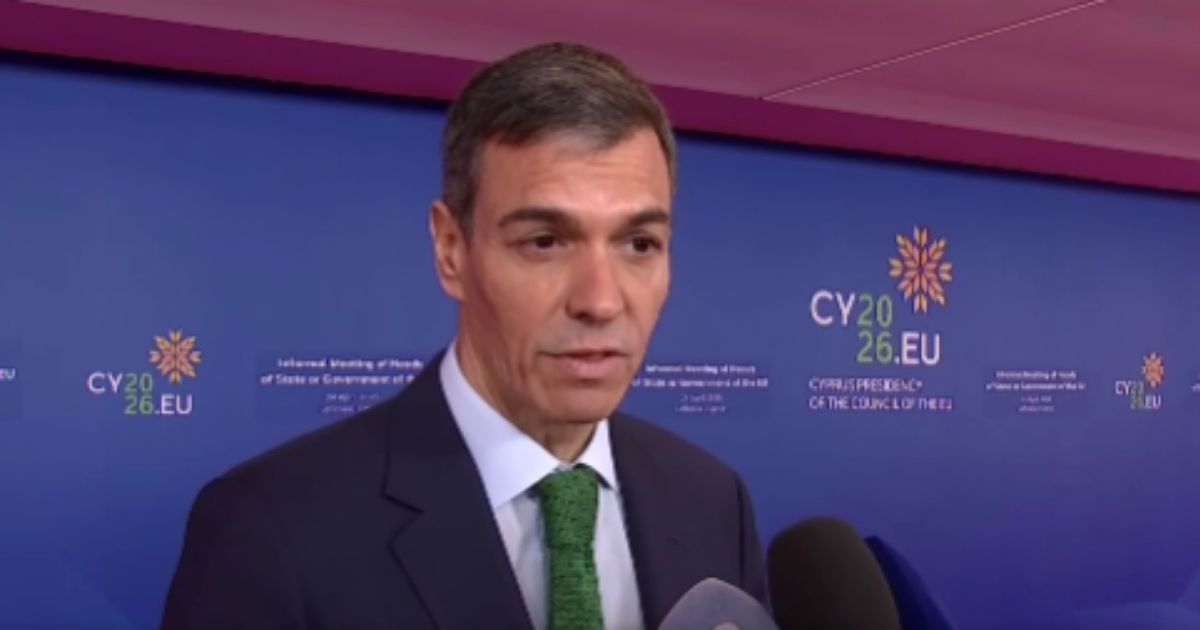
Spain has moved to calm a growing diplomatic storm after an internal Pentagon email reportedly raised the idea of punitive measures against NATO allies, including Spain, over their position on the war with Iran.
The Spain NATO Iran rift has sharpened after Reuters reported that the email discussed possible steps against countries seen in Washington as failing to support US military operations. Among the options mentioned was the possible suspension of Spain from NATO, although there is no indication that this has become official US policy.
Prime Minister Pedro Sánchez responded from Nicosia, where EU leaders are meeting, stressing that Spain does not work on the basis ofleaked emails. He said Madrid bases its decisions on official documents and formal government positions, while insisting Spain remains committed to the Atlantic alliance.
Sánchez says Spain remains a loyal NATO ally
Sánchez sought to lower the temperature around the report, saying Spain’s position was one of “absolute collaboration” with NATO allies, but always within the framework of international law.
That wording matters.
Madrid has been careful to present its stance not as anti-NATO, but as a legal and political objection to the use of Spanish territory or airspace for military action against Iran. Spain has also insisted it continues to meet its responsibilities as an ally.
The prime minister said Spain would defend both the national interest and the obligations it has accepted within NATO. His message was aimed at two audiences: Washington, where frustration with some European allies has grown, and the Spanish public, where military involvement in foreign conflicts remains politically sensitive.
Why Spain is in the spotlight
Spain’s position has become more prominent because of the strategic importance of Rota and Morón, two military facilities in Andalucia used under long-standing defence cooperation agreements with the United States.
In March, Reuters reported that US aircraft left Spain after the Spanish government said its bases could not be used for attacks on Iran. Spain’s foreign minister, José Manuel Albares, said at the time that the bases were under Spanish sovereignty and that their use must comply with existing agreements and the United Nations Charter.
That refusal placed Spain among the European governments most visibly distancing themselves from US military operations linked to Iran.
The leaked Pentagon email, as reported by Reuters, appears to reflect frustration over access, basing, and overflight rights. These are often crucial in US military planning, especially when operations involve the Middle East, North Africa, or the Mediterranean.
Can Spain actually be suspended from NATO?
The North Atlantic Treaty sets out how a country may leave NATO, but it does not provide a clear mechanism for expelling or suspending a member state. Article 13 says a member may cease to be a party one year after giving notice of withdrawal to the US government, which acts as the depositary of the treaty.
That means any talk of “suspending Spain from NATO” would be legally and politically complex.
It may carry symbolic force in Washington, especially as a warning to allies. But it is not the same as an official NATO procedure being activated.
This is why the Spanish government has chosen a cautious response. Sánchez has not treated the email as a formal diplomatic move. Instead, he has drawn a line between internal discussions and official decisions.
A deeper strain in US-Spain relations
The row comes during a period of wider tension between the Trump administration and several European governments over defence, Iran, and the future of NATO.
Spain has often been among the European countries most willing to challenge Washington’s position on foreign policy. Sánchez has taken a critical line on military escalation in the Middle East, while also arguing that Europe must act within international law.
For Spain, this is also a domestic political issue.
Any suggestion that Spanish bases could be used for attacks on Iran would be difficult for the coalition government to defend at home. Sánchez has faced pressure from parties to his left over defence spending, NATO commitments, and Spain’s position on international conflicts.
At the same time, the government does not want to appear isolated from NATO. Spain has repeatedly stressed its support for Ukraine, its participation in allied deployments, and its commitment to European security.
Why this matters beyond Spain
The leaked email does not only concern Madrid.
It points to a broader question inside NATO: how far can the United States expect allies to support military action that has not been agreed collectively by the alliance?
NATO’s Article 5 is based on collective defence after an attack on one member. But the Iran conflict is not being framed by Spain as a NATO defence operation. That distinction is likely to remain central to Madrid’s argument.
The report also raises questions about how the Trump administration may seek to pressure allies that reject US military requests. Reuters reported that other possible measures mentioned included limiting the influence of countries viewed as obstructive.
For Spain, the immediate danger is not expulsion from NATO. It is a further deterioration in trust with Washington.
Madrid tries to keep the dispute contained
For now, Sánchez’s strategy appears clear: avoid escalation, do not validate an internal email as official policy, and repeat Spain’s commitment to NATO within international law.
That may be enough to prevent the issue from becoming a full diplomatic crisis. But the story is unlikely to disappear quickly.
Spain’s role in NATO, the use of US-linked bases in Andalucia, and Madrid’s refusal to support military action against Iran are now firmly back in the international spotlight.
The Spain NATO Iran rift is therefore not simply about one leaked email. It reflects a deeper argument over sovereignty, military cooperation, and how far European allies are willing to follow Washington into conflicts beyond NATO’s formal mandate.