 Lorraine Williamson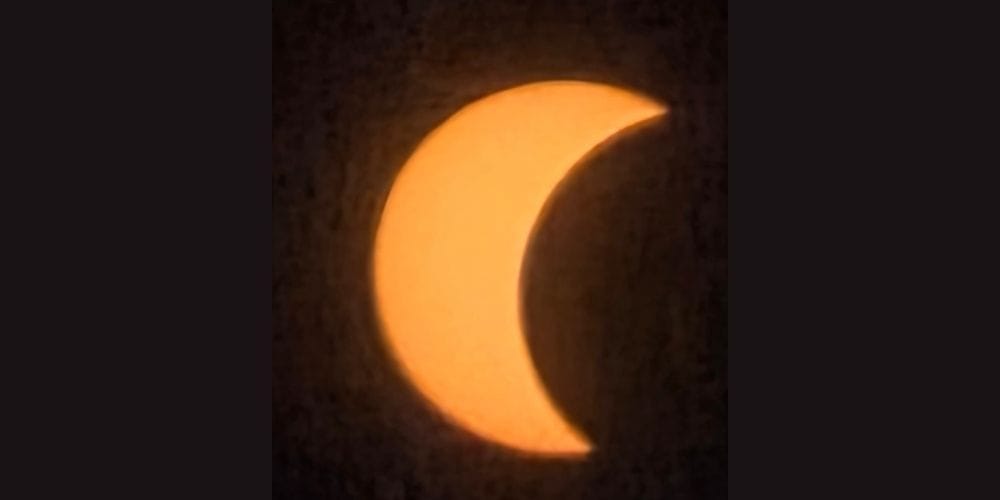
Spain’s long-awaited total solar eclipse passed largely without major incident on Wednesday evening, despite huge crowds, an extraordinary traffic operation and severe wildfire concerns across parts of the country.
Millions of people gathered in cities, villages and designated viewing areas along the path of totality, which crossed northern Spain from west to east before reaching the Mediterranean and the Balearic Islands. The event briefly plunged parts of the country into darkness shortly after 8.30 pm, marking the first total solar eclipse visible from mainland Spain in more than a century.
The eclipse had been months in the planning. Spain mobilised thousands of police officers, Guardia Civil personnel, emergency workers and traffic teams as authorities prepared for unusually large movements of people towards rural viewing locations and areas inside the band of totality.
The DGT had warned that traffic towards the eclipse zone could rise by between 30% and 100%, potentially creating between 400,000 and 1.5 million additional road journeys. Its special operation included traffic controls, temporary access restrictions and additional monitoring of roads leading to popular observation areas.
By late Wednesday evening, however, there was no indication of the widespread road disruption or serious emergency incidents that authorities had feared.
Crowds gather from Galicia to the Balearics
The band of totality crossed Spain from the north-west towards the Mediterranean, passing through areas including Galicia, Asturias, Castilla y León, the Basque Country, La Rioja, Aragón, the Comunitat Valenciana and the Balearic Islands.
Large crowds gathered in towns and countryside locations along the route, while hotels and restaurants in some of the most favourable observation areas reported exceptionally strong demand. AP reported that visitors filled viewing sites and hillside areas in places such as Medinaceli, where eclipse tourism had transformed what would normally have been a quieter August evening.
Around half of Spain lay within the path of totality, while the remainder of the country experienced a partial eclipse. The period of complete darkness lasted less than two minutes in most Spanish locations because the event occurred close to sunset.
The eclipse formed part of an unusual sequence of major solar eclipses visible from Spain, with another total eclipse due in 2027 and an annular eclipse following in 2028.
Cloud spoils the view in some areas
Not everyone enjoyed perfect conditions.
AEMET had warned throughout the day that low cloud could affect northern Galicia and parts of the Cantabrian coast, while other areas faced varying amounts of higher cloud or reduced visibility.
That meant the experience varied sharply depending on location. Some observers enjoyed clear views of totality, while others saw the Sun disappear behind cloud at the crucial moment.
The low position of the Sun also made an unobstructed western horizon essential. Even relatively minor cloud or haze close to the horizon was enough to interfere with viewing in some places.
Here in Marbella, the eclipse was partial rather than total, but it still drew people down to the beach to watch the Sun disappear behind the Moon. InSpain.news watched from the shoreline, where finding the specialist eclipse glasses proved almost as difficult as finding the perfect viewing spot — local supplies appeared to have sold out before the event.
However, another beachgoer offered to share a pair. The difference was extraordinary. To the naked eye, with all the necessary precautions against looking directly at the Sun, there was little sense of the shape of the eclipse itself. Through the certified glasses, however, the bright disc of the Sun was transformed, with the Moon’s dark silhouette clearly cutting across it. It was a simple act of kindness between strangers that made one of Spain’s most anticipated evenings considerably more memorable.
Heavy traffic builds after totality in parts of Spain
The eclipse passed without widespread national disruption, but there were significant localised traffic problems in some of the busiest viewing areas. In Catalonia, thousands of people travelled south towards Tarragona and the Ebro area, while Rodalies trains from Barcelona were heavily crowded as spectators tried to reach the path of totality.
Road traffic also intensified after the eclipse ended. The AP-7 recorded queues of up to 12 kilometres between El Vendrell and Torredembarra, while other roads in the Tarragona area experienced delays as large numbers of visitors began their return journeys at roughly the same time. Cadena SER reported the post-eclipse congestion and crowded rail services in Catalonia.
The disruption reflected one of the DGT’s main concerns before the event: that the greatest pressure could come after totality, when spectators left viewing sites simultaneously. The traffic authority had advised drivers to stagger their return journeys and avoid setting off immediately after the eclipse where possible.
Peñíscola vehicle fire among the most serious incidents
One of the most notable incidents occurred in Peñíscola, Castellón, close to an official eclipse observation area.
A fire that began in a parked vehicle spread into nearby vegetation and ultimately affected 34 vehicles, according to reports from emergency authorities. Three aerial resources were deployed as firefighters worked to stop the flames spreading further and protect nearby homes.
Elsewhere in the Comunitat Valenciana, authorities dealt with a stabilised wildfire near Xàtiva, two cases of people fainting and a minor road accident on the A-23.
Officials also reported attempts to enter natural parks that had been closed because of wildfire risk, improperly parked vehicles and one case involving the use of a chainsaw in the Serra d’Irta despite restrictions. Overall, however, regional authorities said the eclipse passed without serious incidents.
The Generalitat had activated emergency coordination centres in nine municipalities hosting official observation sites and maintained additional emergency resources throughout the evening.
Traffic operation continues after totality
Although the eclipse itself has ended, the DGT operation continues while spectators make their way home.
Traffic authorities had warned in advance that the greatest pressure on the road network could come after totality, when large numbers of people leave viewing sites at approximately the same time.
Drivers were encouraged to stagger their return journeys rather than immediately joining the road network after the eclipse, particularly from rural areas served mainly by secondary roads.
The DGT also repeatedly warned motorists not to stop on hard shoulders or carriageways to watch the eclipse, not to wear eclipse glasses while driving and not to take photographs or videos from behind the wheel.
As of late Wednesday evening, no national balance of eclipse-related traffic incidents had yet been published by the DGT.
A rare evening across Spain
For many people, the most striking moment came as daylight rapidly faded during totality and the solar corona became briefly visible around the darkened Moon.
The event occurred at sunset, creating unusually dramatic viewing conditions across western-facing landscapes and coastal areas.
It was also a major test for Spain’s emergency planning. Authorities had been preparing not only for traffic congestion but also for the risk of wildfires, overcrowding, heat-related illness and people attempting to watch from unsafe roadside locations.
More than 120 viewing areas reportedly faced restrictions because of environmental and wildfire concerns, while additional police and emergency personnel were deployed across the country.
Despite those concerns, the first indications on Wednesday night were that the event had passed with comparatively few serious incidents.
A fuller picture will emerge once the DGT, Interior Ministry and regional emergency services publish their final assessments of traffic, attendance and emergency interventions.
For now, however, Spain’s first total solar eclipse in more than a century appears to have delivered the spectacle millions had waited for — without the widespread disruption authorities had prepared for.