 Lorraine Williamson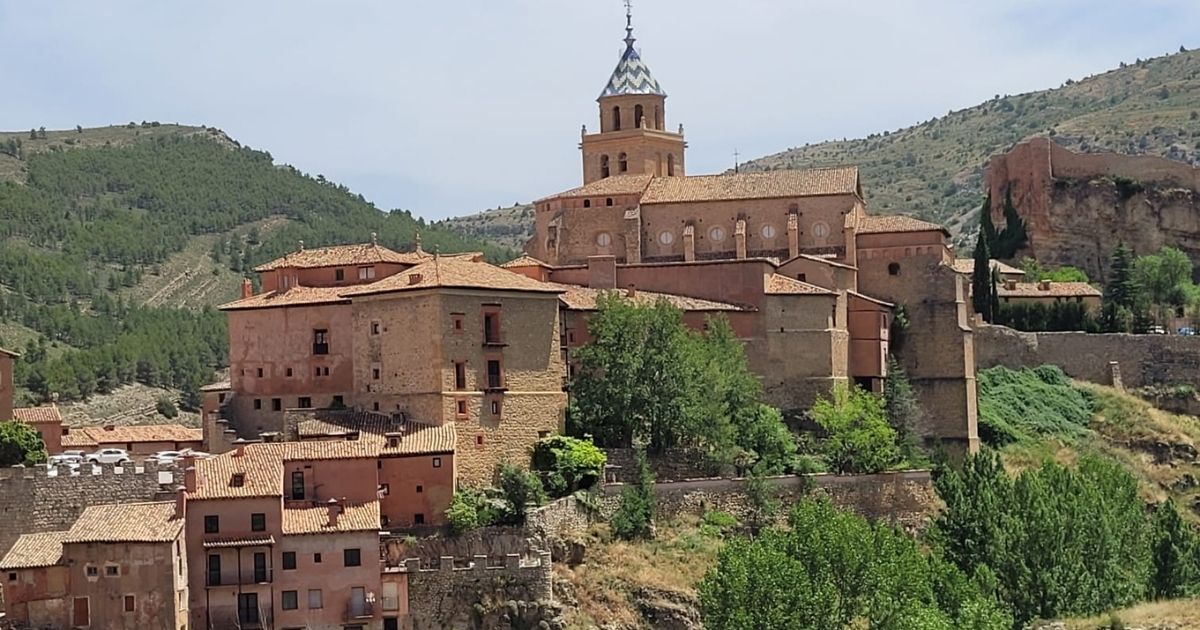
Some places in Spain seem designed to be stumbled upon slowly. Albarracín, tucked into the hills of Teruel in Aragón, is one of those rare towns that seem to belong to another age.
There are no beaches here. No grand city boulevards. No rush to tick off the obvious sights. Instead, this small medieval town rises above a bend in the Guadalaviar River, a cluster of reddish-coloured houses, wooden balconies, narrow lanes, and defensive walls that look almost unreal in the late afternoon light.
For travellers who think they already know Spain, Albarracín is a reminder that some of the country’s most memorable places sit far from the coast.
Why Albarracín is worth the detour
Albarracín is best suited to travellers who want a slower, more atmospheric side of Spain. It is ideal for a weekend escape, a scenic inland road trip, or a stop between Teruel and the Sierra de Albarracín.
The town is known for its terracotta-coloured houses, medieval walls, steep cobbled streets and dramatic red-rock landscapes nearby. It is not a beach destination or a fast city break. Its appeal lies in walking, views, history and the feeling of finding a place that still moves at its own pace.
Why Albarracín feels so different
 Albarracín is often described as one of Spain’s most beautiful villages, but that phrase barely explains its pull. Its character comes from colour, texture and height.
The houses are built in warm shades of rust, rose and terracotta. Many seem to lean into the hillside rather than stand on it. Above the old town, the walls climb over the ridge, giving the whole place the look of a fortified settlement still watching the valley below.
Spain’s official tourism portal highlights Albarracín as a place to wander, while Turismo de Aragón describes a walk through its steep streets, walls and monuments as a journey back to the Middle Ages.
That is not just marketing language. It is the feeling you get when the modern world briefly drops away.
A town made for wandering, not rushing
 Albarracín rewards visitors who do very little at first. The best introduction is not a checklist, but a slow walk.
Start in the old quarter and let the streets pull you upwards. The lanes are narrow, irregular and often steep. Doorways open onto stone steps. Balconies appear overhead. Small windows, wrought iron details and timber-framed façades give the town a lived-in beauty that feels carefully preserved without becoming artificial.
The Plaza Mayor is a natural pause point, with views across the rooftops and surrounding hills. From there, visitors can continue towards the cathedral, the castle area and the remains of the town walls.
The walk up to the walls is worth the effort. From above, Albarracín becomes easier to understand: a compact medieval town shaped by defence, geography and centuries of adaptation.
A layered history in the hills of Teruel
Albarracín’s story is tied to its frontier position and its strategic setting. Its fortified appearance reflects a long history of Muslim, medieval Christian and noble influence in this part of inland Spain.
The old town still carries that layered past. This is not a place where history is locked inside one monument. It is spread through the streets, the walls, the castle remains, the cathedral and the shape of the town itself.
The official Albarracín website presents the town as one of Spain’s most beautiful historic destinations, with information on heritage, guided visits, culture and local life.
For many visitors, though, the real appeal is simpler. Albarracín still feels coherent. It has not lost its identity to hurried tourism.
Beyond the village: red rocks, pine forests and ancient art
Albarracín is not only about the town. Just outside it lies one of Aragón’s most striking landscapes: the Pinares de Rodeno.
This protected area is known for its red sandstone formations, pine forests and prehistoric rock art. The contrast between green trees and reddish stone echoes the colours of the village itself, creating a landscape that feels almost painted.
Turismo de Aragón points visitors towards the Protected Landscape of the Pinares de Rodeno, where rock shelters preserve examples of Levantine rock art. The wider rock art of the Mediterranean Basin on the Iberian Peninsula is recognised by UNESCO as a World Heritage Site, described as the largest group of rock-art sites in Europe.
It gives a visit to Albarracín a deeper dimension. The town may feel medieval, but the surrounding landscape tells a much older human story.
Why inland Spain is having a moment
Albarracín also fits into a wider shift in Spanish travel. More visitors are looking beyond the busiest coastal resorts and better-known city breaks, especially in spring, autumn and cooler inland periods.
That does not mean these places are empty. Albarracín is well known among Spanish travellers, photographers, hikers and lovers of historic villages. However, for many international visitors, Teruel remains one of Spain’s least explored provinces.
That relative quiet is part of the appeal.
Inland destinations such as Albarracín offer a different rhythm. They invite longer lunches, slower walks, scenic drives and overnight stays rather than rushed day trips. They also spread tourism into areas where local businesses, guesthouses, guides and restaurants depend on visitors staying a little longer.
How to visit Albarracín
Albarracín is in the province of Teruel, in Aragón. The nearest city is Teruel, around 30 to 40 minutes away by car, making the town an easy addition to a route through inland eastern Spain.
A car is the simplest option, especially for visitors who want to combine the village with the Pinares de Rodeno or other villages in the Sierra de Albarracín.
Wear comfortable shoes. The old town is steep and cobbled in parts, and the climb to the walls is not a flip-flop walk. Summer days can also be hot, while winters in Teruel can be cold, so spring and autumn are especially attractive.
The Sierra de Albarracín tourist office is listed by Spain’s tourism portal and can provide local visitor information.
What not to miss
The old town is the main experience. Give yourself time to walk without a strict route.
The town walls are the classic viewpoint and one of the best ways to appreciate Albarracín’s setting. The cathedral and historic centre add cultural depth, while the Plaza Mayor is ideal for a slower pause.
Outside the town, the Pinares de Rodeno make an excellent half-day extension for walkers, photographers and anyone interested in prehistoric art.
Albarracín also works well as an overnight stop. Staying after the day visitors leave gives the town a different atmosphere, particularly at dusk when the red tones deepen, and the walls begin to stand out against the hills.


A hidden Spain worth slowing down for
Albarracín is not hidden because nobody knows it. Spaniards have admired it for years. It is hidden in another sense: tucked away from the version of Spain many visitors first imagine.
There are no palm-lined promenades here, and that is precisely the point.
This is Spain in stone, timber, red earth and silence. A town where the streets climb, the walls watch, and the landscape outside carries stories far older than the village itself.
For anyone planning a slower journey through inland Spain, Albarracín deserves more than a passing glance.
Discover Extremadura – Spain beyond the crowds