 Lorraine Williamson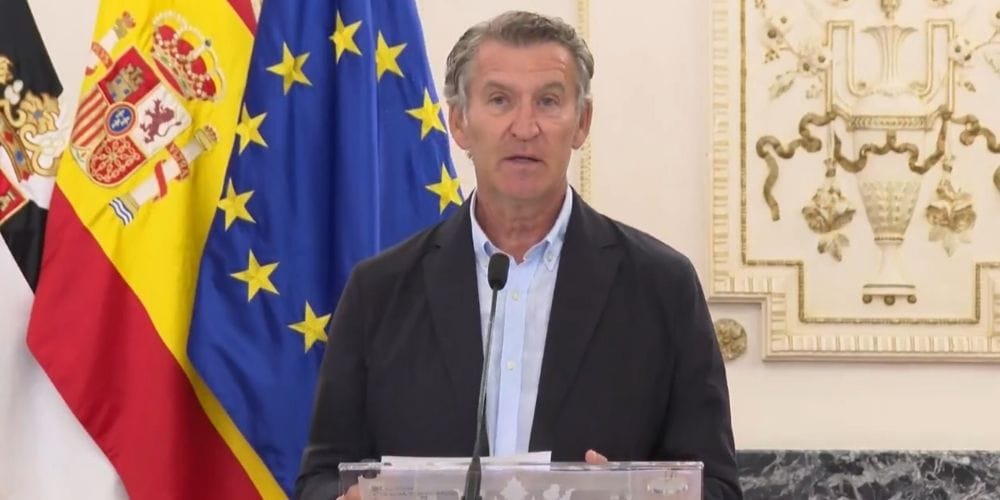
Spain is preparing to declare the situation in Ceuta as one of “interest for national security”, marking a significant escalation in Madrid’s response to the migration crisis that began at the end of July. Prime Minister Pedro Sánchez has convened the National Security Council for Tuesday morning, while Spain has now formally asked the European Commission to activate emergency financial assistance for Ceuta.
The move towards a national-security framework comes almost four weeks after the mass crossings from Morocco placed extraordinary pressure on the autonomous city’s accommodation, health, security and social services.
Under the government’s plans, a single command structure will coordinate the different ministries and administrations involved in managing the consequences of the crisis.
Territorial Policy minister Ángel Víctor Torres is expected to take responsibility for coordinating the central government’s response.
The formal steps are due to be taken on Tuesday, with Sánchez convening the National Security Council at 8.30 am, ahead of the weekly Council of Ministers meeting.
What does the national-security designation mean?
Describing the situation as one of interest for national security does not mean declaring a state of emergency or suspending the normal powers of Ceuta’s autonomous administration.
Spain’s national-security framework provides mechanisms for coordinating different parts of government when a crisis is considered to affect strategic national interests and requires action across several administrations.
The decision therefore represents a significant change in the organisation of Madrid’s response, moving towards stronger central coordination rather than individual ministries dealing separately with migration, security, health, minors and other consequences of the mass arrivals.
The crisis has also generated political disagreement. Opposition leader Alberto Núñez Feijóo criticised Sánchez on Monday for waiting almost a month to convene the National Security Council following the crossings.
Spain formally asks Brussels for emergency funding
A second important development emerged on Monday evening when the European Commission confirmed that it had received Spain’s formal request for emergency financial assistance to help manage the situation in Ceuta.
The application comes 25 days after more than 80,000 people crossed into Ceuta from Morocco, according to the latest figures cited in the request’s confirmation.
Brussels is now assessing the Spanish government’s application. The amount of emergency assistance being sought has not yet been made public.
The formal application is significant because European Commission officials had previously said contacts with Madrid over possible financial support remained informal. Monday’s request therefore moves the process into a new stage.
The EU has already publicly backed Spain following the July crossings. At an extraordinary meeting of European interior ministers earlier this month, member states expressed solidarity with Spain and discussed the need for stronger protection of the EU’s external borders.
Almost four weeks of pressure on Ceuta
The scale and speed of the arrivals have created an exceptional logistical challenge for a city of around 80,000 inhabitants.
Emergency accommodation has been established, thousands of people have had to be registered and identified, and authorities have faced particular challenges surrounding unaccompanied minors, healthcare and the return of migrants who do not have a legal right to remain in Spain.
The crisis has also placed Spain’s relationship with Morocco under renewed scrutiny. Madrid and Rabat have been cooperating on border control and the possible return of migrants, while the Spanish government has repeatedly stressed that Ceuta is part of Spain and the European Union.
Tuesday will now mark another important stage in the response.
The National Security Council is expected to assess the situation first, followed by the Council of Ministers. Further details should then emerge about the powers and priorities of the single command, while Brussels considers Spain’s request for emergency European funding.