 Lorraine Williamson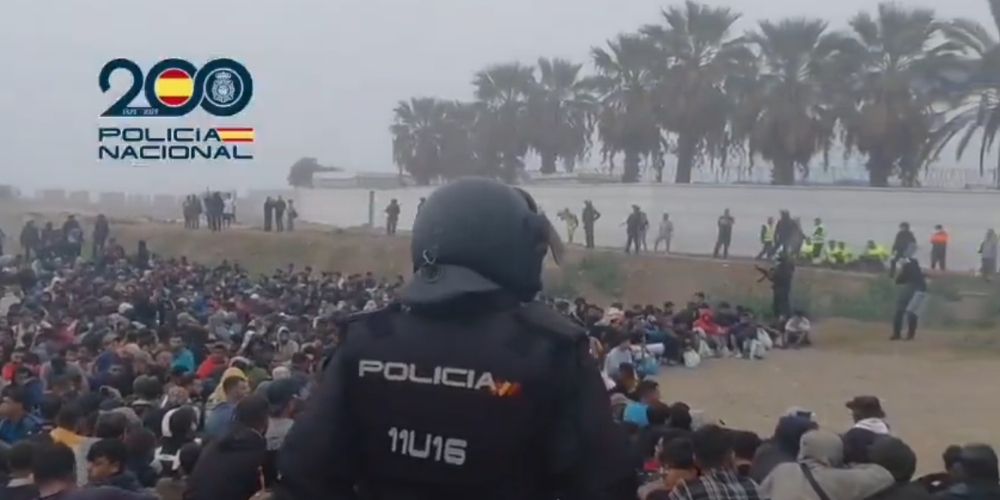
Ceuta is preparing for a historic visit by King Felipe VI and Queen Letizia while migrants, including families and children, continue to face uncertainty over accommodation and further camp clearances. More than 11,000 people have returned to Morocco or been expelled since August, but many others remain outside official reception facilities.
The royal couple is due to arrive in Ceuta on Tuesday 13 October, the first visit to the autonomous city by a reigning Spanish monarch since 2007. Their programme includes meetings with local representatives, a school visit and a tribute to those who died attempting to reach Spanish territory from Morocco during the mass border crossings in July.
However, preparations for the visit are taking place against the backdrop of an unresolved humanitarian situation. Although several large migrant settlements have been cleared and thousands of people have left Ceuta, others have moved into residential neighbourhoods, abandoned buildings and surrounding hillsides, where their circumstances remain difficult to assess.
More than 11,000 returns recorded since August
The Spanish government confirmed on 8 October that 11,026 people had returned to Morocco or been expelled from Ceuta since 10 August. Of those, 10,513 were recorded as voluntary returns and 513 as expulsions, while 2,783 departures took place during the nine days beginning on 29 September.
Minister Ángel Víctor Torres said the latest figures reflected progress in managing the crisis, particularly following the clearance of the El Trampolín beach settlement earlier this month. However, he acknowledged that considerable work remained, with the authorities continuing to expand accommodation and process the cases of people still in the city.
The government has made 7,377 reception places available for adults, an increase of 5,400 since Torres was appointed to oversee the response. Nevertheless, the availability of accommodation does not mean that everyone has entered the official reception system, and some migrants remain reluctant to approach the authorities because of fears about their future.
Another migrant settlement faces clearance
Attention has now turned to the former Guano factory, one of Ceuta’s largest remaining informal settlements. According to reporting published on Saturday, approximately 1,500 people have been staying at the site, although the number is changing as residents leave amid fears of an imminent clearance.
Government delegate David de la Encina has confirmed that the settlement will be cleared, but no official date has been announced. Some migrants have already moved towards the El Príncipe and Los Rosales neighbourhoods or the Tarajal industrial area, while others have sought shelter in the hills surrounding the city.
The Government Delegation has been working with neighbourhood representatives to identify where displaced migrants are staying. Officials are particularly concerned about children and teenagers living outside formal accommodation, with efforts focused on locating them, assessing their circumstances and arranging appropriate protection.
Children and families remain vulnerable
Among those affected is a young girl named Amira, whose situation was highlighted by Cadena SER on Saturday. She has reportedly spent more than 70 nights sleeping outdoors with her father, who fears that seeking official assistance could result in their separation.
Her experience reflects the uncertainty facing families who have not yet secured accommodation or whose immigration circumstances remain unresolved. While reception facilities have expanded, concerns persist about the safety and welfare of those still living in informal settlements or sleeping in public spaces.
Official figures show that 2,827 unaccompanied minors remain within Ceuta’s protection system. The authorities have arranged 86 family reunifications on the Spanish mainland and transferred another 173 minors to other autonomous communities, while further assessments and age-determination procedures continue.
The continuing presence of children outside formal accommodation presents particular challenges for social services and humanitarian organisations. Beyond immediate shelter, questions remain about access to education, healthcare and longer-term arrangements for those who cannot safely return to their countries of origin.
Royal visit to honour those who died at sea
King Felipe VI and Queen Letizia will arrive in Ceuta on Tuesday before travelling to Melilla the following day. Their official programme includes meetings with representatives of local institutions and civil society, a visit to the Vicente Aleixandre public school and an interfaith ceremony at the Sidi Embarek cemetery.
The ceremony will commemorate those who died attempting to enter Ceuta during the mass crossings of 30 and 31 July. At least 88 deaths have been reported, although humanitarian organisations have suggested that the number could be considerably higher.
The visit carries historical significance for Ceuta, where the last visit by a reigning Spanish monarch took place in 2007, when King Juan Carlos I travelled to the city. Felipe VI and Letizia are also expected to spend the night in Ceuta before continuing their programme in Melilla.
For the migrants still living outdoors, however, the immediate concerns remain accommodation, safety and uncertainty about their future. With another settlement facing clearance, attention will remain on whether the authorities can provide appropriate support to those displaced, both before and after the royal visit.