 Lorraine Williamson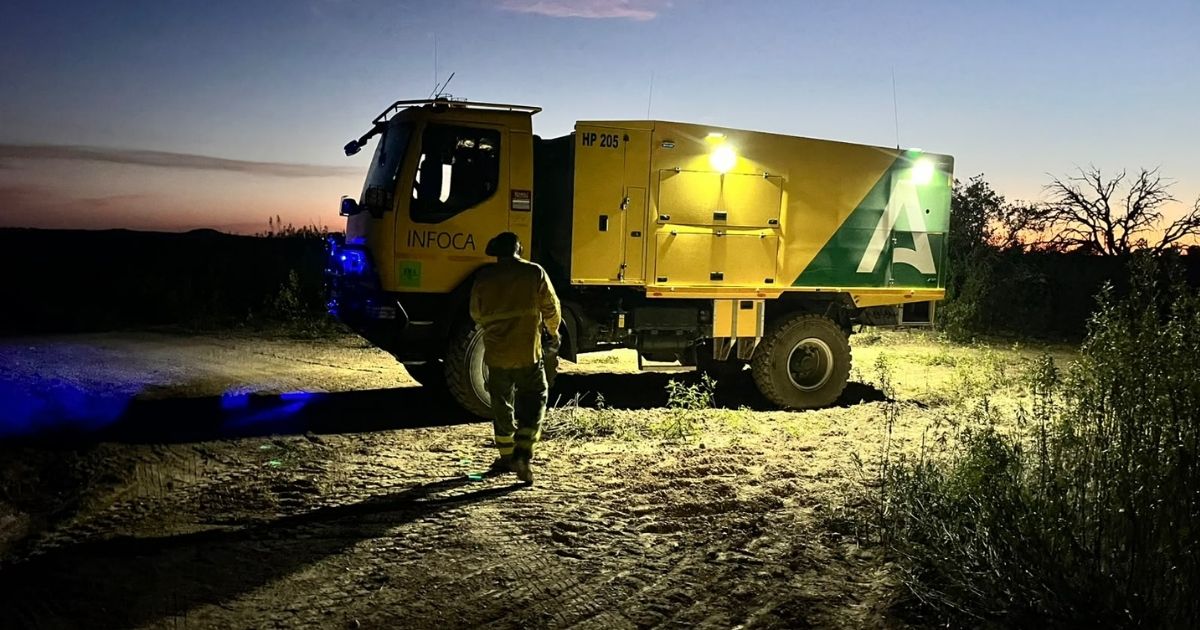
The major wildfire in Huelva has been stabilised after affecting around 5,000 hectares and forcing hundreds of people from their homes during one of Andalucia’s most serious fire emergencies so far this season.
The fire broke out on Monday in the Los Turbios area of Villanueva de los Castillejos. It spread across land, affecting several municipalities, including San Bartolomé de la Torre and Gibraleón. Strong winds, dry vegetation and changing conditions helped the flames advance quickly during the most dangerous phase.
What stabilised means
A stabilised fire is not the same as an extinguished fire. It means the flames are no longer spreading freely, and crews have been able to hold the perimeter, although firefighters must still monitor the area and prevent reactivations.
The improvement followed better weather conditions and intensive work by emergency teams. Spain’s Department of National Security said the fire had been declared stabilised and that all residents evacuated from the affected area had been allowed to return home.
Evacuees return after emergency level drops
Hundreds of residents were evacuated or moved preventively while the fire threatened rural homes, estates and residential areas around Villanueva de los Castillejos, San Bartolomé de la Torre and Gibraleón.
Earlier reports said 378 people had been evacuated during the emergency. By Thursday, the remaining evacuees had been authorised to return home after the situation improved.
Andalucia also lowered the emergency level after the fire was stabilised. The response had previously been raised to operational level 2 because of the fire’s complexity and the need for support from Spain’s Military Emergencies Unit.
Infoca keeps crews on the ground
Although the situation has improved, the operation is not over. Infoca is keeping around 70 ground professionals in the area after the emergency level was lowered, with teams continuing surveillance, cooling work and checks for possible flare-ups.
This phase matters because large wildfires can reactivate even after the main front has stopped advancing. Roots, tree stumps, and pockets of vegetation may continue to burn below the surface, especially if the wind picks up again.
Firefighters will continue working until the fire is controlled and, later, fully extinguished.
UME support during the most serious phase
The Unidad Militar de Emergencias joined the operation after Andalucia requested national support during the most serious stage of the fire. The deployment included 113 personnel and 50 vehicles, adding military emergency capacity to the regional firefighting response.
At the height of the operation, more than 400 personnel from different administrations were involved, supported by vehicles, heavy machinery and aerial resources during daylight hours.
The work focused on holding the perimeter, preventing new flare-ups and protecting homes, roads, rural properties and natural areas.
Roads improve, but caution remains
The N-431 and A-495, both affected during the emergency, reopened after earlier disruption linked to the fire and smoke.
However, anyone travelling through affected rural areas should still take care. Emergency vehicles may continue operating nearby, and burned landscapes can remain unstable after flames have stopped advancing.
The Zafra-Huelva railway line was also affected during the emergency because of problems linked to the electricity supply. Passengers should check rail updates before travelling until normal service is fully confirmed.
Damage assessment begins
The fire has left a wide scar across part of western Huelva province. Local authorities are expected to assess damage to rural land, farms, tracks, infrastructure and natural spaces over the coming days.
The affected municipalities may seek to be declared seriously affected areas, a status often described informally as a disaster-zone declaration. That can help open the door to support measures after major emergencies. The full environmental and economic impact will not be clear until emergency teams can safely complete inspections across the burned area.
Fire risk remains real across Andalucia
The stabilisation of the Huelva fire brings relief, but it does not mean the wider risk has passed.
On Thursday, EMA Infoca published its forest fire risk index for Andalucia and warned that temperatures were above 30C across most of the region, except in parts of Málaga province. The agency urged the public to take maximum precautions and avoid risky behaviour.
The risk map showed mostly low-to-moderate conditions across much of Andalucia, but with pockets of higher risk, including parts of western Andalucia and the south-east. Those conditions can change quickly when heat, wind and dry vegetation combine.
The warning is a reminder that the region is now in the high-risk fire season. One major fire may have been stabilised, but emergency services remain on alert.
Especially at this time of the year, avoid lighting fires or using machinery that can create sparks, dispose of cigarettes safely, respect rural restrictions and report any smoke or flames immediately to emergency services.
The Huelva wildfire has shown how fast a rural fire can escalate. Now the priority is to keep the affected area safe, support the communities that have been disrupted and prevent the next emergency before it starts.