 Lorraine Williamson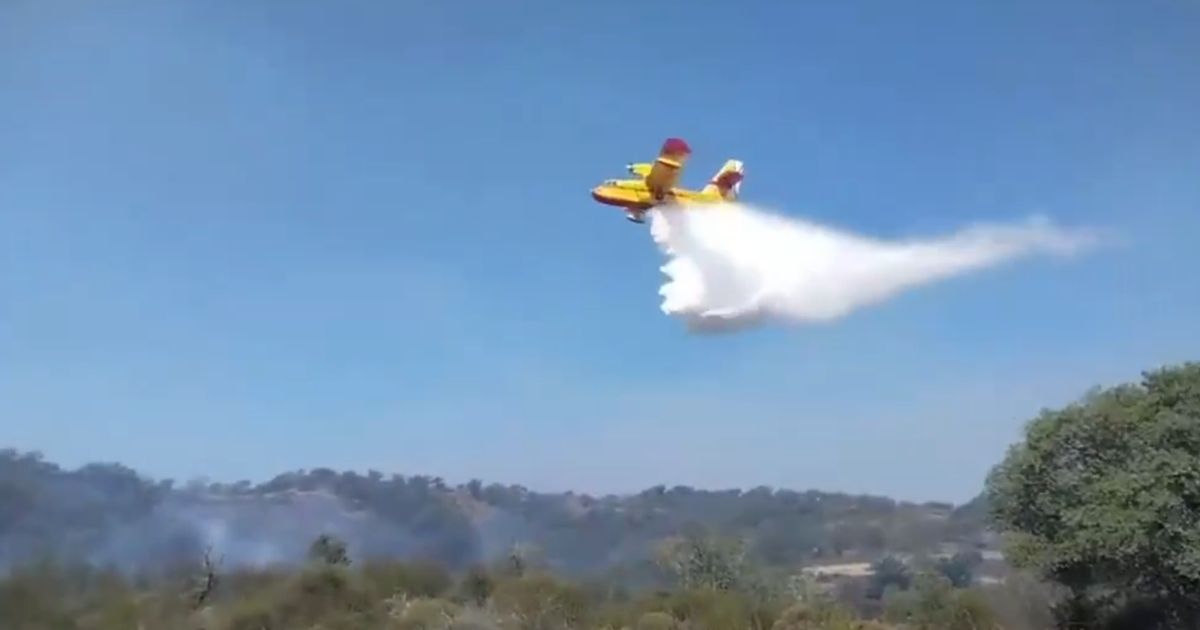
The major wildfire burning in Huelva remains active this Wednesday evening, with Spain’s Military Emergencies Unit now supporting the response and emergency crews using a short weather window to try to contain one of Andalucia’s most serious early-summer fires
The fire began on Monday in the Los Turbios area of Villanueva de los Castillejos and has affected several municipalities, including San Bartolomé de la Torre and Gibraleón. It has already burned more than 3,600 hectares, according to reports citing emergency sources.
Emergency level raised as UME joins the operation
Andalucia raised the forest fire emergency plan to operational level 2 late on Tuesday because of the fire’s complex behaviour and worsening conditions. The regional government requested support from the Unidad Militar de Emergencias, which deployed 113 personnel and 50 vehicles to the area.
The level 2 declaration does not mean the fire is out of control everywhere, but it does show that the emergency has grown beyond a standard regional firefighting response. It allows more resources to be coordinated when homes, roads, infrastructure or public safety may be at risk.
More than 400 personnel and 28 aircraft involved
Following a coordination meeting at the Advanced Command Post, Antonio Sanz, Andalucia’s regional minister for the Presidency, Health and Emergencies, said authorities were maintaining a message of “prudence and responsibility”. Source: Antonio Sanz on X, reposted by EMA Infoca.
Sanz said 411 personnel from several administrations were working on the fire, supported by 28 aerial resources during daylight hours. He also said the fire perimeter now covers more than 5,000 hectares. That figure refers to the perimeter of the fire, not necessarily the total area completely burned.
He said Wednesday’s wind was less intense than on Tuesday and that forecasts were holding, giving crews “a new window of opportunity” before an expected change at around 8.00 pm. Emergency teams remain highly alert because the fire is still being described as particularly complex.
Fire crews focus on the most difficult areas
The main concern has been the left flank of the fire, where there is still a large amount of vegetation available to burn. Crews have also been working near the head of the fire, close to Gibraleón, and at the tail, near the area where it began.
Authorities are trying to prevent reactivations caused by wind changes. These flare-ups can make smoke columns more visible and can force crews to redirect resources quickly, especially in areas with dry vegetation and difficult access.
Hundreds evacuated, but many have returned
A total of 378 people have been evacuated or moved preventively since the fire began. By Wednesday, many had been allowed to return home after some of the most immediate risks were reduced, although more than 100 people were still unable to go back.
The evacuations have affected rural homes, estates and residential areas around San Bartolomé de la Torre, Villanueva de los Castillejos and the Gibraleón area. A further 26 people were also preventively evacuated from the Venta de los Cazadores urbanisation after the fire developed near Gibraleón.
Road and rail disruption continues
The N-431 was closed in both directions between the Cazadores junction and the entrance to Gibraleón, around the river bridge area, from kilometre 90.5 to 93, according to the update shared by Antonio Sanz. Source: Antonio Sanz on X, reposted by EMA Infoca.
Spanish reports later said the N-431 and A-495 had reopened after earlier disruption caused by the fire and smoke. However, the Zafra-Huelva railway line remains interrupted because of the emergency.
Drivers in the affected area should still check official traffic updates before travelling and avoid roads near the fire zone unless the journey is essential. Emergency services have repeatedly asked the public not to approach the area, as this can obstruct firefighting vehicles and put more people at risk.
Local towns assess the damage
The municipalities affected by the wildfire are already assessing the possible long-term impact. Reports say the mayors of Gibraleón and San Bartolomé de la Torre are expected to ask for their areas to be declared seriously affected zones, a status often referred to informally as a disaster zone.
That status can help open the door to support measures after major emergencies, although the full scale of the damage will not be clear until the fire is stabilised and teams can safely assess the land.
A warning at the start of fire season
The Huelva wildfire has become one of Andalucia’s most serious fire emergencies so far this season, coming as southern Spain faces the familiar combination of dry vegetation, heat and changing winds.
Residents in affected areas must follow official instructions, avoid unnecessary travel near the fire zone, keep windows closed if smoke is present and allow emergency teams to work.
Further updates are expected from Plan Infoca, 112 Andalucía and regional emergency authorities as conditions develop.