 Lorraine Williamson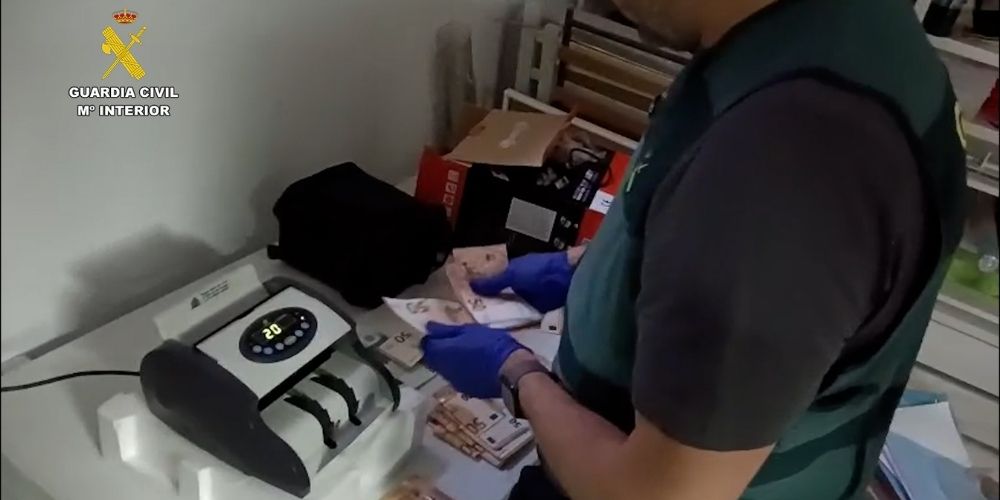
The Guardia Civil has arrested four members of the same family and placed four others under investigation over an alleged pyramid-style investment scam in Valencia that affected at least 81 victims and involved around €1 million.
The group was based in Silla and El Perellonet, in the province of Valencia, and allegedly offered false investment services to around 700 clients through a company created for that purpose. The Guardia Civil investigation, named “Trettifire”, concluded that the suspects used a fake website, manipulated returns and personal trust networks to make the scheme appear genuine.
How the alleged scam worked
According to the Guardia Civil, the suspects presented themselves as offering investment services and showed clients supposed returns through a website they controlled. Once initial investors had handed over money, the group allegedly used funds from newer investors to simulate profits for earlier ones, creating the structure of a pyramid or Ponzi-style scheme.
Investigators say there was no real economic activity behind the returns being shown to clients. Instead, the money was redistributed to make it look as though investments were producing gains, while fresh contributions from new victims helped keep the appearance of success going.
Trust, social circles and charity events
The case is a reminder that investment fraud does not always look anonymous or obviously suspicious. The Guardia Civil says the group allegedly used abuse of trust, family and friendship circles, people with public relevance and participation in charity events to build a reliable image and attract more victims.
That detail is important because many victims of financial scams are not caught by a badly written email or a strange message from abroad. They are often approached through someone they know, someone who appears successful, or a group where other people seem to be making money.
WhatsApp warning in Spain: how Ghostpairing lets scammers read your messages
Luxury spending and assets blocked
The Guardia Civil says the money taken from victims was used to maintain a high standard of living, including leisure activities, luxury products and repeated cash withdrawals. Investigators say the main suspect withdrew around €343,000 in cash and spent up to €149,000 on technology platforms and services.
During searches at the suspects’ homes, officers seized around €26,000 in cash, a high-end vehicle, valuable computer equipment and luxury handbags, with the seized goods valued at €257,429. The Guardia Civil also blocked €235,000 in bank accounts, properties valued at €1.275 million, eleven vehicles, nine properties, luxury watches and computer material.
84 alleged offences
The four people arrested are two women aged 35 and 38, and two men aged 30 and 46. The Guardia Civil says they are accused of a total of 84 offences: 81 counts of fraud, one of document falsification, one of money laundering and one of belonging to a criminal organisation.
Four other people are also under investigation: two women aged 68 and 71, and two men aged 70 and 73. The case has been handled by the Economic Crimes Team of the Guardia Civil Command in Valencia, with proceedings sent to the Civil and Instruction Section of Valencia Plaza Court number 1.
Warning signs for investors
Spain’s financial regulator, the CNMV, warns people to check that any investment company is authorised before handing over money. It also warns against common red flags such as unexpected calls or messages, pressure to invest quickly, personal affinity, entry bonuses, pyramid schemes that encourage clients to recruit others, and promises of high returns without risk.
The CNMV also reminds investors not to be fooled by sophisticated websites, social media appearances or the apparent confidence of other people online. It advises people not to invest in products they do not understand and to report suspicious incidents to the CNMV, the police, the Guardia Civil or the courts.
For anyone approached with an investment opportunity in Spain, the safest first step is to pause. Check whether the company is properly registered, ask for written information, avoid pressure to act immediately, and be especially cautious if the offer depends on bringing in more investors or promises returns that seem too good to be true.
This case remains subject to judicial proceedings.