 Lorraine Williamson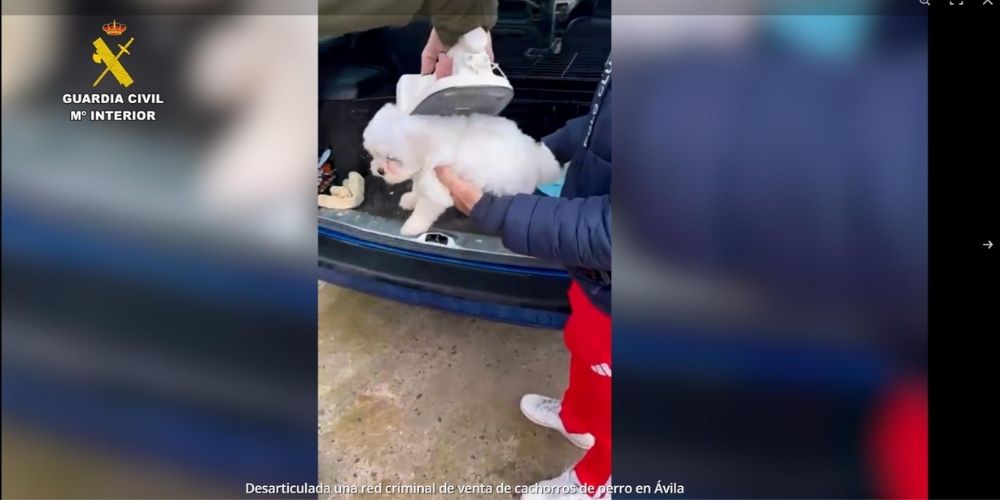
The Guardia Civil has dismantled an alleged illegal puppy sales network in Spain after identifying 636 possible victims across the country. The operation focused on a group based in the La Moraña area of Ávila, but investigators say the puppies were sold and distributed nationally through websites and social media.
Nine people are being investigated as alleged members of a group involved in the irregular breeding, purchase and sale of puppies. Among them are three veterinarians whose alleged role is now part of the investigation. The case, known as Operation Bibiache, was led by SEPRONA, the Guardia Civil’s nature protection unit in Ávila.
How did the alleged network operate?
According to the Guardia Civil, the group bought and sold dogs without complying with animal welfare and administrative rules. The puppies allegedly lacked proper traceability, legitimate paperwork and correct registration, while microchips were sometimes swapped or not properly recorded.
Investigators say buyers were attracted through online adverts, websites and social media. The puppies were then distributed to different parts of Spain, with the Guardia Civil describing long-distance transport involving very young animals and inadequate conditions. Some puppies were later found to have serious health problems, and several died after being bought.
The investigation began on December 10, 2025, after officers developed suspicions about possible irregularities linked to an animal-breeding activity in La Moraña. After initial enquiries, agents inspected the facilities in mid-December and found indications of possible criminal and administrative offences.
More than 600 possible victims
The financial analysis carried out by investigators identified 636 people who may have been affected. They were located across Spain after appearing as payers through mobile phone transfers linked to puppy purchases.
The Guardia Civil says confirmed income linked to the four main beneficiaries reached €146,325 over a period of around one year. However, investigators believe the real figure could exceed €500,000 once cash payments and transfers still under analysis are taken into account.
The alleged offences under investigation include fraud, false documentation, misleading advertising, professional intrusion, animal mistreatment by omission, identity theft, electricity fraud, offences linked to protected species, and belonging to a criminal group. The final classification of any offences will be a matter for the court.
Three veterinarians investigated
One of the most serious elements of the case is the alleged involvement of three veterinarians. The Guardia Civil says their presumed collaboration may have allowed access to certain veterinary medicines and the implantation of microchips used as part of the operation.
That detail matters because false or irregular health records can make an illegal sale appear legitimate to a buyer. A puppy may be presented as vaccinated, chipped or properly documented, while the underlying traceability remains unclear.
Investigators also found protected bird species, including goldfinches and siskins, without the required CITES documentation. They also detected an irregular connection to the electricity supply at the premises.
What should buyers in Spain check?
Buying a puppy in Spain should not be treated as a quick online transaction. Under Spain’s animal welfare law, the commercial breeding of companion animals that require individual identification must be carried out by registered breeders, and the sale of dogs, cats and ferrets in pet shops is prohibited. Dogs, cats and ferrets may only be sold through registered breeders.
Anyone considering buying a puppy should ask for clear proof of the breeder’s registration, the animal’s microchip details, vaccination and veterinary records, written purchase documentation, and evidence that the puppy is old enough and healthy enough to be separated from its mother.
Warning signs include sellers who refuse visits, offer urgent delivery, avoid written contracts, provide unclear paperwork, use several names or phone numbers, or insist on transport before the buyer has seen the animal’s living conditions. Very low prices, emotional pressure and promises of “pedigree” status without verifiable records should also raise concern.
National case
Although the alleged network was based in Ávila, the Guardia Civil says the possible victims were distributed across the whole of Spain. That makes the case a national consumer-protection and animal-welfare issue, not only a local investigation.
Illegal puppy sales can leave buyers with high veterinary bills and emotional distress, while animals may suffer from poor breeding conditions, early separation, inadequate transport and untreated illness. The problem is also difficult to detect when online adverts, forged documents and apparently professional-looking paperwork are used to reassure buyers.
The Guardia Civil has now handed the investigation to the competent judicial authority. The nine people under investigation remain presumed innocent unless and until proven guilty in court.
Evidence and investigation
The court will decide the next steps after reviewing the evidence collected by SEPRONA and other Guardia Civil investigators. The financial side of the case is also still being analysed, meaning the estimated fraud figure could change as more payments are examined.