 Lorraine Williamson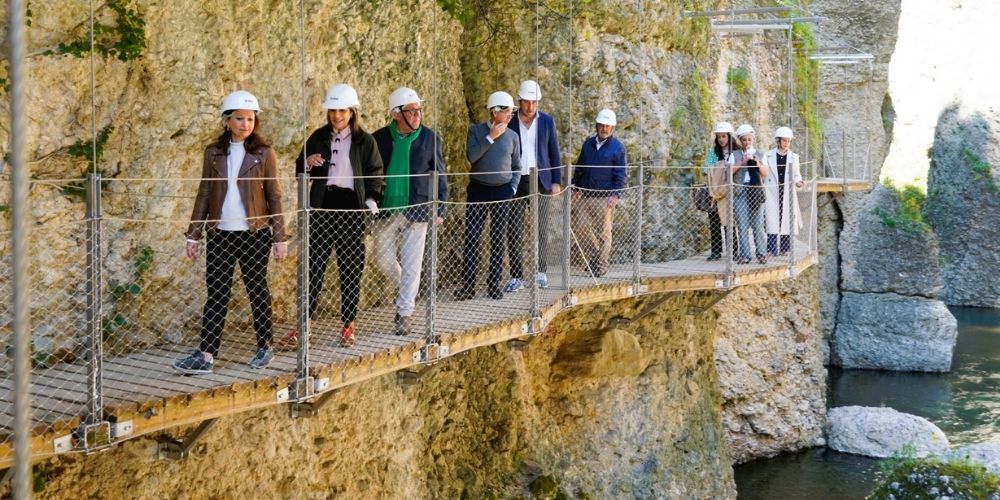
The second phase of the Camino del Tajo is expected to open at the end of July, although the exact inauguration date has not yet been confirmed. The new section will take visitors into the gorge of the Tajo de Ronda, where the Guadalevín river runs below the historic centre, and the Puente Nuevo rises above the cliffs.
The existing first phase already allows visitors to descend towards the base of the Puente Nuevo. The new section will continue from there, adding just over half a kilometre of route through the gorge and towards the Padre Jesús neighbourhood, opening up a part of Ronda that most visitors have only ever seen from above.
It is a simple idea, but a striking one. Ronda’s most photographed view has always been the bridge from the top or the deep drop from the bridge itself. This route turns that experience around, allowing people to walk below the Puente Nuevo and see the walls of the gorge from inside.
Under the Puente Nuevo
The route will use a wooden walkway attached to the rock face, suspended around three to four metres above the riverbed. It has been compared with the Caminito del Rey because of the cliffside walkway, although the Ronda route is much lower, making it likely to feel more manageable for people who are uncomfortable with serious heights.
Once open, visitors will be able to pass beneath the Puente Nuevo and continue through the narrow gorge that splits Ronda’s old and newer parts. The route will also pass below the Puente Viejo and continue towards the area around the historic Padre Jesús neighbourhood and the Arab Baths.
The second phase was designed by Luis Machuca y Asociados, the team linked to the restoration of the Caminito del Rey. Ronda Town Hall says the structure is designed to be dismantled if needed and to have the lowest possible impact on the protected setting.
History below the city
The new walkway is not only about the view. Along the route, visitors will be able to see the old irrigation channel that still functions today, remains of historic mills, and the water infrastructure connected to the hydroelectric plant that has supplied power to the city.
The path also passes the entrance to the Mina de la Casa del Rey Moro, one of Ronda’s most fascinating historic features. The mine was carved into the rock to allow access from the city down to the river, giving residents a way to reach water during times of siege.
That detail matters because the gorge is not just scenery. It shaped how Ronda was defended, how water was managed, how people moved between different parts of the city and how the town developed around its dramatic natural divide.
A project years in the making
The second phase has been treated as one of Ronda’s major tourism projects. The investment is close to €1.1 million, funded equally by Ronda Town Hall and the Diputación de Málaga, while the works were carried out by Sando, the company also associated with work on the Caminito del Rey.
The project has not been straightforward. Building inside the gorge required specialist vertical work, careful transport of materials and approval from different public bodies because of the protected natural and historic setting. Málaga Hoy reported that the project had come close to being abandoned more than once before moving forward under Machuca’s design. Málaga Hoy
The first phase has already become a major draw. Ronda Town Hall said it received more than 150,000 visits in 2025 and described the full route as a new tourism attraction not only for the city but for the wider Serranía de Ronda and Málaga province.
Visitor centre and practical details
Before the opening, work is continuing to prepare the Ermita de San Miguel area as a visitor reception point and auxiliary tourist information office. The site is close to several of Ronda’s older monuments, including the Puente Viejo, the Arab Baths, the Felipe V arch and parts of the city walls.
The route will include QR codes with information about the history, landscape, flora and fauna of the gorge, following the model already used on the first section. Ronda Town Hall has also said entry will be free for residents of Ronda, although full visitor prices and booking details for the new phase have not yet been announced.
For now, anyone planning a summer visit should treat the late-July opening as expected rather than fixed. Once the date, ticket system and access details are confirmed, the route is likely to become one of the most talked-about new visitor experiences in inland Andalucía.
For Ronda, it adds something rare: not another viewpoint, but a completely different relationship with the place itself. The bridge, the gorge and the old city will still be the same, but seeing them from below may make one of Spain’s most familiar views feel new again.