 Lorraine Williamson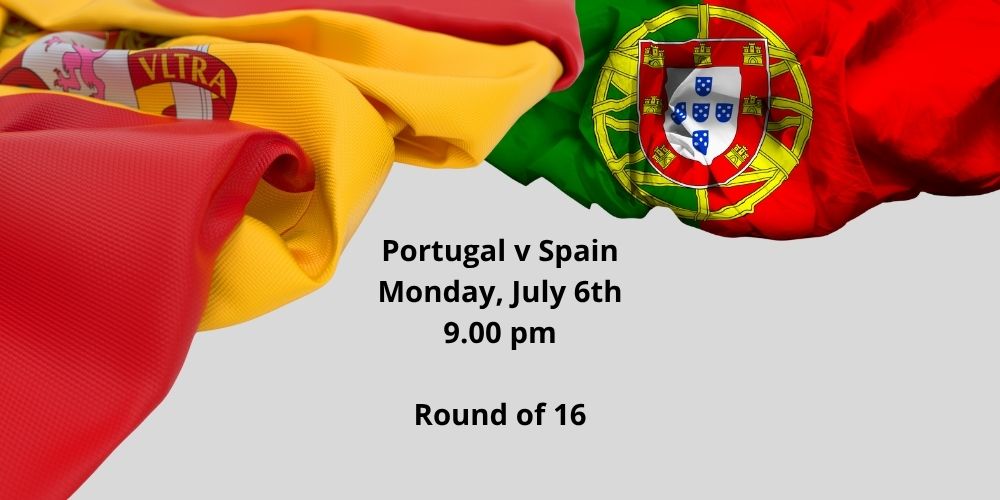
Spain will face Portugal in the World Cup last 16 on Monday, setting up the kind of Iberian knockout tie that, for many football fans, will no doubt feel like a final.
La Roja reached the next round after beating Austria 3-0 in Los Angeles, with Mikel Oyarzabal scoring twice and Pedro Porro also on target. The RFEF said Spain will now play Portugal in Dallas on Monday, July 6, at 9.00 pm Spanish mainland time, with a place in the quarter-finals at stake.
For supporters in Spain, this is not just another knockout match. Portugal is a neighbour, a rival and, in many parts of the country, a country linked by family, work, travel, friendship and shared border history. It is the sort of fixture that turns terraces, living rooms, fan zones and WhatsApp groups into nervous places long before kick-off.
Spain hit form at the right time
Spain’s win over Austria was more than a comfortable scoreline. La Roja dominated the rhythm of the match, with Lamine Yamal repeatedly causing danger from the right and Marc Cucurella heavily involved on the left.
Cucurella thought he had opened the scoring from a corner in the first half, only for the goal to be ruled out for a foul. Oyarzabal then forced Alexander Schlager into a save before finally breaking through in the 36th minute, finishing first time after Pedri opened the play to the left and Cucurella delivered a measured cross into the penalty area.
Spain could have added more before half-time. Álex Baena struck the crossbar with a free-kick, and Lamine Yamal was denied by another strong save from Schlager on the rebound. Austria’s best chance to unsettle Spain came after the break, when Saša Kalajdžić headed over shortly after coming on.
The second goal came in the 66th minute when Baena crossed for Pedro Porro to head in from close range, his first World Cup goal. Oyarzabal then sealed the 3-0 win late on from another Cucurella centre, taking his tally to four goals in the tournament.
Spain’s control was also defensive. Reuters reported that Austria failed to register a shot on target, while Unai Simón extended his World Cup clean-sheet run to 519 minutes, which the RFEF described as an all-time World Cup record.
Portugal survive Croatia scare
Portugal’s route to the last 16 was far more uncomfortable. Croatia took the lead through Ivan Perišić in the 53rd minute, before the match moved into a chaotic spell of offside calls, VAR checks and missed chances.
Croatia had a Nikola Vlašić finish ruled out shortly after the opener, before Rafael Leão almost answered for Portugal by cutting inside and striking the bar. Cristiano Ronaldo then had the ball in the net, but his celebrations were cut short by an offside flag.
Portugal eventually equalised from the penalty spot in the 68th minute after Renato Veiga was pulled down in the area, with Ronaldo scoring his first knockout-stage goal at a World Cup. Croatia then came close again when Mateo Kovačić hit the post, with Diogo Costa reacting to keep out the follow-up.
The decisive moment came in stoppage time. Gonçalo Ramos, introduced from the bench, glanced in a Rafael Leão cross in the 94th minute to make it 2-1. Croatia thought they had forced extra time when Joško Gvardiol scored deep into added time, but the goal was disallowed after a VAR review for offside in the build-up.
That makes Monday’s Spain-Portugal tie even more interesting: Spain arrive after their cleanest and most controlled performance of the tournament, while Portugal arrive after surviving a tense, emotional, VAR-heavy knockout match.
An Iberian match with extra meaning
Spain and Portugal have met many times before, but a World Cup knockout meeting always feels different. There is no league table to recover from, no second group game to correct the damage, and no comfortable way to lose.
The winner goes on. The loser goes home.
For people living in Spain, this match also has a particular closeness. Portugal is not a far-away opponent on the other side of the world. It is next door. Many people in Spain have Portuguese friends, relatives, colleagues or regular travel links across the border. The rivalry is serious, but it is also familiar.
That is what makes the match so watchable. Spain v Portugal is competitive without needing to be manufactured. It already has history, geography and emotion built in.
A preview of the 2030 connection
There is also a future World Cup thread running through this fixture. FIFA has confirmed that Morocco, Portugal and Spain will host the 2030 World Cup, with three centenary celebration matches to be held in Argentina, Paraguay and Uruguay.
That means Monday’s match is not only an Iberian derby in the 2026 tournament. It also brings together two of the three countries that will carry the main hosting responsibility four years from now.
Morocco, the third 2030 co-host, is still part of the current World Cup picture too. FIFA lists Canada v Morocco among the round-of-16 fixtures, giving the North African side its own chance to continue deeper into the tournament.
Hosts and England still in the story
The 2026 host nations also remain part of the knockout story. Canada face Morocco, Mexico face England in Mexico City, and the United States face Belgium in Seattle, according to FIFA’s round-of-16 schedule and match previews.
For English-speaking readers in Spain, the Mexico-England fixture will also attract attention. FIFA lists that match for Sunday, July 5, at Mexico City Stadium, with England trying to keep their own World Cup run alive against one of the host nations.
But for Spain, the focus now turns firmly to Monday night.
Monday night in Dallas
Spain v Portugal will be played at Dallas Stadium on Monday, July 6. The RFEF gives the kick-off time as 9.00 pm in mainland Spain, making it a prime-time match for supporters watching at home, in bars and in public spaces.
After the fan zones and giant screens set up for Spain’s match against Austria, towns and cities may now be watching closely to see whether similar arrangements are confirmed for Monday. A Spain-Portugal knockout match is exactly the kind of fixture that can fill squares and terraces quickly.
Spain have momentum. Portugal have pedigree. One of the neighbours will move closer to the quarter-finals, and one will see its World Cup end.
It may only be the last 16, but it already feels much bigger than that.