 Lorraine Williamson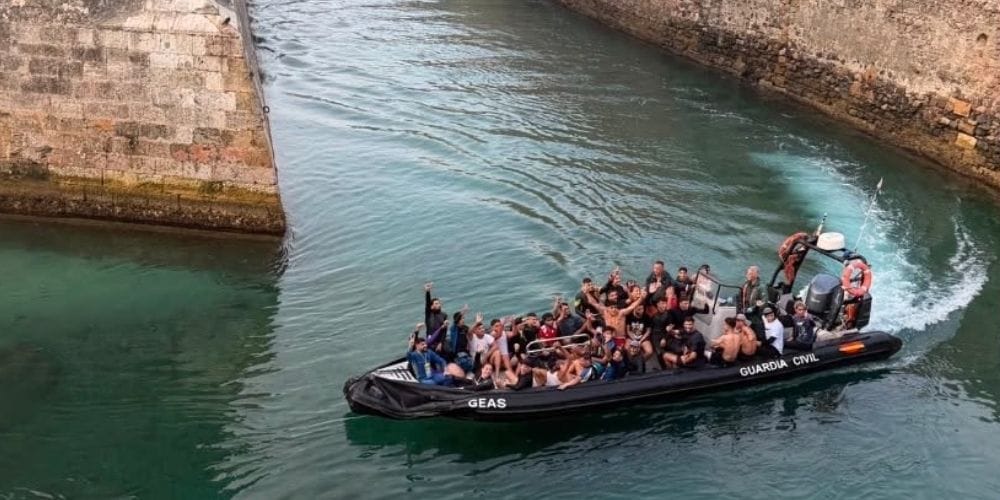
A floating sea barrier has been installed in Ceuta as Spain moves to strengthen border security following this week’s unprecedented migrant surge, while European leaders continue to debate how the bloc should respond.
The temporary barrier was put in place overnight after what authorities described as a calmer night on the border, marking the latest phase of Spain’s response to one of the most significant migration crises the enclave has faced. The move comes after tens of thousands of people crossed from Morocco into the Spanish territory during several days of chaos, overwhelming local services and prompting an emergency response.
Spain says border conditions have now stabilised, although security remains heightened and additional personnel continue to patrol both the land frontier and coastal areas. Authorities are also working with Morocco to prevent further mass crossings while processing those who remain in the enclave. According to Reuters, more than 48,000 people have already returned voluntarily to Morocco following the surge.
The 500-metre floating barrier has been positioned in the sea close to one of the busiest crossing points into Ceuta. Officials say it is designed to discourage people from attempting to swim around the border fence, a route used by many during previous migration attempts. The installation is expected to remain in place while authorities assess the security situation.
Reaching Ceuta does not open Europe’s borders
The barrier is intended to reduce further irregular crossings, but it has also highlighted widespread misunderstanding about Ceuta’s role within Europe’s borders. Despite claims circulating on social media, reaching the Spanish enclave does not give migrants automatic access to mainland Spain or the rest of the Schengen area. Spain maintains identity and document checks on passengers travelling by ferry or air from Ceuta to the mainland, meaning those without the legal right to continue their journey can be stopped.
Travellers using ferry services between Ceuta and Algeciras must present valid identification before boarding. While Ceuta is Spanish territory, it operates under special border arrangements, and entering the enclave irregularly does not allow unrestricted onward travel through Spain or Europe.
Although the immediate humanitarian pressure has eased, emergency services continue supporting those who remain in temporary accommodation. Spanish officials are also continuing investigations into the deaths that occurred during the mass crossing, with the final toll still subject to official confirmation.
European pressure continues to grow
The crisis has quickly become a wider European issue.
Several European Union member states have called for urgent discussions on strengthening the bloc’s external borders, while additional support from Frontex, the European Border and Coast Guard Agency, is being considered. European governments are also examining how similar incidents could be prevented elsewhere along the EU’s southern frontier. According to Reuters, at least 22 EU countries have backed calls for an extraordinary meeting to discuss the situation.
Spain has defended its handling of the crisis, insisting that close cooperation with Morocco has already helped restore order. Prime Minister Pedro Sánchez has pledged to continue working with Rabat to improve border management while ensuring humanitarian assistance for those affected.
A longer-term challenge
The installation of the floating barrier highlights the growing challenge facing Ceuta, one of the European Union’s only land borders with Africa. Migration pressure has periodically affected both Ceuta and neighbouring Melilla for decades, but the scale of this week’s events has reignited debate over border security, migration policy and cooperation between European and North African governments.
While the immediate emergency appears to have eased, officials on both sides of the border remain on alert. With Europe now examining its broader response, the events in Ceuta are likely to shape discussions on migration and border management well beyond Spain.