 Lorraine Williamson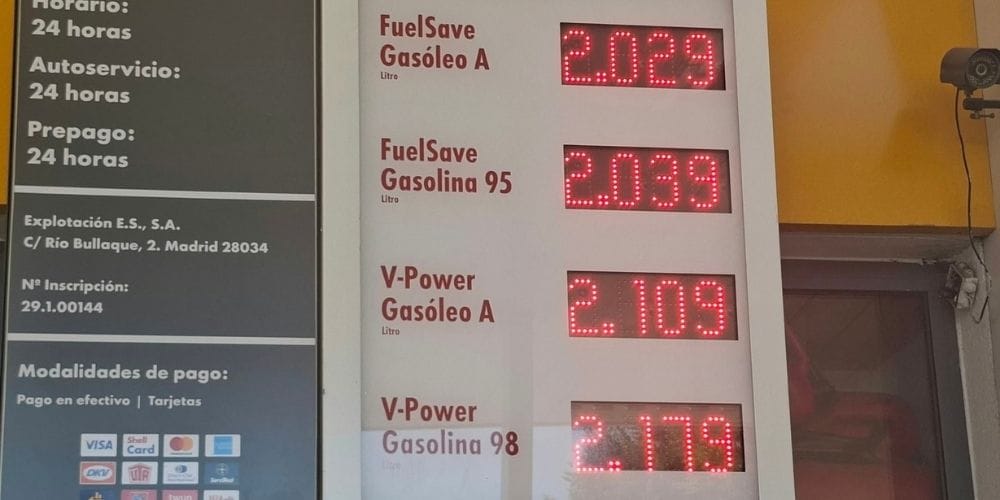
Spain is cutting the tax charged on petrol and diesel by 20 cents per litre during October as part of a new package of measures responding to continuing pressure on energy prices linked to the conflict in the Middle East.
The reduction takes effect on Thursday 1 October and applies through the Hydrocarbon Tax rather than as a separate discount paid to motorists at the petrol station. The government has also created a mechanism allowing the larger tax reduction to return or remain in place if fuel prices rise sufficiently.
How much will fuel tax fall?
For petrol and diesel, the Hydrocarbon Tax reduction will be 20 cents per litre in October, before falling to 13 cents in November and 6 cents in December under the current timetable.
Those later reductions are not necessarily fixed. If September’s consumer price index for petrol or diesel is more than 15% higher than in the same month last year, the 20-cent reduction will continue during November, followed by 13 cents in December. If October’s annual increase also exceeds 15%, the full 20-cent reduction could be applied again in December.
What does the change mean at the petrol station?
The measure is different from the highly visible fuel rebate introduced during the energy crisis of 2022, when motorists saw a specific discount applied to their bill at the filling station. This time, the government is reducing the tax rate applied to petrol and diesel.
That means drivers should not expect to arrive at the till and have 20 cents mechanically deducted from every litre displayed on the receipt. The tax reduction is designed to lower the fiscal component of fuel prices, although the actual pump price motorists pay will continue to depend on wholesale fuel costs and pricing by individual operators.
The government says taxation currently represents around 39% of the final price of unleaded petrol in Spain, compared with an average of 48.1% across the eurozone. For diesel, taxes represent around 26.7% of the final price, against a eurozone average of 39.1%.
Gas bills protected from much steeper rise
The package goes considerably further than petrol and diesel. More than three million customers on Spain’s regulated natural-gas tariff, known as the TUR, are also being protected from a potentially much larger increase this autumn.
The government has limited the weighting of wholesale gas prices in the formula used to calculate October’s TUR. As a result, the regulated tariff is expected to rise by around 15%, rather than the increase of more than 45% that the government says would otherwise have occurred.
Butane bottle price capped
Households using bottled butane will also receive protection through the winter. The maximum regulated price of a standard butane cylinder will be capped at €19.55 until 30 June 2027.
The current maximum price is €18.84, meaning some increase remains possible, but the cap is intended to prevent international energy-market pressures being passed fully on to consumers.
Electricity tax cuts could return
The government has also created a safeguard allowing energy tax reductions to return if electricity prices rise sharply enough. If electricity inflation in September is at least 15% higher than a year earlier, VAT on electricity would fall from 21% to 10%, while the Special Electricity Tax would drop from 5.1% to 0.5%.
The VAT reduction would apply to households with contracted power below 10kW and beneficiaries of the social electricity tariff. The reduced VAT mechanism also covers natural gas, biomass pellets, briquettes and firewood.
Professional drivers, farmers and fishing sector included
Separate support is being maintained for sectors particularly exposed to fuel costs. Professional road transport will continue receiving assistance during the final three months of 2026, although the structure differs from the tax reduction available on ordinary petrol and diesel.
Farmers will retain a 20-cent-per-litre reduction on agricultural diesel, while support for fishing companies is also being extended. Additional assistance covers freight rail and maritime transport.
The government says the three emergency packages introduced since March now represent more than €12 billion in measures intended to protect households and businesses from the economic consequences of the Middle East crisis.
Changes begin on 1 October
The timing means motorists will begin seeing the effect of the new tax regime from Thursday, although pump prices will still move according to changes in wholesale markets and individual filling-station pricing.
For October, however, the government has returned to the maximum 20-cent-per-litre tax reduction. What happens in November and December will depend partly on whether fuel-price inflation remains above the thresholds written into the new legislation.