 Lorraine Williamson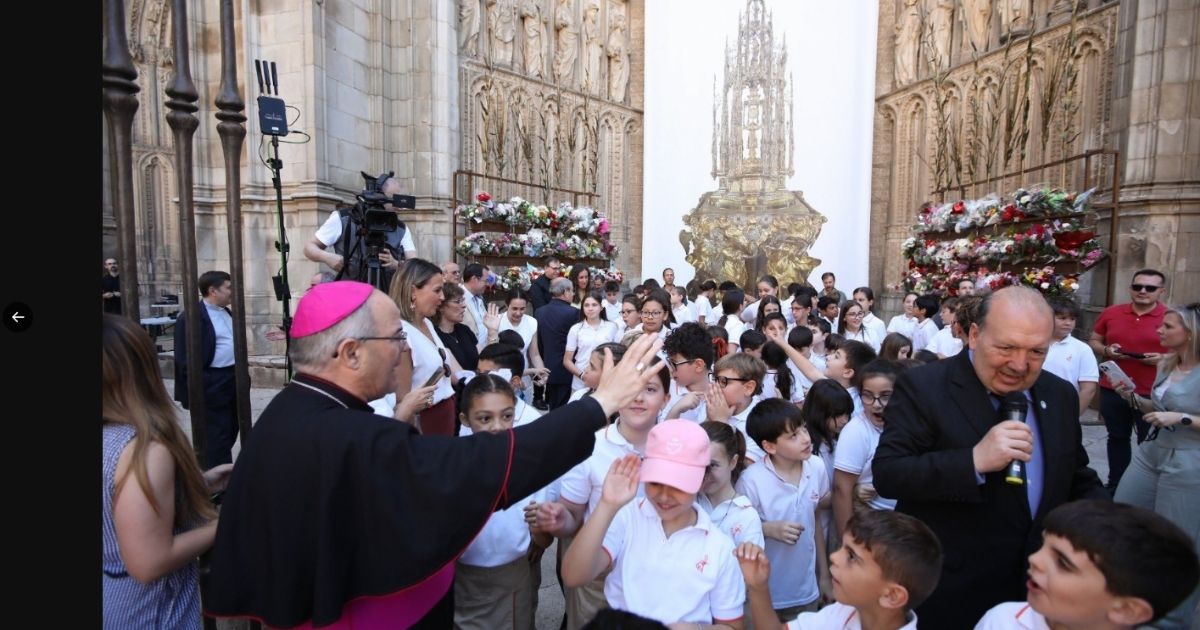
Few Spanish cities understand ceremony quite like Toledo. Each June, its narrow streets, balconies and historic squares are transformed for Corpus Christi in Toledo, one of the country’s most important religious and cultural processions.
In 2026, Corpus Christi fell on 4 June, with Toledo once again placing its medieval centre at the heart of the celebration. Spain’s official tourism website lists the event as a Festival of International Tourist Interest and describes it as Toledo’s most important festival.
Celebrated across Spain, but especially famous in Toledo
Corpus Christi is not only celebrated in Toledo. Across Spain, towns and cities mark the feast with processions, floral carpets, decorated streets and religious ceremony. Sitges, Ponteareas and San Cristóbal de La Laguna are among the places known for their elaborate natural tapestries and flower displays.
Toledo, however, has one of the country’s most famous and solemn versions of the celebration. Its historic centre, religious heritage and ceremonial procession give the event a particular weight, which is why Corpus Christi in Toledo is often treated as one of Spain’s great June traditions.
A procession through one of Spain’s most atmospheric cities
Corpus Christi in Toledo is built around a solemn procession through the old city. The route is decorated with awnings, wreaths, lanterns, tapestries and aromatic herbs, creating a sensory experience that blends faith, history and civic pride.
The centrepiece is the Monstrance of Arfe, an extraordinary work of gold and silver craftsmanship dating from 1515. According to Spain.info, it weighs around 160 kilos and is carried through the city accompanied by religious guilds and fraternities.
For visitors, the setting matters almost as much as the procession itself. Toledo’s old town, already one of Spain’s most atmospheric historic centres, becomes a stage of shaded streets, floral decoration and ceremonial music.
More than a religious date
Although Corpus Christi is a Catholic feast, Toledo’s celebration has become part of the city’s wider cultural identity.
Spain.info notes that the festival has been recorded in Toledo since at least the 15th century. That long history explains why the event continues to draw not only worshippers, but also visitors interested in Spanish heritage, architecture and living tradition.
The wider programme usually includes concerts, shows, sporting events and the opening of some interior courtyards in historic buildings, giving visitors more ways to experience the city during Corpus week.
Why it matters for visitors in Spain
Corpus Christi in Toledo is a reminder that some of Spain’s most powerful events are not built around noise or spectacle alone.
This is a quieter kind of drama. The emotion lies in the preparation, the route, the music, the decorated streets and the continuity of a tradition that has survived for centuries.
It is also a strong cultural travel option for anyone in Madrid, as Toledo is one of the easiest historic day trips from the capital.
Spain ferias and fiestas 2026: the big guide to Spain’s best celebrations month by month
Toledo at its most ceremonial
Corpus Christi shows Toledo at its most solemn and beautiful. The city’s layered Christian, Muslim and Jewish past is already visible in its architecture, but during this June festival, its streets become part of the ritual itself.