 Lorraine Williamson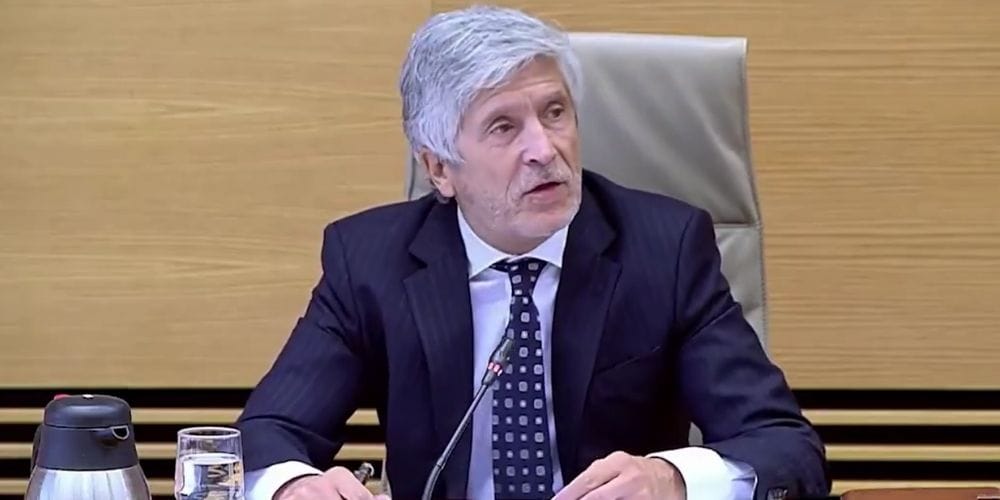
Almost a month after the mass arrival of migrants from Morocco, Ceuta is struggling with growing tension, public protests and a series of documented violent incidents. Meanwhile, thousands of people remain in the autonomous city. Prosecutors have recorded 16 alleged sexual assaults during the crisis. Recent disturbances have also included an attack on four Spanish soldiers and violence directed at migrants. Consequently, the government has now announced permanent measures to reinforce the border as it works to restore normality.
Interior Minister Fernando Grande-Marlaska told Congress on Friday that around 72,000 people entered Ceuta on 30 and 31 July. Most returned to Morocco shortly afterwards, but the government estimates that approximately 5,000 remain in the city.
Marlaska acknowledged that lessons needed to be learned from what happened and appealed for an end to violence. He said the government’s priority remained restoring normality while dealing with those still in Ceuta through the appropriate return, asylum and other legal procedures.
The consequences of the extraordinary influx have increasingly moved beyond border management. Thousands of residents have joined demonstrations calling for faster action. Meanwhile, migrants continue to sleep in improvised camps and public spaces as authorities try to establish suitable temporary accommodation.
Residents taking part in protests have spoken about their frustration and growing insecurity. Fights and other incidents are contributing to concern in parts of the city. The demonstrations themselves have largely involved residents demanding action from the authorities. However, some gatherings have subsequently been followed by serious disturbances involving smaller groups.
Prosecutors record 16 alleged sexual assaults
One of the most concerning official developments came from Spain’s Fiscalía General del Estado. Prosecutor General Teresa Peramato said during a visit to Ceuta on Thursday that prosecutors had recorded 16 alleged sexual assaults involving 17 victims during the migration crisis.
Sixteen of the victims are female, and the majority are minors, according to the Fiscalía. Peramato also reported an increase in offences against property and in offences involving attacks on or resistance to law enforcement officers.
The figures require some caution. They relate to alleged offences recorded during the period of the crisis. Therefore, that does not mean every case involves a local female victim and a migrant suspect. The nationality or migration status of victims and alleged perpetrators has not been specified by the Fiscalía for all 16 cases, and each case remains subject to the appropriate investigation or judicial process.
Three prosecutors from mainland Spain are being sent to reinforce the prosecution service in Ceuta. Peramato also highlighted the vulnerable humanitarian situation faced by many of the migrants who remain in the city.
Four soldiers injured and 12 people arrested
Security concerns intensified further on Thursday after a military vehicle carrying four Spanish soldiers was attacked in the Benzú area at around 5.30 am.
Police sources told EFE that between 30 and 40 people surrounded the vehicle and threw large stones at it. The four soldiers managed to escape but suffered injuries requiring medical attention.
Police and Guardia Civil officers subsequently arrested 12 Moroccan nationals. Some of those allegedly involved attempted to escape by sea. This prompted the Guardia Civil’s Maritime Service to intervene. Furthermore, the investigation continues to identify other participants.
The attack followed disturbances involving groups of residents and migrants around the beaches of El Trampolín and Benítez. According to police sources cited by EFE, around 400 people moved towards El Trampolín after a larger demonstration and some attempted to attack migrants they encountered.
Security forces prevented the group from entering the area, but another group reached Benítez beach. Mattresses, blankets and other possessions belonging to migrants were thrown into the sea. Police used warning rounds and smoke canisters as they tried to prevent further confrontation.
Migrant shelters burned as protests escalate
Tensions continued on Thursday evening when people taking part in another protest entered Benítez beach and destroyed makeshift shelters being used by migrants. Some shelters and belongings were burned, and police carried out charges during the disturbances.
Protesters later moved towards El Trampolín, where a human cordon prevented a Red Cross vehicle carrying food from reaching migrants. The vehicle eventually abandoned its attempt to enter the area following instructions from the National Police.
RTVE reports on Friday that the migrant camp at El Trampolín has since grown as people moved there following the incidents at Benítez. Around 5,000 migrants remain in Ceuta, including approximately 1,500 minors.
The situation highlights the two different pressures now confronting authorities: concerns among residents about security and disruption to everyday life, alongside the humanitarian problem of accommodating and processing thousands of migrants who remain in the city.
Government expands processing operation
The Interior Ministry has reinforced the operation to identify and process migrants who remain in Ceuta. Eight additional police processing lines are now operating at the provisional Temporary Reception Centre for Foreigners, or CATE, being prepared in the El Tarajal industrial area.
An 11-member team from the Directorate General for International Protection has also arrived to reinforce asylum processing. Particular attention is being given to minors, women and girls and people considered vulnerable.
The CATE is expected to be completed on 4 September, when the eight new processing lines will increase to 14. These will operate alongside existing facilities at the National Police headquarters and the border crossing.
Finding suitable accommodation remains difficult. Territorial Policy Minister Ángel Víctor Torres said on Thursday that some locations proposed for temporary accommodation could take months to prepare, while others lacked sanitation, sewerage connections or other necessary infrastructure.
That does not establish claims circulating about widespread human waste in Ceuta’s streets, but it does demonstrate the practical sanitation and infrastructure problems authorities face when attempting to accommodate thousands of people at short notice.
Spain announces permanent border reinforcement
Against this backdrop, Marlaska announced a series of longer-term measures on Friday intended to strengthen Ceuta’s border with Morocco.
The Tarajal and Benzú breakwaters will be extended, while Interior plans a permanent maritime containment system using anchored buoys. The government also intends to increase aerial surveillance with drones and deploy light intervention vessels and remotely operated underwater equipment.
The announcement represents a shift from managing the immediate consequences of the July arrivals towards attempting to prevent another crossing on the same scale.
Prime Minister Pedro Sánchez is meanwhile chairing the government’s Specialist Committee on Ceuta on Friday, with 11 ministers participating. Interior, Foreign Affairs and Migration ministers are also appearing before Congress as the government faces questions over its handling of the crisis.
Ceuta therefore remains under significant pressure, but the situation is more complex than a confrontation between residents and migrants. There are documented offences and serious security concerns, thousands of people requiring accommodation and processing, peaceful residents demanding action, and episodes of violence directed at migrants and humanitarian workers.
Authorities are now trying to address all of those pressures at once. With thousands of migrants still in the city and demonstrations continuing, restoring normal daily life is likely to depend both on accelerating individual immigration procedures and preventing further violence on Ceuta’s streets and beaches.