 Lorraine Williamson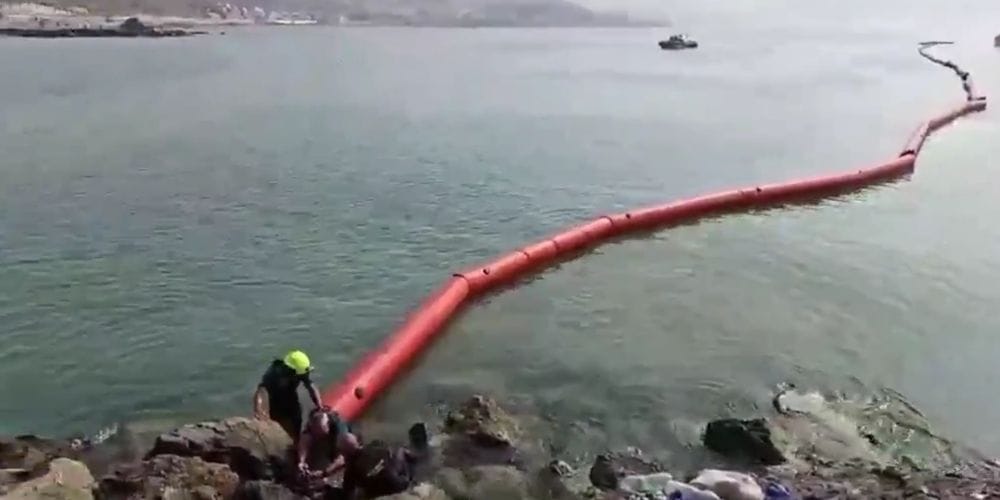
Ceuta is gradually returning to normal after the mass crossing from Morocco, but the political crisis has spread far beyond the Spanish enclave. European governments are now divided over border controls, migration policy and whether Spain’s response has left the wider Schengen area exposed.
Spanish authorities say at least 48,300 people have already returned to Morocco, while police and military personnel continue carrying out checks across Ceuta. Shops have begun reopening, and the immediate pressure at the border has eased, although groups of migrants remain in parts of the city and searches continue along the coast. RTVE reported the latest official return figures on Sunday morning.
At least 67 people are known to have died during the crisis, many while attempting to swim around the coastal border from Morocco. The confirmed toll may rise as rescue teams and maritime authorities continue searching the water and shoreline. RTVE said almost 60,000 people entered Ceuta between Thursday and Friday.
The Spanish government has installed a 500-metre floating barrier beside the Tarajal breakwater to discourage further sea crossings while still allowing access for patrol and rescue vessels. The temporary structure combines inflatable sections with naval buoys and forms part of a wider reinforcement of the border.
European governments turn on Spain
The easing of the immediate emergency has not calmed the political dispute. Italy has introduced temporary controls affecting travel from Spain, while other European governments have pressed for stronger coordinated action to prevent people who entered Ceuta from travelling farther into the European Union.
Prime Minister Pedro Sánchez has accused governments acting alone of responding through fear and political calculation rather than European solidarity. Spain has requested urgent talks between EU interior ministers, arguing that the crisis should be treated as a shared external-border emergency rather than a reason to restrict movement from Spain as a whole.
Italy has defended the restoration of controls as a measure permitted under European treaties, arguing that the management of the EU’s external borders is a collective responsibility. The Italian government has also raised security concerns about uncontrolled movement within Europe, despite Spanish assurances that those entering Ceuta cannot simply travel onwards through the Schengen area.
The European Commission has publicly expressed support for Spain and stressed the importance of solidarity, but the crisis has exposed widening divisions over migration. Conservative and far-right parties across Europe are using the events in Ceuta to challenge Sánchez’s policies, while the Spanish government insists that its regularisation programme did not apply to people arriving during the latest crossing.
Ceuta is not in northern Spain
International coverage has also created confusion about where the crisis occurred. Ceuta is a Spanish autonomous city on the North African coast, separated from mainland Spain by the Strait of Gibraltar. Morocco borders it and forms part of the European Union’s external frontier.
Descriptions suggesting that migrants “invaded northern Spain” are therefore geographically wrong. The crossing took place into Spanish territory in North Africa, not into northern mainland regions such as Galicia, Asturias, Cantabria or the Basque Country.
Fox News has repeatedly used the language of borders being “overrun” and has carried claims that the scenes resembled an “invasion”. Its written reporting does correctly describe Ceuta as a North African enclave. Still, the broader television framing risks giving viewers the impression that tens of thousands of people entered mainland Spain and began moving freely across the country.
That distinction matters. Ceuta is outside the passport-free Schengen area for border-control purposes, and travellers entering mainland Spain from the enclave are subject to identity and document checks. Spanish officials say the overwhelming majority of those who crossed have already returned to Morocco.
Questions remain over Morocco’s role
The Spanish government has avoided directly accusing Morocco of deliberately allowing the crossings, despite criticism that Moroccan security forces failed to prevent tens of thousands of people reaching the frontier. Madrid continues to describe Morocco as a strategic partner and says cooperation has improved since the height of the emergency.
Accounts from migrants and reports from the border suggest that social media rumours played a significant role, including claims that the frontier had been opened or that people reaching Ceuta could not be returned. Spanish officials have also blamed organised networks for spreading false information and encouraging dangerous attempts by land and sea.
The government has admitted that it did not anticipate the scale of the crisis. Officials have said that, had intelligence services understood what was about to happen, tens of thousands of people would not have been able to enter within such a short period. El País reported the government’s acknowledgement that it had been caught by surprise.
Questions will now focus on why warning signs were missed, whether Morocco deliberately reduced its border presence and how Spain intends to prevent another mass crossing. The handling of unaccompanied minors and people seeking international protection will also remain under scrutiny, as they cannot be returned through the same procedures used for other arrivals.
Ceuta begins a difficult recovery
Police and military forces are expected to remain visible in Ceuta as the city attempts to restore normal services. The reopening of the Beni-Enzar crossing in Melilla has eased some pressure elsewhere along Spain’s North African frontier, but security has been reinforced in both autonomous cities.
The political consequences will last much longer than the immediate border emergency. Spain must now manage its relationship with Morocco, defend free movement within Europe and answer domestic criticism over how the crisis was allowed to escalate.
Ceuta may be calmer, but the dispute it triggered has moved into Brussels, several European capitals, and beyond. What began as a humanitarian and security emergency on a narrow stretch of the North African coast is now testing the EU’s ability to respond collectively to pressure at its external borders.