 Lorraine Williamson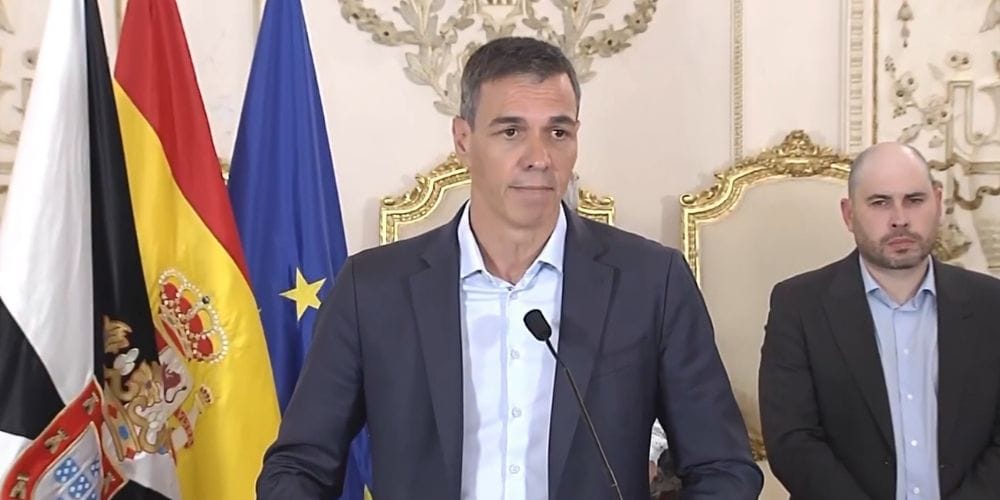
Spain’s North African enclave is beginning to regain control after one of the largest border incidents in its history, but the humanitarian, political and diplomatic consequences continue to grow. Authorities say thousands have already returned voluntarily to Morocco, while emergency services remain under pressure following the mass arrival. More than 50,000 people are believed to have crossed during the crisis, although estimates vary.
Spain’s Prime Minister Pedro Sánchez travelled to Ceuta on Friday alongside Interior Minister Fernando Grande-Marlaska, describing the events as a serious challenge to Spain’s territorial integrity and promising additional support for the autonomous city. He also pledged to accelerate the return of those not entitled to remain in Spain in cooperation with the Moroccan authorities.
The latest confirmed death toll also remains fluid. Spanish officials have confirmed at least 34 people died during the chaotic crossings, while some international agencies have reported higher figures as recovery operations continue. Authorities have cautioned that the final number may change as investigations continue.
The crossing dwarfs previous migration surges affecting Ceuta. In 2021, around 8,000 people entered the enclave during a diplomatic dispute between Spain and Morocco. This week’s events have far exceeded that episode, placing enormous pressure on local services and security forces.
Military deployment and overnight unrest
Spanish military units were deployed to reinforce the Guardia Civil and National Police after local authorities warned they were struggling to cope with the scale of the influx.
Overnight, clashes continued around the border area as Moroccan security forces attempted to prevent further crossings. Vehicles were damaged and set alight during the unrest, while thousands of people gathered close to the frontier hoping to reach European territory before tighter controls were restored.
Conditions inside Ceuta quickly became difficult as parks, sports facilities and public spaces were used to accommodate exhausted arrivals. As food and shelter became increasingly scarce, thousands of migrants chose to return voluntarily to Morocco once border controls tightened again. Reuters reports that roughly half of those who crossed have already gone back.
Italy’s response raises wider European tensions
The crisis has rapidly become a European issue.
Italy has called for tougher action at EU level, arguing that Spain must strengthen protection of the Union’s external border. Italian politicians have even suggested suspending Spain from the Schengen free-travel area.
However, legal experts note that no individual member state can unilaterally expel another country from Schengen. While governments can temporarily reintroduce internal border controls during exceptional circumstances, any broader action would require agreement under European Union rules.
The Spanish government has rejected criticism of its migration policies, insisting that the immediate priority remains restoring order, assisting those affected and working closely with Morocco to prevent further mass crossings.
Europe watches closely
The events in Ceuta have once again highlighted the vulnerability of the European Union’s only land borders with Africa and reopened debate over migration policy, border security and cooperation with neighbouring countries.
Although the immediate situation appears to be stabilising, authorities on both sides of the border remain on high alert as investigations continue into the deaths and the circumstances that triggered one of the most dramatic migration crises Spain has faced in recent years.