 Lorraine Williamson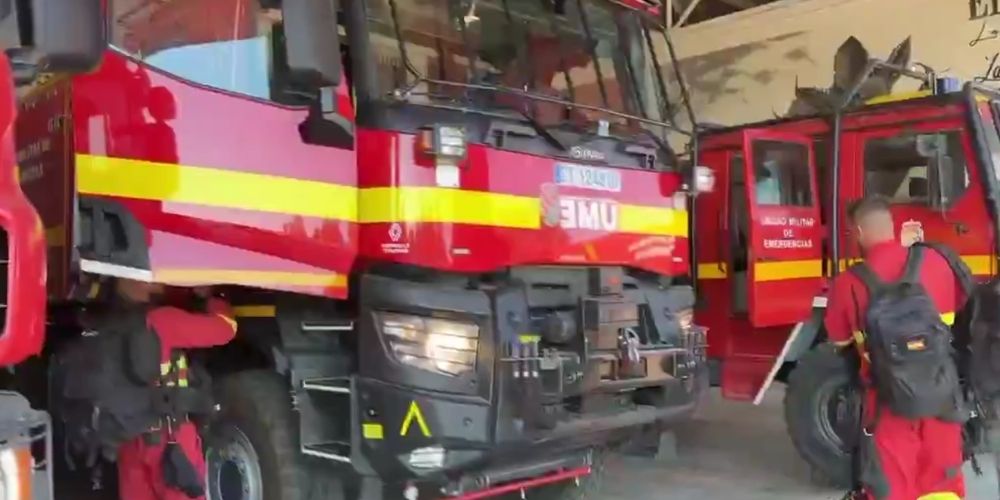
A wildfire in Soneja, Castellón, has forced the preventive evacuation of around 500 people from neighbouring Azuébar, as Spain enters another difficult day of heat, wind and very high fire danger.
The Department of National Security said on Monday morning that the Soneja fire had forced the preventive evacuation of Azuébar, affected an estimated 150 hectares, and reached part of the Sierra de Espadán Natural Park. The official update also confirmed that, alongside regional and local resources, state aircraft and UME military personnel had been mobilised to support the firefighting operation.
Fire enters Sierra de Espadán
The fire broke out on Sunday in the inland Castellón municipality of Soneja, close to Azuébar and the Sierra de Espadán natural area. The landscape is highly sensitive, with pine forest, scrubland, steep terrain and valuable cork oak areas higher up the mountainside.
By Monday, later reporting from the emergency area put the burned surface at around 181 hectares and said the fire had entered the Sierra de Espadán Natural Park, although the most valuable cork oak areas had not been reached. Emergency officials said the fire’s advance had been contained overnight thanks to higher humidity, lower temperatures and weaker wind, but warned that the day still carried risk because temperatures could exceed 40ºC and wind gusts could reach around 45 km/h.
Azuébar residents moved out
The preventive evacuation of Azuébar was ordered because of the fire’s proximity, the heavy smoke and the possible risk to the village if conditions worsened. Some residents went to stay with relatives or friends, while others were taken to temporary accommodation.
The evacuation is a reminder that wildfire emergencies are not only about flames reaching homes. Smoke, road access, changing wind and the possibility of rapid fire movement can make it safer to move people out before the situation becomes more dangerous.
Not yet a normal return
Although the fire’s advance was contained overnight, residents were not immediately able to return to normal on Monday morning. Emergency teams were still assessing the perimeter, watching for reactivations and trying to take advantage of calmer conditions before the day’s heat and wind increased.
That uncertainty is difficult for residents, especially in a small inland municipality where many people have animals, farmland, second homes or family property close to the affected area. But early returns can put both residents and emergency crews at risk if roads are still needed for fire vehicles or if smoke and flames shift suddenly.
Heatwave adds pressure
The Soneja fire comes during a new Spanish heatwave. AEMET’s special warning, issued on Monday, says the episode began on Sunday and is expected to last until at least Thursday, with a high probability of very high temperatures in the south-western quadrant, the Ebro valley, north-eastern depressions and Pyrenean valleys. The agency also warns that fire danger will rise generally to very high levels because of high temperatures, possible storms and gusts of wind, and the accumulated water deficit from June.
Across Spain, the combination of heat, dry vegetation, low humidity and wind can turn a small ignition into a fast-moving emergency. The risk is especially high around forests, rural roads, agricultural land, campsites, natural parks, picnic areas and urbanisations close to woodland.
Public asked to avoid fire-risk behaviour
Protección Civil has asked the public to take extreme care during the period of very high and persistent temperatures, especially because of the danger of forest fires. Its advice includes avoiding actions that can start fires, not throwing cigarette ends or rubbish into the countryside, and calling 112 immediately if smoke or flames are seen. It also urges people to drink water frequently, avoid prolonged exposure to the sun, and take special care of babies, children, older people and vulnerable residents.
For people in Castellón and the wider Comunitat Valenciana, this means checking official emergency and traffic information before travelling near affected areas. People should not try to enter closed roads, return to evacuated zones before being told to do so, or go near the fire area to take photos.
What residents and visitors should do
Anyone close to the Soneja, Azuébar or Sierra de Espadán area should follow instructions from emergency services, Guardia Civil, local councils and regional authorities. If evacuation or confinement orders are issued, they should be followed immediately.
Visitors planning walks, rural stays or natural-park trips during the heatwave should reconsider routes in high-risk areas, avoid forest tracks where restrictions are in place, carry water, and keep phones charged. Even away from active fires, people should avoid machinery, barbecues, discarded glass, cigarette ends or any activity that could generate sparks.
Spain is now entering several days when fire prevention matters as much as firefighting. The safest choices are simple ones: avoid risky behaviour, stay informed, respect closed areas, and call 112 at the first sign of smoke or flames.