 Lorraine Williamson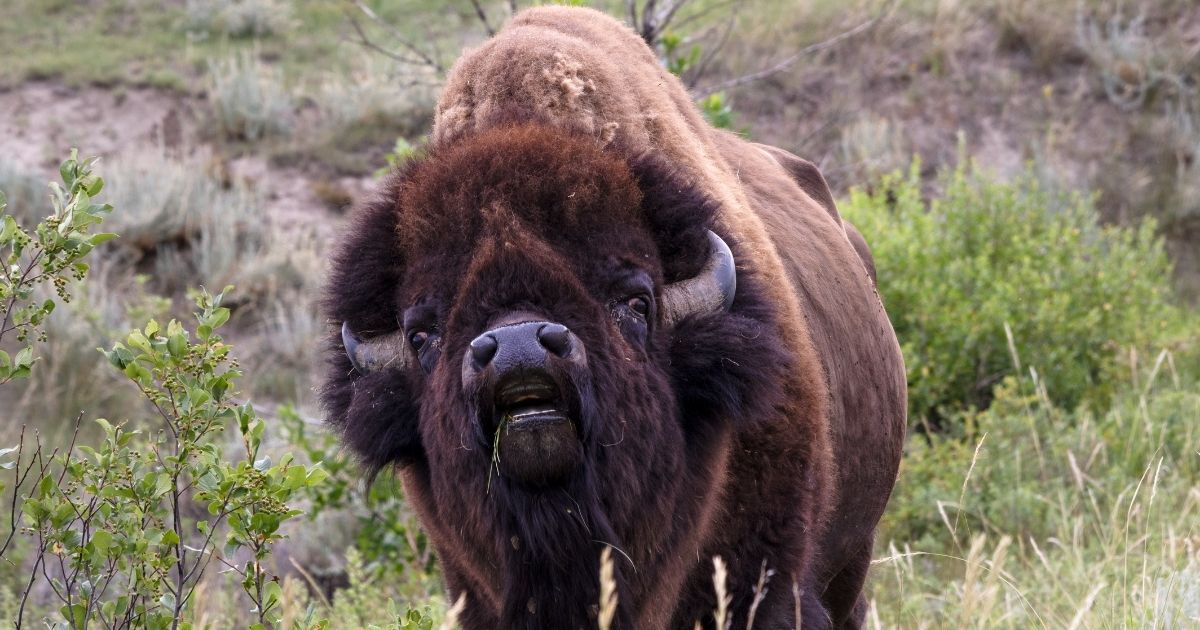
Nine European bison are grazing in a small village in Guadalajara in a project that could offer Spain a different way to manage overgrown woodland, reduce wildfire risk, and bring life back to depopulated rural areas.
The animals have been in El Recuenco, in the Alto Tajo area, since January. According to EFE, they are the first European bison to be released into public woodland in Spain, after arriving from a private estate in El Espinar, Segovia.
The project is being led by Rewilding Spain, with researchers studying how bison adapt to Mediterranean mountain ecosystems and whether their grazing can help restore landscapes under pressure from climate change, rural abandonment and rising fire risk.
Why this matters
The story is not just about unusual wildlife. It touches three major issues for Spain: wildfires, rural depopulation and the search for new economic activity in villages that have lost people, livestock and traditional land management. The bison project is still experimental, but it is already attracting visitors and scientific interest.
A village of around 80 people takes a bold step
El Recuenco is a small municipality in Guadalajara with around 80 inhabitants. Like many rural villages in inland Spain, it has faced decades of population loss and reduced economic activity.
The local council agreed to host the bison because its public woodland is seen as one of the village’s most important assets. Rewilding Europe said the council and residents supported the initiative after talks, meetings and visits designed to build local consensus.
Mayor Enrique Collada told EFE that the village had already been exploring forestry management projects. The bison idea appealed because the animals can consume large amounts of biomass and help keep the landscape more open.
How bison could reduce wildfire fuel
Spain’s wildfire problem is not only caused by heat. In many inland areas, abandoned farmland, fewer grazing animals and the decline of traditional forest work have left more dry vegetation on the land.
That vegetation can become dangerous fuel in summer.
European bison are large, mobile grazers. Rewilding Spain says the study is looking at their role in managing woody vegetation and helping forests become more resilient to wildfires and climate impacts.
EFE reported that the animals in El Recuenco have access to more than 20,000 hectares for natural grazing. The herd is made up of five females and four males.
Unlike cattle, bison do not simply graze in one place. They move across the landscape, feeding on grass, shrubs and young trees. Researchers are now monitoring how that behaviour affects the structure of the woodland.
Tourists are already coming to see them
The project is also becoming a rural tourism story.
EFE reported that the bison have already attracted visitors interested in nature and wildlife. The mayor said people can see them when visiting the village, provided they keep a safe distance.
That matters for places like El Recuenco. Small villages often need more than one reason to bring people in. Wildlife watching, walking routes, environmental education and rural accommodation can all help create income beyond traditional farming.
The mayor also told EFE that the presence of the bison helped attract interest from a future eco-resort and landscape hotel project.
Scientists are watching closely
The El Recuenco herd is part of an international research project involving Rewilding Spain, the University of the Basque Country, the University of Manchester and ECONOVO, a research centre linked to Aarhus University in Denmark.
Researchers are analysing hormones, immune markers and faecal samples to understand the animals’ health, stress levels, diet and adaptation to the local environment.
The bison are also being monitored by GPS. Rewilding Spain said the animals would live in semi-freedom inside a fenced area of publicly owned woodland, with team members tracking their movements and condition on the ground.
Not everyone is convinced
However, the idea of introducing European bison into Spanish landscapes is not without debate.
EFE reported that some scientists question whether the species truly belongs in Spain today, and whether its presence can be assumed to improve ecosystems or reduce wildfire risk.
That caution matters. The project should not be treated as a miracle solution to Spain’s wildfire problem. It is better understood as a live experiment in land management, biodiversity and rural development.
Rewilding Spain argues that the point is not to recreate the past exactly, but to understand the role large herbivores can play in shaping landscapes, increasing biodiversity and reducing excess vegetation.
From near extinction to rural experiment
The European bison is the largest land mammal in Europe. Its survival is itself remarkable.
EFE reported that the species was pushed to the edge of extinction in the early 20th century by hunting, surviving only thanks to animals kept in zoos and breeding programmes. Today, around 8,800 European bison live across Europe.
Rewilding Europe says the number has risen sharply over the past decade, after there were fewer than 60 individuals alive in zoos and private parks in 1927.
In El Recuenco, researchers hope to learn whether this recovered species can now help solve very modern problems: abandoned woodland, fire risk and the economic decline of rural Spain.
A small village with a national question
Spain is facing hotter summers, more intense fire seasons and growing pressure on rural communities. No single project can answer all of that.
But the bison in El Recuenco raise a useful question. Could animals once associated with Europe’s wild past become part of Spain’s rural future?
The answer will take years of research. For now, the village has gained attention, visitors and a new way to talk about land that might otherwise have been left unmanaged.
If the experiment works, bison in rural Spain may become more than a curiosity. They could become one small part of a wider shift in how Spain protects its countryside from fire, abandonment and decline.