 Lorraine Williamson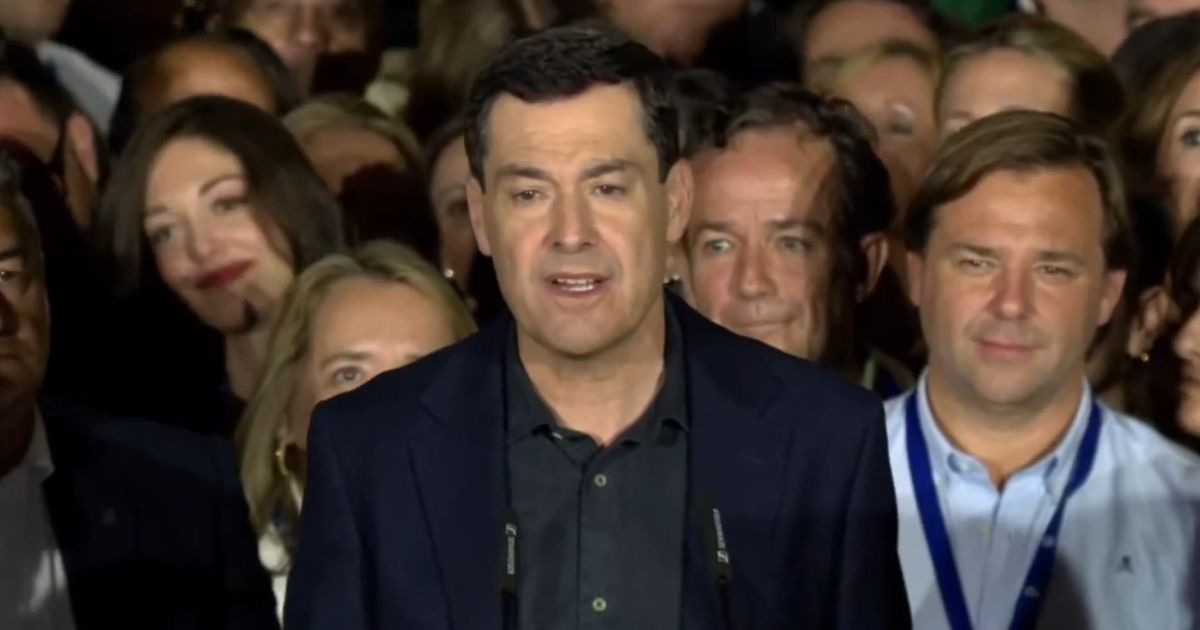
Juanma Moreno has won in Andalucia, but not with the freedom he wanted. The Andalucia election result leaves the Partido Popular as the clear winner, yet two seats short of an absolute majority. That means Moreno is now likely to need support from Vox to remain president of the Junta de Andalucia.
According to RTVE, the PP finished with 53 seats, down from 58 in 2022. The absolute majority in the 109-seat Andalucian Parliament is 55. Vox rose to 15 seats, making it decisive in the new parliamentary arithmetic.
How this affects Andalucia
There is no immediate change to daily life in Andalucia. Services continue, the current regional government remains in place for now, and any new policy direction will depend on the investiture process and whatever agreement Moreno can reach. But the result matters because housing, healthcare, tourism, agriculture, immigration, public spending and environmental policy could all become part of post-election negotiations.
A clear win, but not a free hand
The PP remains the dominant political force in Andalucia. It won across all eight provinces and attracted around 1.7 million votes, according to RTVE’s election report. But the fall from 58 to 53 seats changes the tone of the victory.
Four years ago, Moreno governed with an absolute majority. That allowed him to present himself as a moderate conservative leader with space to govern alone.
This time, the result is more complicated. The PP has won comfortably, but it cannot guarantee Moreno’s investiture without outside support.
Reuters also described the vote as a significant test ahead of Spain’s next national election, noting that the PP won but lost its absolute majority and must now rely on Vox if it wants to stay in power.
Why Vox now matters
Vox does not need to overtake the PP to shape what happens next. It only needs to be necessary.
That is exactly where the election result leaves the party. RTVE reports that Vox increased by one seat, from 14 to 15, while keeping a similar share of the vote to 2022. Because the PP fell short, Vox now holds the key to Moreno’s investiture.
The question is whether Vox will simply allow Moreno to govern, demand a formal role in government, or seek a written agreement on policy.
On Monday, Vox figures were already signalling that they would not necessarily ask for ministerial posts, but would push for their campaign demand of “national priority”. El País reported that Vox said it would seek a change in policies rather than posts in the Junta.
Moreno, meanwhile, has said he wants to govern alone. He argued that the result was strong enough to justify a single-party PP government, while also acknowledging that parliamentary dynamics may require agreements.
What could be negotiated?
The coming days are likely to focus less on who won and more on what Vox will ask for.
Any talks could touch on issues that matter directly to people living in Andalucia. Healthcare was one of the major campaign themes, along with unemployment and drug trafficking, according to Reuters.
Housing may also become part of the debate, especially in coastal areas where rising prices, tourist rentals and access to affordable homes are already major concerns.
Immigration and public spending are also likely to feature. Vox has repeatedly pushed harder language on immigration, while the PP will want to protect Moreno’s more moderate image.
For foreign residents, tourists and second-home owners, the key point is that nothing changes overnight. The impact will come later, through budgets, regional laws, administrative priorities and public service decisions.
PSOE hits a new low in its former stronghold
The result is also deeply uncomfortable for the PSOE.
The Socialists won 28 seats, down from 30, marking their worst result in Andalucia. That is politically symbolic because Andalucia was once one of the PSOE’s strongest territories.
María Jesús Montero, who led the PSOE campaign, now faces the task of rebuilding from opposition. El País reported that she has expressed concern over the future of public healthcare, education and housing under the new political balance.
The left was not wiped out, however. Adelante Andalucia made one of the strongest gains of the night, rising to eight seats, while Por Andalucia held five. RTVE said Adelante almost doubled Por Andalucia in parliamentary representation.
The result also came with a noticeable rise in participation. RTVE reported turnout of 64.83%, up 6.47 percentage points compared with 2022.
That suggests the election was not simply a low-energy repeat of the previous vote. More people turned out, but the higher participation did not give the PP the extra seats it needed to govern alone.
Instead, the new parliament is more finely balanced.
Moreno’s harder second act
Moreno is still the favourite to continue as president of the Junta de Andalucia. The question is how much room he will have.
A single-party PP government supported from outside by Vox would allow him to preserve part of his moderate image. A formal coalition, or a strict investiture agreement, would make Vox’s influence more visible.
Either way, the next phase is no longer about the election campaign. It is about leverage.
For Andalucia, the result means continuity at the top, but not business as usual. Moreno has won. Yet the government he forms now may be shaped as much by the two seats he failed to win as by the 53 he did.