 Else Beekman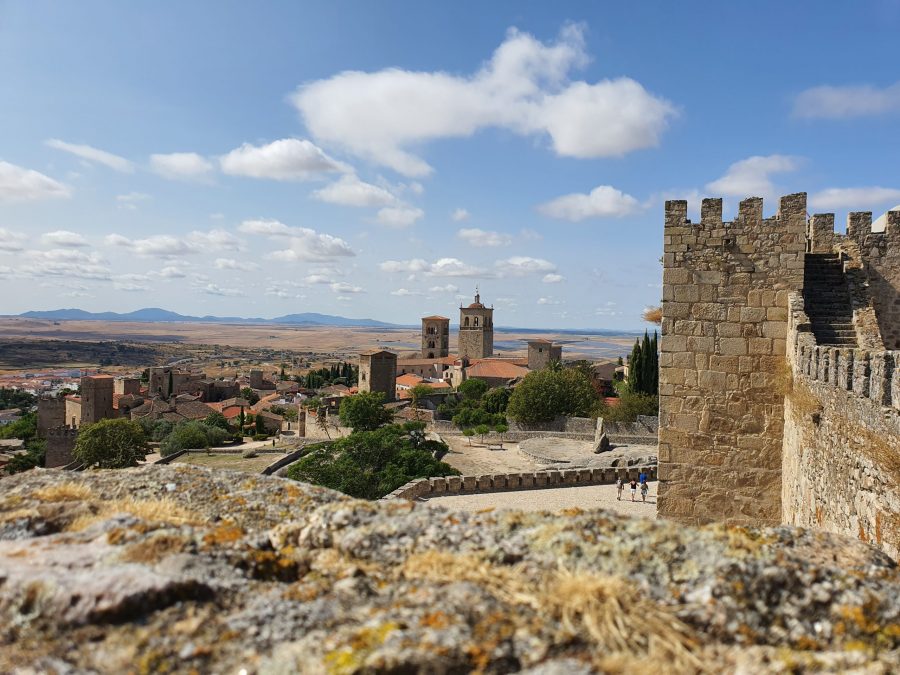
Extremadura is one of Spain’s most quietly rewarding regions. Bordering Portugal in the west, it offers Roman ruins, medieval cities, wild landscapes, exceptional food and a slower rhythm that feels increasingly rare in a country shaped by mass tourism.
For travellers who want to look beyond the beaches and big city breaks, Extremadura is a reminder of how much Spain still keeps hidden in plain sight.
This is a region of broad skies, stone towns, dehesa landscapes and long historical memory. It is also a place where journeys are best taken slowly, with time to stop in market squares, Roman theatres, hilltop villages and family-run restaurants.
Extremadura also feels especially relevant now, as more travellers look for alternatives to Spain’s busiest coastal and city destinations. Its appeal lies in depth rather than spectacle: UNESCO World Heritage sites, rural routes, nature reserves, gastronomy, and towns where daily life still moves at a gentler pace.
European and World Heritage

Cáceres old town
Extremadura hosts three UNESCO World Heritage Sites: the Royal Monastery of Santa María de Guadalupe, the Archaeological Ensemble of Mérida, and the Old Town of Cáceres. Each opens a different doorway into the region’s past, whether you are walking through the honey-coloured streets of Cáceres or sitting inside Mérida’s Roman theatre.
History lovers will find plenty to linger over in Extremadura. Sites are abundant, and some are still being excavated, offering glimpses into Spain’s Roman, medieval and early modern past. Colonial history is more complicated and often uncomfortable, but towns such as Trujillo, where several explorers were born, remain powerful places to reflect on Spain’s wider story.
Cultural Routes and Festivals

Trujillo main square
To follow in the footsteps of explorers such as Francisco Pizarro and Hernán Cortés, visitors to Extremadura can take the Route of the Explorers.
Several other cultural routes lead you along key historical paths, including:
Moreover, from classical theatre to contemporary music, Extremadura hosts some great festivals in incredible settings.

Mérida Roman amphitheatre
The International Festival of Classical Theatre, held from July to August, takes place in the Mérida amphitheatre. It is supported by the Cáceres Classical Theatre Festival in June and the Classical Theatre Festival of Alcántara in August.
Cáceres is also the setting for WOMAD, when world music sets the medieval centre of the town swaying. Luna Castle in Alburquerque hosts Contempopránea, while Los Palomos festival in May puts Badajoz centre-stage for LGBTI rights.
Gastronomy

Jamón Ibérico
No visit to Extremadura is complete without sampling the incredible gastronomy. The wine of Extremadura is delightful and not given the recognition it deserves. Furthermore, the jamón ibérico de bellota is unlike any other ham in Spain. Seated in the centre of Cáceres with a plate of this divine food is paradisiacal.
The landscape and climate combine to create the region’s incomparable gastronomy. Take a trip along the Ruta del Queso (cheese route), and you’ll discover a land of artisan cheesemaking, with sublime cheeses to tantalise the taste buds. Add to the list superb olive oil, honey, cherries, and pastries, and you have a daily feast.
Natural landscape

Extremadura’s natural landscape
One of Spain’s national parks sits in Extremadura, and it is a place of remarkable beauty. Monfragüe National Park is one of the best examples of Mediterranean forest and scrubland in Spain. Located within the Monfragüe Biosphere Reserve, it is also one of the country’s great birdwatching destinations. Black vultures, black storks, griffon vultures and Egyptian vultures can all be seen here, especially around the cliffs and river valleys shaped by the Tagus River.
Furthermore, Extremadura has two other UNESCO Biosphere Reserves: Tajo Internacional and La Siberia, as well as the Villuercas-Ibores-Jara UNESCO Global Geopark.
These and other natural areas in Extremadura include open woodland landscapes of holm oaks, cork oaks and other species. Known as dehesas, they cover almost a million hectares and help shape the region’s gastronomy, especially its acorn-fed Iberian pork.
For lovers of natural swimming, the region’s rivers, reservoirs, gorges, and natural pools offer plenty of places to cool off in summer. Extremadura may be inland, but it has more than 50 natural bathing areas, including several freshwater beaches recognised for their quality.
Moreover, the region’s open, natural, and sparsely populated landscape makes it an excellent spot for stargazing. Limited light pollution, clear skies and good access give keen astronomers and casual stargazers the chance to enjoy the wonders of the night sky.