 Lorraine Williamson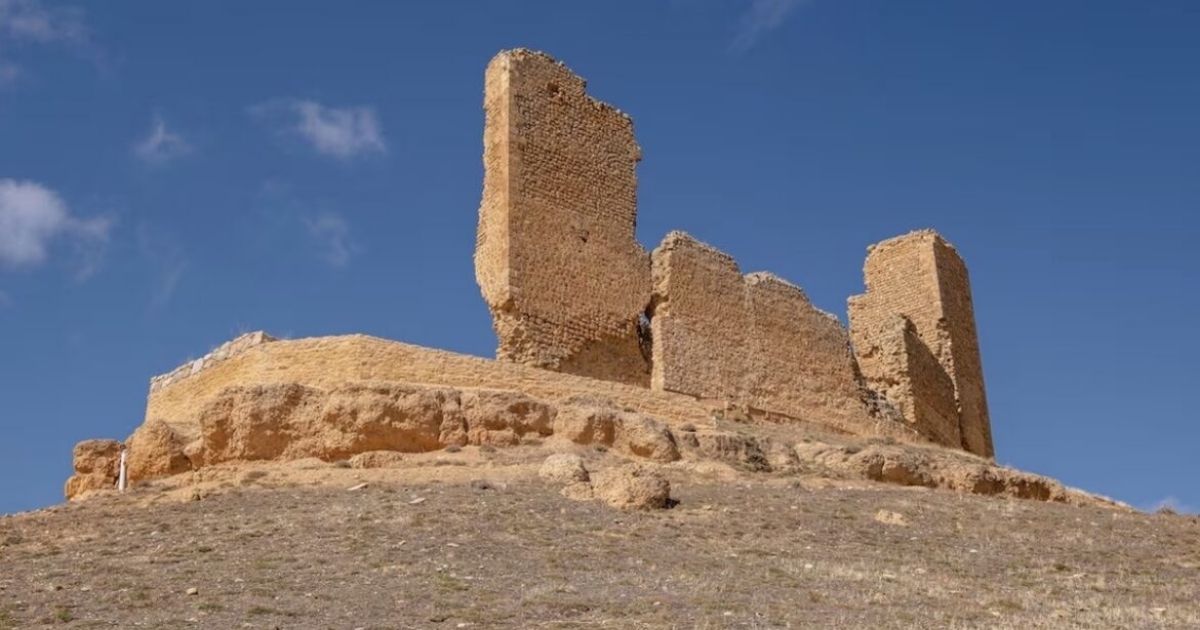
Spain’s castles are among the most visible symbols of its history. They sit above villages, guard old routes, and shape the skyline from Castilla to Andalucia.
Yet many of them are quietly falling apart. Experts warn that Spain’s castles at risk are not isolated cases, but part of a much wider heritage problem involving neglect, weak records, fragmented rules and years of underinvestment.
At a glance: why Spain’s castles are under threat
- Experts say more than half of Spain’s castles are at risk of collapse.
- Spain still lacks a complete, updated national inventory of its castles.
- Poor restoration work and misuse can worsen structural damage.
- Investment often goes to castles with tourism value, leaving remote sites behind.
More castles than Spain can properly count
Spain has thousands of castles, towers, walls and defensive structures. But one of the biggest problems is surprisingly basic: nobody knows exactly how many there are.
El País reports that the official register still relies on a catalogue dating from 1968, which experts now consider incomplete. The Spanish Association of Friends of Castles has already identified more than 10,000 defensive structures, but believes the real number could be far higher.
That lack of information matters. Without a full record, it is difficult to assess which buildings are most fragile, which need urgent work and which could disappear before they are even properly studied.
Six in ten could face collapse risk
The condition of many castles has returned to public debate after a tower at the castle of Escalona, in Toledo, collapsed in March. The fall was captured on a mobile phone and widely shared online.
For heritage specialists, however, the incident was not a surprise. El País cites archaeologist Miguel Ángel Bru, who estimates that six out of ten castles in Spain face a risk of collapse. If smaller partial collapses are included, he puts the figure closer to eight out of ten.
Other cases include Almonacid in Toledo, Peñarroya in Ciudad Real and sections of historic walls in cities such as Salamanca and Lugo.
Why so many castles were abandoned
Many Spanish castles lost their purpose centuries ago.
Once they were no longer needed for defence, many were left unused. Churches and cathedrals often kept a religious or community role, but defensive buildings became easier to ignore.
Some were gradually stripped for stone. In villages across Spain, old castle blocks were reused in houses, barns and walls. What now appears picturesque often reflects centuries of slow dismantling.
Nature adds another pressure. Erosion, landslides and weakened ground can crack walls and destabilise towers, particularly on exposed hilltops or cliffs.
When restoration causes damage
Not all damage comes from abandonment.
Experts also warn that poor restoration work can make things worse. Rigid modern materials such as concrete or cement may trap moisture, prevent old walls from breathing and accelerate decay.
That creates a difficult balance. Castles need intervention, but the wrong intervention can harm them.
The problem is even harder because heritage rules are fragmented. Spain’s autonomous communities manage much of their own heritage policy, which can make national coordination slow and uneven.
Misuse adds another layer of risk
Some threatened castles are not just neglected. They are also misused.
El País highlights the castle of Oreja, between Toledo and Aranjuez, as one example. Experts say it has serious structural problems, while people have reportedly slept inside and illegal rave parties have been held there.
The tower of Mota del Marqués in Valladolid is another striking case. Its remaining structure appears almost sliced open, standing in a fragile state above the landscape.
These sites may still look romantic from a distance. Up close, they are often unstable, unprotected and hard to manage.
Tourism can save castles — but not all of them
Tourism has helped some castles survive.
Those that can attract visitors, host events or anchor rural tourism projects are more likely to receive funding. Spain has several successful examples of restored fortresses that now bring life to towns and villages.
But that creates an uneven system. Castles in remote areas, or those without obvious commercial appeal, may be left behind even when their need is greater.
For heritage specialists, the risk is that Spain saves the castles that can sell tickets while losing quieter sites that are just as historically important.
A disappearing part of rural Spain
The issue is not only architectural.
Castles often form part of the identity of rural communities. They mark old frontiers, Islamic and Christian histories, noble lineages, trade routes and military landscapes.
When they collapse, something more than stone is lost. A village loses part of its memory, and Spain loses another fragment of a landscape built over centuries.
That is why experts are calling for better documentation, stronger coordination and more realistic conservation plans.
Six spectacular castles in Spain
Spain still has time to act
There is still hope.
Some restoration projects are showing that careful consolidation can protect fragile structures without turning them into theme parks. Other castles may never become tourist attractions, but they can still be stabilised, recorded and respected.
The first step is knowing what exists. Without a proper national inventory, Spain cannot decide what to save, what to secure and what to document before it disappears.
Spain’s castles have survived wars, abandonment and changing empires. Whether they survive neglect may depend on whether the country finally treats them as living heritage, not just romantic ruins on a hill.