 Lorraine Williamson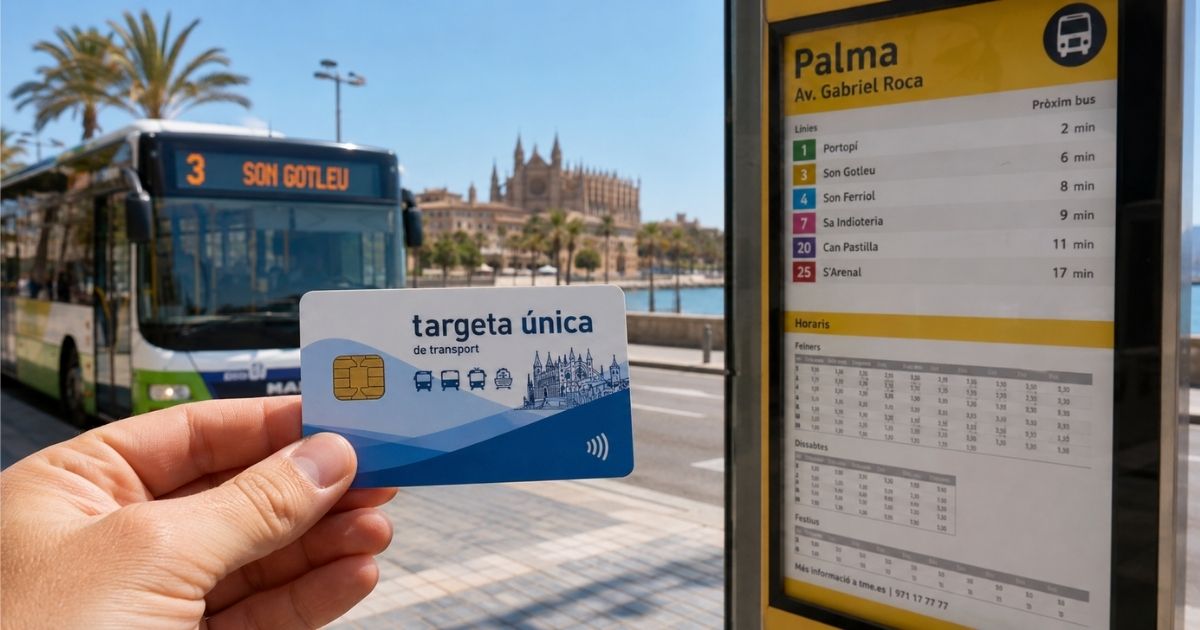
A growing row has erupted in Mallorca after claims that tourists are using resident-only transport cards to access discounted travel on the island’s public transport network.
The controversy centres on Mallorca’s “Tarjeta Única” resident transport card system, which offers discounted fares for eligible island residents.
At a glance: what is happening in Mallorca
- Bus drivers say some tourists are using resident discount travel cards.
- The cards are designed for Balearic Islands residents.
- Concerns have been raised in the Balearic parliament.
- Authorities say inspections and checks are continuing.
What are the resident travel cards?
Mallorca’s public transport system offers discounted fares to Balearic Islands residents through personalised travel cards linked to local registration details.
The cards are intended to help residents with the cost of buses, trains and metro services across the islands. In some cases, journeys can be heavily reduced or even free under regional subsidy schemes.
Tourists are not eligible for those discounts.
Drivers say misuse is becoming more visible
According to reports in Última Hora, drivers on the TIB interurban bus network have warned that tourists are increasingly using resident travel cards to access cheaper journeys across Mallorca.
The issue has now reached the Balearic parliament, where politicians have raised concerns about whether controls are strong enough and how widespread the misuse may be.
Some drivers reportedly believe the practice is happening daily on certain tourist-heavy routes, especially during busy travel periods.
Why the issue touches a nerve
Transport is becoming an increasingly sensitive issue in Mallorca.
The island has faced repeated debates over overcrowding, rising housing costs, rental pressure and the impact of mass tourism on daily life for residents.
For many locals, the transport discounts are seen as a public benefit funded to support island residents rather than visitors.
That is why allegations that tourists are using the cards have sparked frustration beyond the actual cost of bus fares.
Authorities say checks are in place
Balearic transport authorities say inspections and identity checks are already carried out on the network.
Because the resident cards are personalised, inspectors can request identification if they suspect misuse. Penalties may apply if cards are used fraudulently or by someone other than the registered holder.
Even so, critics argue enforcement is difficult during crowded periods, particularly in summer when visitor numbers surge across the island.
Tourism pressure remains a political issue
The transport card dispute arrives at a time when Mallorca is once again debating the impact of tourism growth.
Recent demonstrations across the Balearics have focused on housing shortages, rising rental prices and pressure on infrastructure. Public transport has increasingly become part of that wider conversation.
For some residents, the issue is not simply whether a tourist saves a few euros on a journey. It is about whether local systems designed for residents are slowly being overwhelmed.
Visitors also face confusing rules
At the same time, the transport system can be confusing for visitors unfamiliar with local discount schemes.
Different cards, subsidy programmes and regional transport rules exist across the Balearic Islands, and some tourists may not fully understand which fares they are entitled to use.
Authorities have not suggested that all misuse is deliberate fraud. However, transport workers say clearer controls and communication may still be needed ahead of the busiest summer months.
A wider debate about who Mallorca is for
The row over transport cards may sound minor compared with housing or water shortages, but it reflects a broader question running through Mallorca’s tourism debate.
As visitor numbers continue to rise, residents increasingly want reassurance that local infrastructure, services and public benefits are not being eroded.
For tourists, Mallorca remains one of Europe’s most popular destinations. For many locals, however, the challenge is making sure everyday island life remains affordable and functional for the people who live there year-round.