 Lorraine Williamson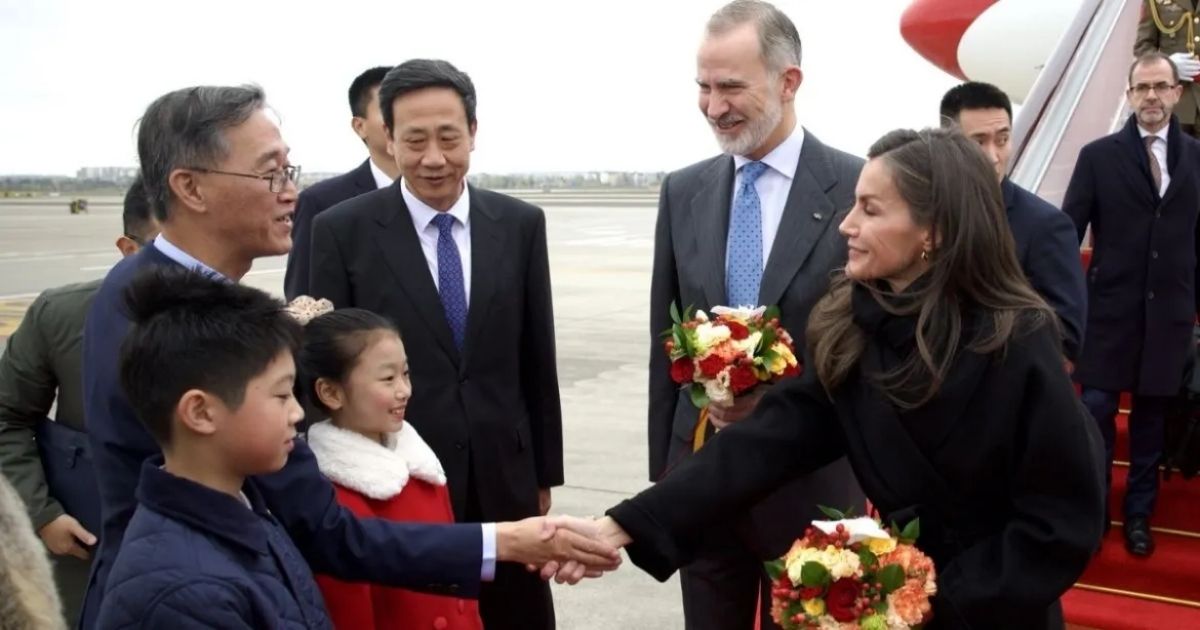
Pedro Sánchez’s new trip to China is not just another diplomatic stop. It comes at a moment when Spain is trying to steady itself in a more volatile global economy, with trade uncertainty rising, energy markets unsettled, and governments looking for room to manoeuvre. Beijing is part of that calculation.
The Chinese foreign ministry says Sánchez will make an official visit from 11 to 15 April, with meetings scheduled with Xi Jinping, Li Qiang and Zhao Leji. Reuters notes that this will be his fourth trip to China in four years, underlining how regularly Madrid has chosen to keep that channel open even as wider Western suspicion of Beijing has hardened.
This is about economic positioning as much as diplomacy
The real significance of the visit lies in timing. Spain is not heading into Beijing from a position of calm global trade. Banco de España said in its March quarterly report that uncertainty around US trade policy is now even higher in the medium term, and that progress on the EU-US trade agreement reached last summer has been suspended.
That does not mean Spain is turning away from Brussels or Washington. However, it does suggest Madrid wants to keep widening its options. In February, the government’s new Asia-Pacific Strategy 2026-2029 said Spain wanted to support more stable economic frameworks in the region, deepen cooperation, and even create a ministerial-level strategic dialogue with China in the coming months. Viewed in that context, Sánchez’s trip looks less like a one-off and more like part of a longer plan.
Why China still matters to Spain
China is not just a distant geopolitical talking point for Spain. It is a major economic power that Madrid clearly believes cannot be ignored, especially at a time when supply chains, tariffs and investment decisions are under fresh pressure. Reuters reported that King Felipe made a state visit to China in November 2025, the first by a Spanish monarch in 18 years, which it described as another sign of the closeness of bilateral ties despite broader mistrust elsewhere in Europe and the United States.
Spain’s own Asia-Pacific strategy points in the same direction. The government says it wants to reinforce scientific, technological, educational and cultural cooperation across the region, and specifically flagged Sánchez’s China visit as part of that effort. That gives the trip a broader frame than trade alone. It is also about how Spain wants to project itself in Asia over the next few years.
The trade backdrop is more complicated than it looks
There is an awkward twist in the global picture. Banco de España says that after recent changes in US tariff policy, almost 60% of Spanish and euro area exports to the United States are subject to tariff reductions, while around a third face slight increases. That may sound less alarming than feared at first glance, but the central bank’s bigger point is that the rules remain unstable and the medium-term outlook is highly uncertain.
That uncertainty helps explain why countries such as Spain are keen to keep other relationships active. It would be too simplistic to say Madrid is choosing China over America. A fairer reading is that Spain wants to avoid being boxed in while the global trade landscape keeps shifting. That is an inference from the central bank’s warning about trade uncertainty and from the government’s own push for more structured ties in Asia.
What Beijing is saying
China has made clear that it sees something bigger in the visit. In its official announcement, the foreign ministry said Sánchez’s trip should be used to deepen mutual trust and expand cooperation. Reuters also reported spokesperson Mao Ning saying Beijing wanted to strengthen multilateral coordination and take the relationship to a higher level.
That language matters because it shows China sees Spain as more than a passing European visitor. Madrid is being treated as a useful interlocutor inside the EU at a time when relations between China and parts of the West remain tense. Spain may not carry the weight of Germany or France in every economic debate, but it is clearly trying to make itself matter in this one. That final point is an inference from the level of engagement reflected in the official announcements and the sustained pattern of top-level visits.
Why this matters in Spain tonight
For Spanish readers, the trip matters because it touches several live concerns at once: prices, trade, investment, jobs and Spain’s place in a less predictable world. Foreign visits can often feel distant. This one does not. It sits right on top of questions about how exposed Spain is to global shocks and how much control it has over its own economic direction.
That is why this is more than a diplomatic calendar item. Sánchez’s Beijing visit is really a story about how Spain is trying to protect its room for manoeuvre while the world economy gets messier. Over the next few days, the real test will be whether the trip produces anything concrete on trade, investment or strategic dialogue, or whether it remains a signal rather than a result.