 Lorraine Williamson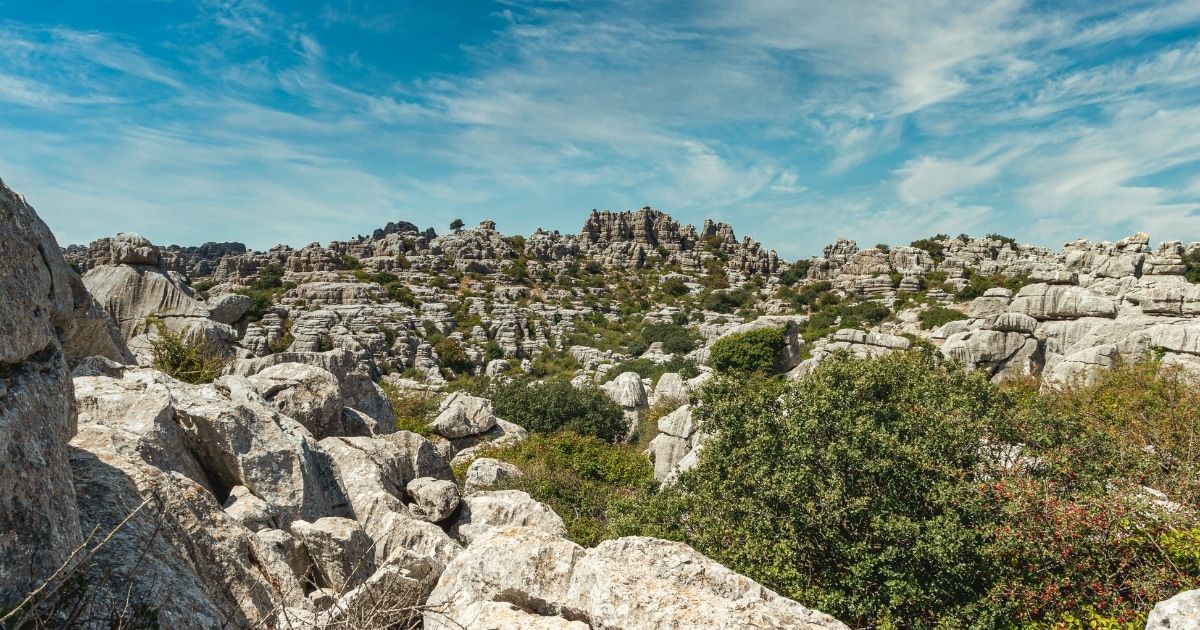
Less than an hour from Málaga, the coast gives way to one of Andalucia’s most extraordinary landscapes. At El Torcal de Antequera, limestone towers, narrow corridors, and strange rock formations rise from a high plateau like the remains of a lost world.
It feels far from the beaches, bars and busy roads of the Costa del Sol, although it is close enough for an easy day trip.
At a glance: visiting El Torcal
- El Torcal sits near Antequera, around one hour from Málaga by car.
- The landscape was formed from limestone that once lay beneath a shallow sea.
- Marked walking routes start from the visitor centre.
- Spring and autumn are among the best times to visit.
A landscape born beneath the sea
El Torcal’s strange forms began around 150 million years ago, when the area lay beneath a shallow sea.
Over millions of years, layers of marine sediment hardened into limestone. Later, tectonic forces lifted the seabed as the African and European plates pushed against each other. What was once underwater became a mountain landscape at around 1,200 metres above sea level.
Rain, wind and temperature changes then did the patient work of erosion. The result is a natural maze of stone slabs, towers, arches and rounded formations.
Walking through a limestone labyrinth
The first impression of El Torcal is often silence.
There are no beach clubs here, no promenades and no traffic noise. Only wind moving through rock corridors, birds overhead and the occasional sound of goats somewhere beyond the path.
Most visitors begin at the visitor centre, where marked routes lead into the karst landscape. The shorter green route takes around 45 minutes and gives a good introduction to the terrain. The longer yellow route, around 90 minutes, heads deeper into the park.
Both routes pass through narrow passages and open viewpoints, with rocks that seem to change shape as you move around them.
El Tornillo and the shapes in the stone
The most famous rock formation is El Tornillo, or “The Screw”.
Its twisted layers make it one of the symbols of the park and one of the most photographed natural features in Málaga province. Elsewhere, visitors often spot shapes that resemble animals, faces or stacks of pancakes.
That is part of the pleasure of El Torcal. It feels both geological and playful, as if the landscape invites you to keep looking twice.
Why mist makes El Torcal even better
The clearest days bring wide views across the plains of Antequera. On exceptional days, the Sierra Nevada can be seen in the distance.
But El Torcal is often at its most memorable in mist.
In spring and autumn, clouds can drift across the plateau, half-hiding the rocks and giving the landscape an almost unreal atmosphere. Photographers often prefer early morning or late afternoon, when the light is softer and the limestone turns gold.
Wildlife on the plateau
El Torcal is not only about stone.
The area is home to wild goats, foxes, reptiles and birds of prey. Griffon vultures are often seen circling above the cliffs, using the air currents that rise around the plateau.
Visitors should stay on marked paths, partly for safety and partly to protect the fragile landscape. The rock may look solid and empty, but the ecosystem is more delicate than it appears.
Antequera makes the perfect second stop
Many travellers combine El Torcal with nearby Antequera, one of inland Andalucia’s most rewarding towns.
Antequera has whitewashed streets, churches, viewpoints and a slower rhythm than the coast. Its prehistoric dolmens are listed as a UNESCO World Heritage Site, making the town one of the best cultural add-ons to a visit to El Torcal.
After walking through stone corridors and high viewpoints, lunch on a terrace in Antequera feels like returning to Andalucia at human scale.
Practical tips for visiting
A car is the easiest way to reach El Torcal. The drive from Málaga takes about an hour, while Antequera is around 20 to 30 minutes away.
Parking at the visitor centre is free, but spaces can fill quickly at weekends and during holiday periods. Weather can also change fast because of the altitude, so it is worth checking conditions before setting off.
Sturdy shoes are strongly recommended. The limestone paths are uneven and can become slippery after rain, mist or morning dew.
Summer visits are possible, but spring and autumn are more comfortable for walking.
A quieter side of Málaga province
El Torcal is one of the best reminders that Málaga province is not only coast.
Within a short drive of the beaches, the landscape becomes cooler, older and stranger. It is a place shaped by an ancient sea, lifted into the mountains and carved slowly by time.
For hikers, photographers and anyone wanting a different kind of Andalucian day trip, El Torcal de Antequera offers something rare: a landscape that feels both close to Málaga and completely removed from it.