 Lorraine Williamson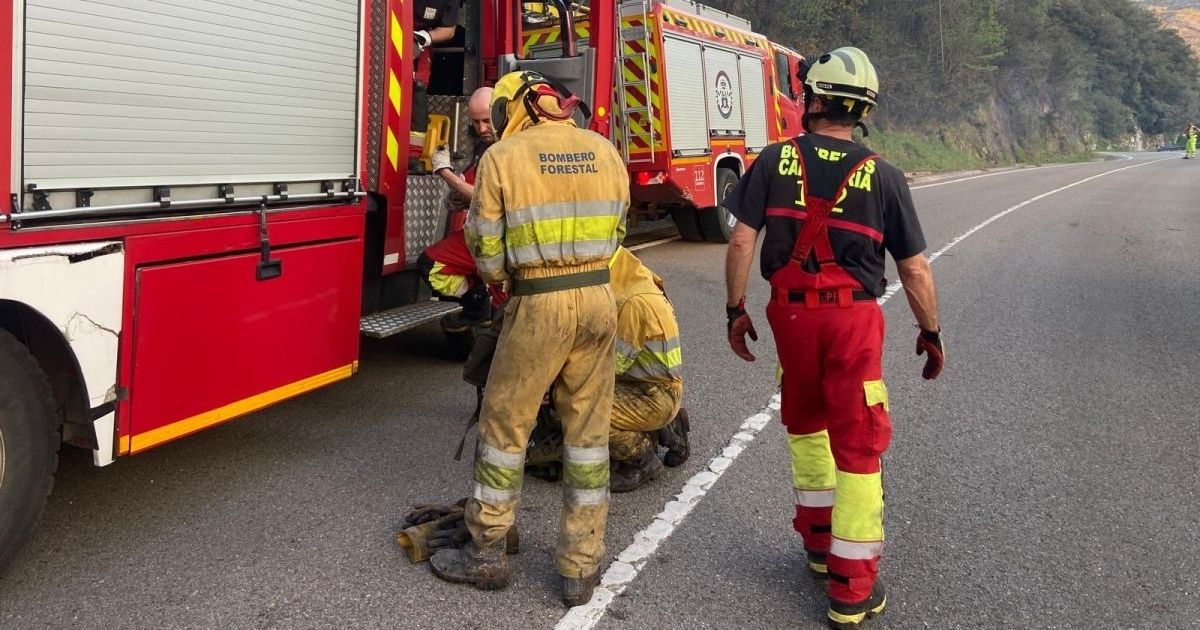
A difficult wildfire day is still unfolding in northern Spain, with at one point 56 wildfires in the previous 24 hours and one blaze disrupting rail traffic for part of the day. Cantabria remained under wildfire pressure on Tuesday afternoon, with 112 Cantabria reporting 23 active forest fires across the region and nine already under control, after the government activated the INFOCANT forest fire plan in pre-emergency mode earlier in the day.
Cantabria’s 112 service said the government activated the pre-emergency phase of INFOCANT at 9.00 am on 7 April because of the number of simultaneous fires and the prospect of unfavourable weather conditions over the next 48 to 72 hours. The official note said the risk was being driven by a combination of active outbreaks, high temperatures, and the lack of meaningful rain.
By Tuesday afternoon, 112 Cantabria said 23 forest fires were still active in Los Tojos, Cabuérniga, Rionansa, Valdáliga, Tudanca, Cieza, Arenas de Iguña, Molledo, Pesquera, Entrambasaguas, San Vicente de la Barquera, Ruente, and Lamasón, while a further nine were classed as under control.
Emergency crews were also called to a porch fire at a home in Monte Aa, in Cabuérniga, which 112 said was caused by embers from a forest fire. In a separate incident, firefighters were mobilised to tackle a forest fire near the cemetery in Lamiña, in Ruente, where crews extinguished flames close to the infrastructure and cooled the surrounding ground.
The fire in Cires remained the biggest concern
The regional government identified the most worrying fire as the one in Cires, in Lamasón, where the blaze was described as the most virulent. Cantabria asked the Ministry for the Ecological Transition for reinforcement from the BRIF brigade based in Soria, even though regional aircraft were already working in other affected areas.
That alone tells you the scale of the concern. This was not being treated as a routine spring brush-fire day, but as a broader regional emergency with multiple fronts and enough risk to justify outside support. That second sentence is an inference based on the INFOCANT activation and the request for national reinforcement.
By early afternoon, the fire count had eased slightly
Early afternoon reporting, said Cantabria was down to 23 active fires. The same reports said nine fires had been brought under control, although the regional pre-emergency phase remained in place because of continuing risk and the possibility of further flare-ups.
That means the situation improved from the morning peak, but it did not disappear. The region remained under pressure, although crews had started to reduce the number of active fronts. This is an inference based on the fall from 26 to 23 active fires and the continued emergency posture.
One blaze even interrupted rail services
The fires also spilled into transport. One wildfire near Arenas de Iguña forced the interruption of rail traffic between Las Fraguas and Los Corrales de Buelna, affecting both the C1 Cercanías line in Cantabria and services between Santander and Palencia. Adif’s network status showed the line was disrupted earlier in the day because of a fire near the infrastructure.
The disruption did not last all afternoon. Europa Press, citing Adif, reported that services were restored shortly before 2.00 pm, after road transport had briefly been arranged for affected passengers.
Why this wildfire story stands out
Wildfires are not unusual in Spain, but the timing and geography of this one make it notable. Cantabria is facing a serious spring fire episode in early April, not the height of summer, and the official warning has been shaped by heat, dryness, and adverse weather conditions rather than a single isolated incident.
That fits a wider pattern seen across Spain in recent years, where fire risk increasingly stretches outside the traditional peak season. We are drawing that broader point as context rather than attributing it to a single source, but today’s events in Cantabria clearly support it.