 Lorraine Williamson
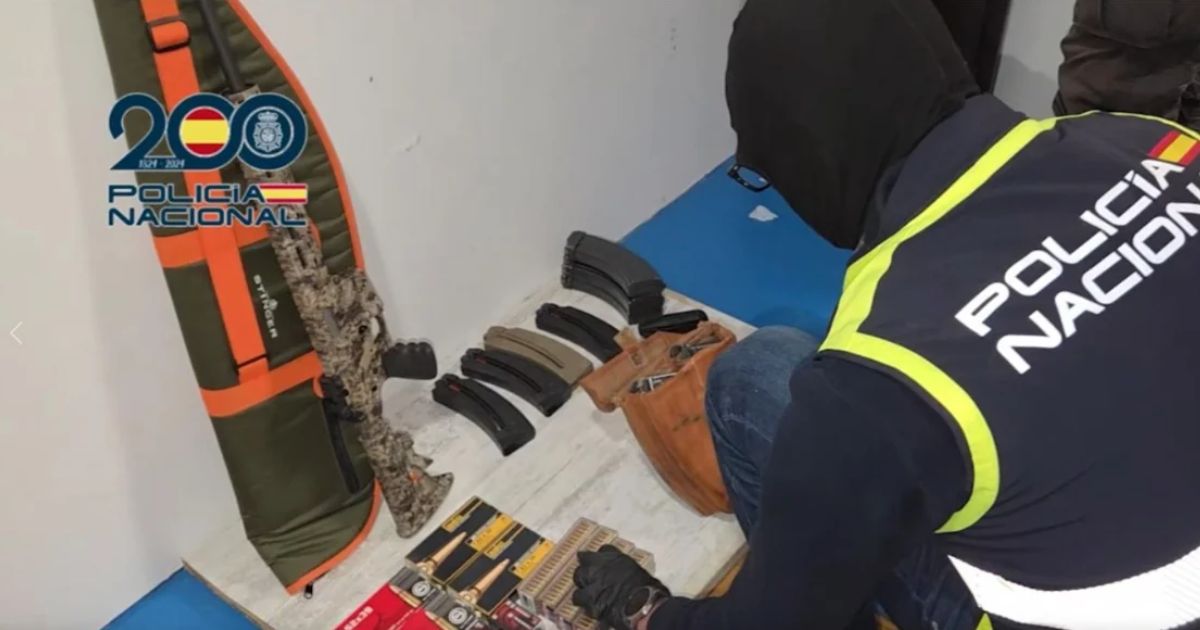
Spanish police say they have prevented the establishment of the country’s first physical cell linked to the pro-Russian cyberattack group NoName057(16), following the arrest of a man in Burgos. The investigation uncovered firearms, more than 5,000 rounds of ammunition and cryptocurrency wallets, raising concerns that an organisation previously associated with online attacks was attempting to establish a presence beyond the internet.
The man was arrested on Tuesday 17 November, with details of the operation released by the Policía Nacional three days later. According to the Ministry of the Interior, investigators believe he represented the first established physical presence in Spain of NoName057(16), a group accused of targeting government institutions, financial organisations and transport services through cyberattacks.
Police allege that the suspect had moved beyond supporting the organisation online and was actively promoting its activities, recruiting sympathisers and encouraging attacks against Spanish institutions. Authorities believe the arrest prevented the development of violent activity, although they have not publicly identified a specific planned attack or established how the weapons recovered were intended to be used.
Weapons and ammunition discovered in Burgos
Searches conducted as part of the investigation uncovered a semi-automatic rifle with a folding stock, carbines, shotguns and high-capacity magazines, alongside more than 5,000 rounds of ammunition, including military ammunition. Officers also recovered improvised batons fitted with screws, extendable batons, detachable double-edged spears, brass knuckles and other weapons.
The inventory extended to containers of chemical products, 13 receptacles holding liquids and ten canisters of butanol. Investigators have not publicly explained the intended use of these materials, and their discovery should not be taken as evidence that a particular attack had been prepared.
Police also seized three physical cryptocurrency wallets containing bitcoin, with the origin of the funds now under investigation. The combination of weapons, ammunition and financial material forms part of a wider inquiry into the suspect’s alleged involvement with the organisation and the activities he may have been preparing to undertake.
Hundreds of cyberattacks attributed to NoName057(16)
NoName057(16) emerged in 2022 following Russia’s full-scale invasion of Ukraine and has become associated with cyberattacks against countries providing political or military support to Kyiv. Spanish authorities attribute at least 447 attacks against targets in Spain to the organisation since 2024, including public institutions, banks and transport companies.
The group is particularly associated with distributed denial-of-service attacks, commonly known as DDoS attacks, which overwhelm websites or online services with traffic until they become difficult or impossible to access. Such incidents can disrupt public services and commercial operations without necessarily involving the theft of personal information or direct access to internal computer systems.
The figure of 447 attacks refers to the activities attributed to the wider organisation rather than actions personally carried out by the Burgos suspect. Investigators are examining his alleged role in supporting and expanding the group’s activities in Spain, particularly through propaganda and recruitment.
From online conspiracy groups to recruitment activity
According to police, the suspect’s involvement developed through online conspiracy communities before progressing to active participation in channels associated with NoName057(16). Investigators allege that he distributed material praising the organisation’s activities, encouraged cyberattacks against state institutions and circulated messages calling for confrontation with police officers.
He is also suspected of acting as an intermediary for recruitment, directing people interested in joining the organisation towards an established network. This alleged activity is central to the investigation because authorities believe the group was attempting to extend its influence beyond the online environment in which it had previously operated in Spain.
Police linked the suspect to a propaganda campaign involving stickers bearing the organisation’s emblem and QR codes directing people to its official online channels. The material appeared in Burgos, Palencia, Lerma, Valladolid, Zaragoza, Logroño, Aranda de Duero and Madrid, with NoName057(16) subsequently claiming that its volunteers had carried out the campaign.
The distribution of propaganda across several Spanish cities suggests an effort to increase the organisation’s visibility and attract potential supporters. However, the existence of promotional material in those locations does not establish that operational cells had been formed in each city.
EU sanctions underline wider cybersecurity concerns
The Burgos arrest came one day after the European Union announced sanctions against NoName057(16) as part of its response to malicious cyber activity. On 16 November, the Council of the European Union included the organisation in measures targeting groups and individuals accused of conducting cyberattacks and other hostile activities.
The Council linked NoName057(16) to attacks against government bodies, critical infrastructure and public organisations in Ukraine, the United States and EU member states. Its reported targets have included the energy, financial and transport sectors, water infrastructure and websites connected with political parties and electoral processes.
The sanctions involve freezing assets and prohibiting EU individuals and businesses from making funds or economic resources available to the organisation. They reflect growing concern among European authorities about cyber operations targeting public institutions and essential services, particularly those associated with Russia’s war against Ukraine.
Although the EU measures and the Burgos arrest occurred within days of one another, they are separate actions by European and Spanish authorities. Both concern the same organisation, but the timing alone does not establish that the police operation was triggered by the sanctions decision.
Suspect released while judicial investigation continues
The investigation was conducted by the Policía Nacional’s General Information Commissariat and its provincial information brigade in Burgos, under the supervision of the Audiencia Nacional’s investigating authorities and prosecutors. Following his arrest, the suspect appeared before the Audiencia Nacional, which ordered his provisional release subject to precautionary measures.
He remains under investigation for alleged membership of a terrorist organisation, glorification of terrorism and offences involving the possession and storage of weapons and ammunition. No conviction has been recorded, and the allegations against him remain subject to the judicial process.
For Spanish investigators, the significance of the case lies in the alleged attempt to establish a physical presence for an organisation previously associated with online disruption. The investigation now centres on the suspect’s activities, the materials recovered, and whether the evidence supports the authorities’ concerns about the group’s expansion into Spain.
Microsoft outage disrupts Outlook, Teams and other services worldwide