 Lorraine Williamson
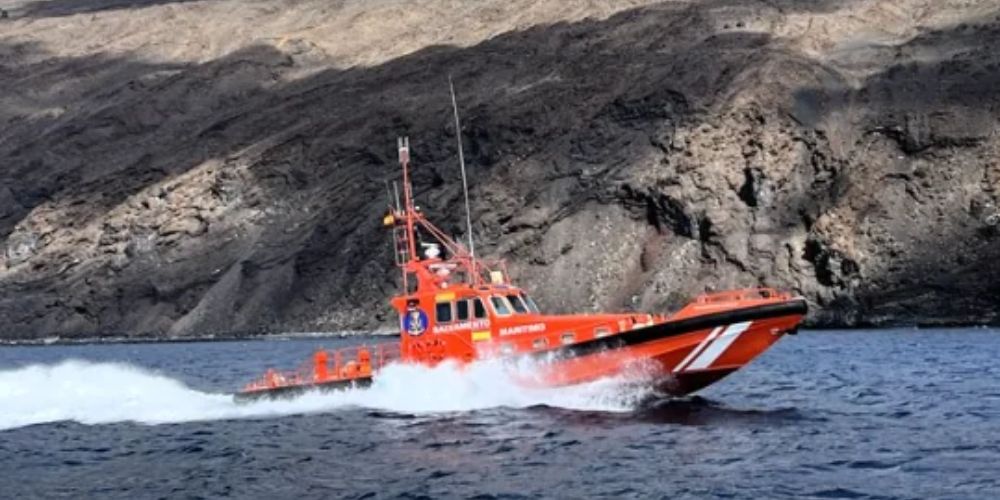
The Canary Islands have recorded their highest daily number of migrant rescues on the Atlantic route, with 1,580 people arriving aboard 15 boats on Saturday 14 November. Most were brought ashore on El Hierro, where emergency services and reception facilities are already struggling to cope with a sustained increase in arrivals.
The latest figures mark a new daily record for the Atlantic migration route, which has been used by people attempting to reach Spanish territory from the West African coast for more than three decades. The previous record was 1,461 people rescued on 7 November 2020, according to figures reported by the Canary Islands’ public broadcaster.
The initial figures published by RTVC on Sunday morning reported 1,488 arrivals, although subsequent reports raised the provisional total to more than 1,500. Rescue operations involved vessels operated by Salvamento Marítimo and the Guardia Civil, with people brought ashore on El Hierro, Gran Canaria and Tenerife.
El Hierro receives more than 1,300 people
El Hierro accounted for the overwhelming majority of Saturday’s arrivals, receiving 1,327 people aboard 13 boats. Another 203 people reached Gran Canaria, while 50 arrived in Tenerife, bringing the archipelago-wide total to 1,488.
One of the largest rescue operations involved a boat carrying 240 people, including 12 women and 36 minors. The vessel had reportedly spent six days at sea after departing from Gunjur in Gambia before reaching La Restinga, the small fishing port on El Hierro that has become a central point for maritime rescue operations.
Other boats had undertaken journeys lasting between four and seven days from Senegal, Gambia and Mauritania. Such crossings can expose passengers to dehydration, exhaustion and dangerous sea conditions, particularly when vessels are overcrowded or unsuitable for lengthy ocean journeys.
The scale of the weekend’s arrivals is particularly striking. With more than 1,500 people reported to have reached the Canary Islands on Saturday alone, rescue crews, medical teams and reception services faced an exceptionally demanding period. The latest arrivals have added to the pressure on El Hierro, where authorities have been managing sustained arrivals throughout November.
Medical services and reception facilities under pressure
Emergency workers have been responding to successive arrivals while arranging medical assessments, temporary accommodation and transfers to other islands. On Gran Canaria, 17 people from one boat required hospital treatment after receiving initial assistance, while another person was evacuated for medical care in Tenerife.
On El Hierro, 11 people remained in the island’s Nuestra Señora de los Reyes hospital, according to the latest reported figures. The temporary reception centre was holding 317 people before the most recent arrivals were included in the count, while 158 others had been transferred to Tenerife during the day.
The situation has become particularly difficult for El Hierro, an island with a population of around 11,400. Its limited healthcare and reception infrastructure must respond to large numbers of arrivals within short periods, often requiring support from other islands and the Spanish government.
Earlier this month, the island’s authorities declared a social emergency to help mobilise additional resources and coordinate the response. The declaration followed weeks of sustained arrivals and concerns about the ability of rescue personnel, healthcare workers, police and humanitarian organisations to maintain services without further assistance.
Why migrant arrivals are increasing in the Canary Islands
The Atlantic route connects parts of West Africa with the Canary Islands, but it is among the most hazardous migration journeys towards Europe. Boats may travel for several days across open ocean, and their occupants can face considerable risks before reaching Spanish waters or being located by rescue services.
The recent increase in arrivals has prompted renewed discussion about conditions in countries of departure, the availability of alternative migration routes and the capacity of Spanish authorities to respond. Economic hardship, insecurity and displacement can all influence migration decisions, although individual circumstances vary considerably.
The pressure has been especially pronounced on El Hierro throughout November. RTVE reported on Saturday that more than 8,000 people had reached the island since the beginning of the month, with the latest arrivals adding to an already demanding situation.
Spanish government faces calls for further support
The Canary Islands government has repeatedly called for additional assistance to manage the number of people arriving and ensure that emergency services can continue operating safely. Regional president Fernando Clavijo has raised concerns about the strain on El Hierro and the need for a longer-term response rather than measures introduced only during periods of exceptional pressure.
The Spanish government has already discussed additional resources, including reinforcement of policing, healthcare and reception arrangements. Transfers to other islands and mainland Spain have also formed part of the response, although the continued arrival of boats has complicated efforts to reduce pressure on El Hierro.
Territorial Policy Minister Ángel Víctor Torres was expected to visit La Restinga on Sunday to assess the situation. The visit comes as authorities consider how to maintain rescue operations and humanitarian assistance while managing the exceptionally high number of arrivals.
Saturday’s record demonstrates the scale of the immediate challenge facing the Canary Islands. With 2,331 people arriving over two days, the priority for the authorities is to provide safe reception and medical care while ensuring that rescue services and local facilities have sufficient resources to respond to further boats.