 Lorraine Williamson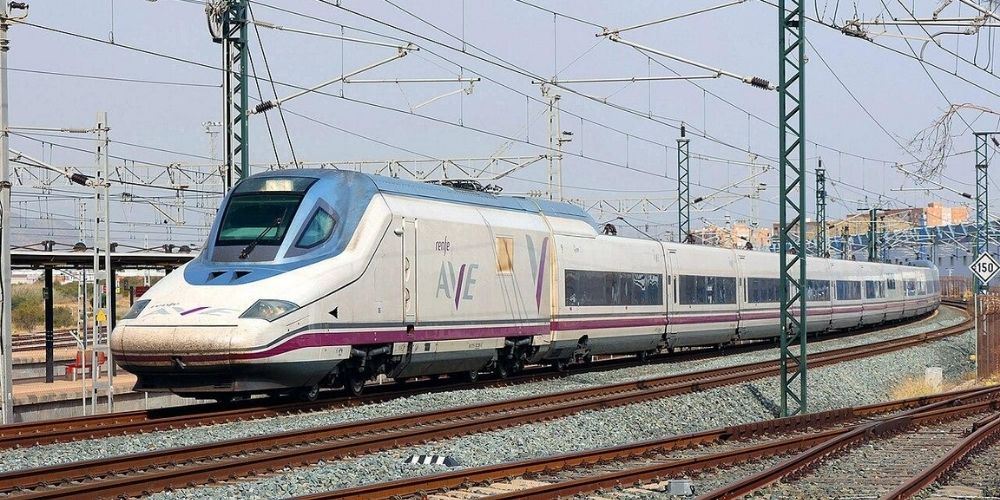
High-speed rail services between Madrid and Barcelona are expected to return towards normal on Monday 19 October, following repairs to infrastructure damaged by a train fire in Zaragoza. The reopening of the second track should allow operators to restore their usual timetables after nearly a week of delays, cancellations and reduced services.
Spain’s railway infrastructure manager, Adif, has completed extensive repair work on the section between Ricla and Plasencia de Jalón, where an AVE train caught fire on 12 October. The damaged train has been removed, and technical inspections have been carried out ahead of the planned reopening.
The affected stretch forms part of the Madrid–Barcelona high-speed railway, used by Renfe, Iryo and Ouigo. All three operators have experienced disruption since the incident, with services forced to share a single track over approximately 25 kilometres.
Repairs completed following Zaragoza train fire
The fire broke out shortly after 4.00 pm on Monday 12 October in the rear power car of a Renfe AVE travelling from Madrid towards Figueres. All 283 passengers were evacuated safely, with no injuries reported.
Rail traffic was initially suspended in both directions while firefighters tackled the blaze and emergency teams inspected the infrastructure. Although trains began moving again later that evening, damage to the railway prevented normal operations from resuming.
Adif has since replaced approximately 1.2 kilometres of overhead electrical contact wire, inspected the rails and repaired equipment damaged by the fire. Workers also removed debris, checked welds and restored signalling and safety installations.
The remaining sections of the damaged train were removed during overnight operations, allowing engineers to complete their inspections and prepare the second track for reopening.
Passengers advised to check Monday’s train schedules
Since the incident, trains travelling through the affected section have been restricted to a single track, with a temporary speed limit of 80 km/h. The restrictions reduced capacity and forced operators to reorganise their services.
Renfe combined some departures using longer trains, while other operators cancelled or rescheduled services to accommodate the reduced capacity.
The reopening of both tracks is expected to allow Renfe, Iryo and Ouigo to begin restoring normal frequencies and journey times. However, passengers travelling on Monday should check directly with their operator before leaving for the station, as individual timetable changes may remain in place.
Investigation into cause of AVE fire continues
Renfe is investigating what caused the fire in the rear power car of the train, which belongs to its older Series 100 fleet.
The operator has confirmed that the train was up to date with its scheduled maintenance inspections, including a major review carried out in May 2026.
The incident caused significant disruption during the return journeys following Spain’s October public holiday weekend. Renfe initially reported 33 affected trains and 12,979 passengers, while the wider disruption over subsequent days affected thousands more travellers.
Although the infrastructure repairs are complete, the investigation into the fire remains ongoing.
The immediate priority is restoring normal services on Monday. Confirmation of the reopening and any remaining timetable restrictions will be important for passengers travelling between Madrid, Zaragoza and Barcelona at the start of the working week.