 Lorraine Williamson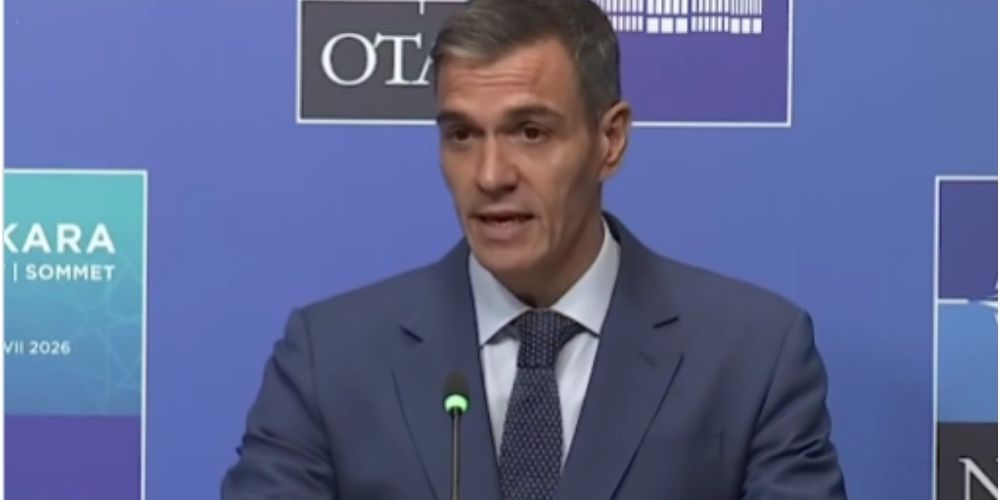
Donald Trump appears to have changed tone on Spain just hours after threatening to cut trade with the country, but the diplomatic row over NATO spending remains unresolved.
El País reported on Thursday morning that, during his return from the NATO summit in Ankara, Trump said Spain had “redeemed itself completely” after agreeing to what he described as a significant payment or commitment. The US president did not give clear details of what Spain had supposedly agreed to, and the comments came after he had sharply criticised Madrid and threatened a trade embargo.
From trade threat to softer words
The shift in tone follows a tense day in which Trump described Spain as a poor NATO partner and said he had instructed Treasury Secretary Scott Bessent to halt commerce with the country. Reuters reported on Wednesday that the dispute centred on Spain’s refusal to commit to NATO’s new 5% defence spending target, as well as tensions over Spain’s position on US military operations linked to the Iran war.
The White House position has not yet been translated into a clear public measure. There has been no confirmed full trade cutoff, and there is still no published list of Spanish products that would be targeted if Washington decided to move from threat to action.
Spain says it will meet NATO needs without welfare cuts
Pedro Sánchez has tried to frame Spain’s position as one of commitment to NATO, but not at any cost. In a message posted on X from Ankara, the Spanish prime minister said European security is built through the unity of allies and that Spain would continue meeting the capabilities required by NATO “without cutting a centimetre” from the welfare state. He added that security and prosperity “can and must go hand in hand.”
That is the political line Madrid is trying to hold. Spain says it remains a committed NATO ally, but argues that defence policy should be judged by capabilities and contributions, not only by a single spending percentage.
Sánchez plays down the clash
Sánchez also played down the public tension with Trump, saying their conversation at the summit had been cordial. Spanish reporting said the prime minister presented Spain as an “ally with principles” and defended the country’s NATO contribution, while insisting that Spain will not raise defence spending in a way that damages domestic priorities.
For Madrid, the challenge is to avoid appearing isolated inside NATO while also defending a position that is popular with many voters at home. Spain has increased defence spending, but it has resisted pressure to move towards the 5% target demanded by Trump.
Could the US target Spain alone?
Even if Trump’s tone has softened, the trade threat has not disappeared completely. Reuters has explained that a full US embargo against Spain would be legally and practically complicated, especially because Spain is part of the European Union customs area and trade policy is handled through Brussels rather than bilaterally by Madrid.
That matters because any major US trade action against Spain could quickly become an EU-US issue. Washington may have more room to impose targeted measures or tariffs, but singling out one EU member state would raise political and legal questions.
Markets and businesses watch closely
Spanish markets reacted to the threat on Wednesday, with investors watching for signs that Trump’s words might become formal trade measures. Major Spanish companies with international exposure were among those affected as uncertainty spread through the market.
For businesses, the uncertainty is the problem. Spain exports goods, including food products, wine, olive oil, auto parts, chemicals and industrial materials to the United States. Even the possibility of tariffs or targeted restrictions can affect confidence, contracts and investment decisions.
What changed?
For now, the important point is that Trump has changed language, not that the dispute has been resolved. His reported comment that Spain had “redeemed itself” may reduce the immediate pressure, but there is still no clear explanation of what changed behind the scenes.
Spain is likely to continue presenting itself as a reliable NATO ally that contributes through capabilities, deployments and strategic cooperation, while refusing to make large welfare-state cuts to meet a headline defence-spending target.
The next signal will come from whether Washington quietly lets the issue fade, publishes any list of Spanish products, or turns the threat into tariffs or another formal measure. Until then, the row remains partly diplomatic theatre, partly economic risk, and partly a wider argument over how NATO allies should pay for security.