 Lorraine Williamson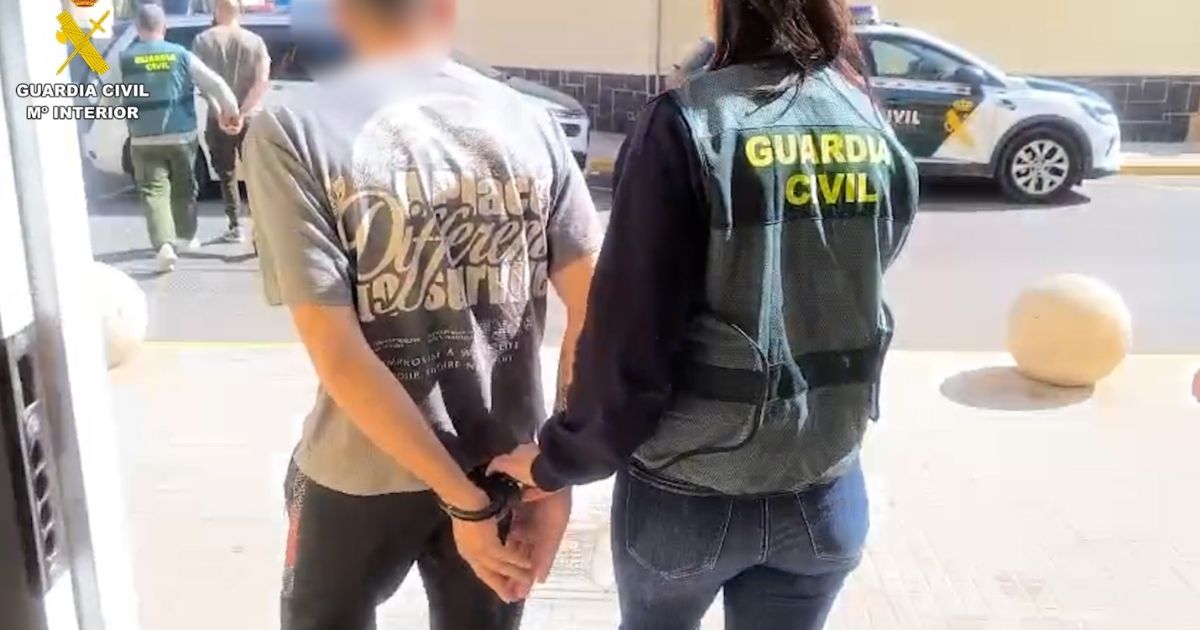
Spain’s Guardia Civil has arrested 31 people in what authorities describe as the country’s largest operation against the synthetic drug known as “flakka”.
Spain´s flakka drug raid targeted an alleged international postal network that sent ALFA-PVP into the country through courier parcels. Spain’s Interior Ministry said around four kilos of the substance were seized, equivalent to about 300,000 doses.
The operation centred on Valencia province, where investigators say the drug was hidden inside fake parcel deliveries designed to look like ordinary online shopping orders.
Why this matters
Authorities describe ALFA-PVP, known as “flakka”, as a dangerous synthetic stimulant with serious health risks, including psychosis, violent episodes, hyperactivity, seizures, cardiac arrhythmias and death. The case also shows how online platforms, fake packaging and cryptocurrency payments are being used to move drugs into Spain through apparently normal courier networks.
How the investigation began
The investigation began after a person affected by the drug alerted the Guardia Civil to alleged trafficking and parcel deliveries from other European countries to different points in Valencia province.
According to the Interior Ministry, early inquiries found that the substance was entering Spain through courier packages left at parcel lockers or associated collection points. Investigators then identified regular delivery patterns and traced how the shipments were being received.
The Guardia Civil later found that the purchases were allegedly made through websites that appeared to sell legal products. Authorities said those sites were repeatedly activated and deactivated to make them harder to track.
Fake parcels, cryptocurrency and online fronts
The official investigation found that the websites were linked to front companies hiding a shared online drug delivery platform. Payments were made in cryptocurrency, according to the Guardia Civil.
Once the substance arrived in Spain, investigators say importers could multiply its price by up to ten times.
The packages were allegedly disguised to imitate parcels from well-known online companies. Inside, officers found boxes for videogames, games or films, with the banned substance hidden inside, along with a plastic card used for handling it.
Searches carried out in Valencia province
The Guardia Civil carried out seven property searches in Alaquàs, Alcàsser, Manises and Valencia city.
Officers seized close to four kilos of ALFA-PVP, as well as a simulated weapon and other synthetic drugs. In total, 31 people were arrested. Two have been remanded in provisional prison by court order.
The investigation remains open, and further arrests have not been ruled out. Authorities say the aim is to dismantle the full logistics network used for sending and receiving the substance.
What is “flakka”?
ALFA-PVP is a synthetic psychoactive stimulant. It is commonly known as “flakka” and remains relatively little known in Spain, although authorities say its use is rising in some recreational sexual settings.
The Guardia Civil says the substance can produce severe side effects even in small amounts. These include psychosis, violent episodes, hyperactivation, seizures, cardiac arrhythmias and, in extreme cases, death.
The drug is consumed in very small quantities. According to the Guardia Civil, doses can range from 2.5mg to 15mg. Possession of just 0.3g is already considered drug trafficking, while more than 30g may trigger the aggravating factor of “notorious importance” under Spanish drug-trafficking rules.
Why courier networks are a growing concern
The case highlights a wider challenge for police forces in Spain and across Europe.
Drug trafficking no longer relies only on traditional street supply chains. Investigators are increasingly dealing with online ordering systems, parcel lockers, false product listings, encrypted communications and cryptocurrency payments.
That makes the trade harder to spot from the outside. A package may look like a normal online order, while the transaction behind it can move through several digital layers before the parcel reaches Spain.
The practical message is not to inspect suspicious parcels themselves, but to report concerns to police if they believe a property, locker point or delivery address is being used for drug trafficking.
Public health and policing now overlap
This operation is not only a crime story. It is also a public health warning.
Synthetic drugs can spread quickly through niche social settings before the wider public understands the risks. In this case, authorities specifically link ALFA-PVP to recreational sexual use, where the dangers can be increased by prolonged sessions, dehydration, other substances and delayed medical help.
The Guardia Civil’s seizure of 300,000 doses gives a sense of the scale of the alleged network. But the open investigation suggests police are still trying to map the people, addresses and digital infrastructure behind the supply chain.
Marbella drug tunnels found as police arrest 11