 Lorraine Williamson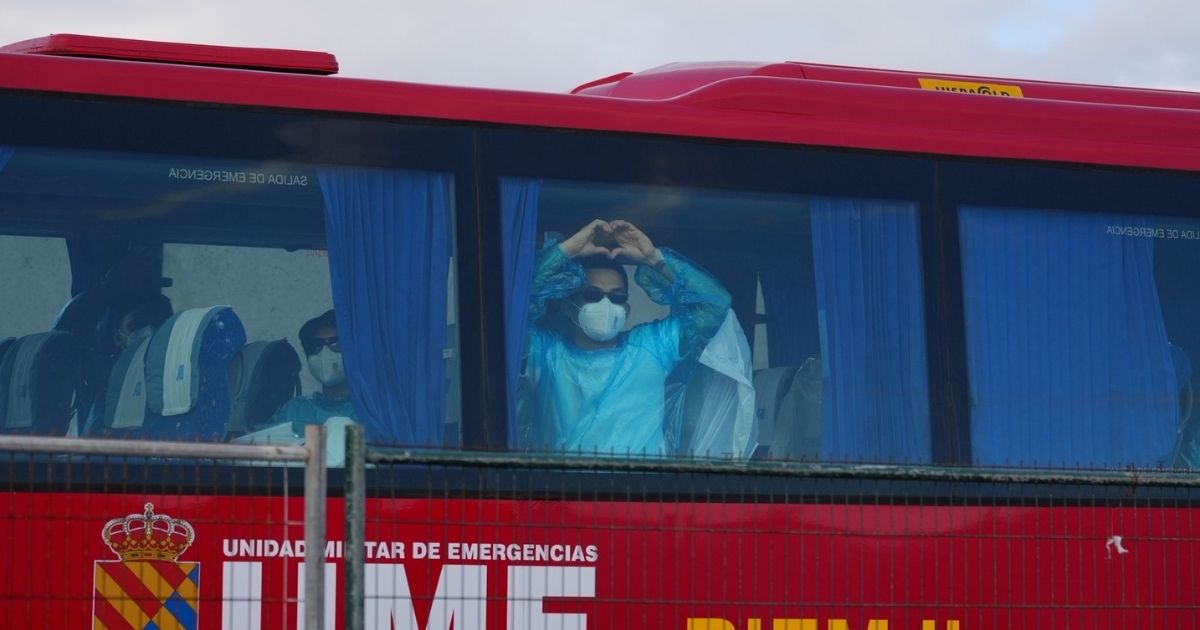
Spain has confirmed a positive hantavirus case among the Spanish passengers quarantined in Madrid after leaving the MV Hondius cruise ship, marking a new phase in the international outbreak linked to the vessel.
The Spain hantavirus case involves one of the 14 Spanish passengers being monitored at the Gómez Ulla military hospital in Madrid. El País reported that the patient initially tested positive and was due to undergo a further PCR test, while remaining asymptomatic at the time of reporting. The patient was expected to be moved to the hospital’s high-level isolation unit.
At a glance
- Spain has detected a positive case among the 14 Spanish passengers quarantined in Madrid.
- ECDC says 11 MV Hondius-linked cases have now been reported, including nine confirmed and two probable.
- Three people linked to the outbreak have died.
- WHO and ECDC continue to assess the risk to the general public as low.
- The virus has been identified as Andes hantavirus, a rare strain that can spread between people only in limited circumstances.
First Spanish positive after Tenerife evacuation
The case was detected after passengers from the MV Hondius were transferred from Tenerife to quarantine facilities in their home countries.
Spain’s group was taken to the Gómez Ulla hospital in Madrid, where health authorities imposed strict monitoring. According to El País, the Spanish protocol includes individual rooms, no visitors, PCR testing, temperature checks and active surveillance.
The positive result changes the Spanish side of the story. Until now, Spain had ruled out suspected local infections in Alicante and Barcelona, while confirmed cases were being reported abroad among passengers repatriated from the ship.
Global case count rises to 11
The European Centre for Disease Prevention and Control said on Tuesday that 11 cases had been reported in total from the MV Hondius cluster. Of those, nine were confirmed and two were probable. Three deaths have been recorded.
AP reported that Spain’s newly confirmed case was among the latest additions to the total. It also said the other Spanish nationals quarantined in Madrid had tested negative.
The figures may appear to differ between agencies and media reports because some countries separate confirmed, probable and suspected cases, while updates are released at different times.
WHO says wider outbreak is not currently evident
The World Health Organisation has continued to urge caution, but not panic.
WHO has said the global public risk remains low, while the risk to passengers and crew from the ship is considered higher. Its 8 May outbreak notice said all confirmed laboratory cases at that point had been identified as Andes virus.
ECDC’s latest update also says the risk to the EU and EEA general population is “very low”. It adds that the ship’s passengers and crew are being managed through isolation, testing and monitoring measures.
WHO director-general Tedros Adhanom Ghebreyesus said there was currently no sign of a larger outbreak, but warned that more cases could appear because of the virus’s long incubation period.
Why the Andes strain matters
Most hantaviruses are linked to exposure to infected rodents, including contact with urine, droppings or saliva.
The strain involved in the MV Hondius outbreak has been identified as Andes hantavirus. This is unusual because it is the only known hantavirus that can sometimes pass from person to person.
Experts stress that this type of transmission usually requires close and prolonged contact. It does not spread in the same way as flu or Covid.
Symptoms can include fever, chills, muscle pain, stomach problems, cough and breathing difficulty. ECDC says symptoms usually appear between one and eight weeks after exposure.
Spanish hospital quarantine could run into June
The Spanish passengers began isolation after leaving the ship and being transferred from the Canary Islands.
El País reported that the Madrid quarantine was expected to run until 17 June, although the timetable could change depending on the confirmed case and further health assessments.
Countries are applying different rules to returning passengers. Some have imposed strict hospital quarantine, while others allow home isolation with monitoring.
WHO has recommended 42 days of quarantine or monitoring for returning passengers, though it cannot enforce national measures.
Alicante and Barcelona contacts remain under watch
Spain is also monitoring two women who had contact with one of the people who later died.
One is in Alicante and had mild symptoms but two negative PCR tests, according to El País. The other is in Barcelona and remains asymptomatic.
So far, there is no evidence of local transmission in Spain outside the MV Hondius-linked group.
A measured response after a difficult evacuation
The MV Hondius reached Tenerife after several days of international concern over how to evacuate passengers safely.
AP reported that 87 passengers and 35 crew were escorted ashore in Tenerife during a controlled operation that ended on Monday night. Some crew remained on board as the ship headed towards Rotterdam for cleaning and disinfection.
For Spain, the positive case means the focus now moves from evacuation logistics to long-term monitoring.
Health authorities will be watching the Madrid group closely over the coming weeks. The key message remains the same: more linked cases may emerge, but officials say there is still no evidence of wider spread in Spain.