 Lorraine Williamson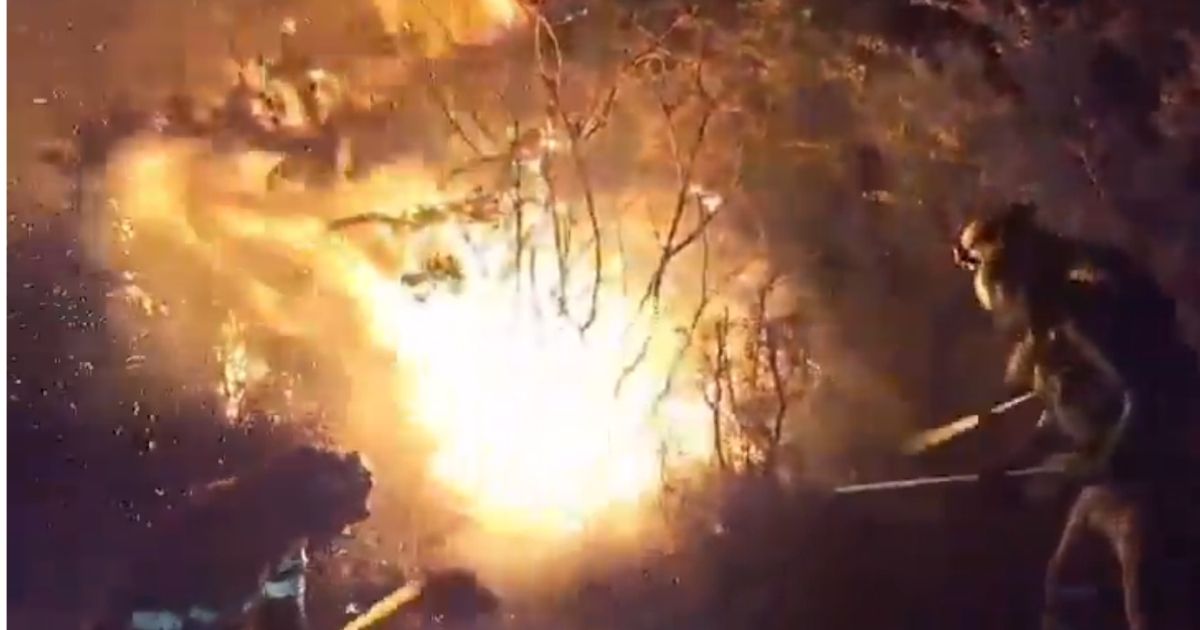
Cantabria’s wildfire surge has become more than a firefighting story. By Wednesday afternoon, it had also become a public health and civil protection issue, with regional authorities warning about smoke exposure while considering a stronger emergency response under INFOCANT.
The latest local update from elDiario.es Cantabria says 37 fires remained “alive” on Wednesday, with 18 active and 19 controlled across nine municipalities, and Vega de Pas the worst affected. The article was updated at 2.23 pm on 25 February 2026, making it one of the clearest same-day snapshots of how the situation evolved after the overnight peak.
That marks an important shift from the earlier morning figures widely reported by RTVE and others, which focused on 60 fires in 24 hours, 40 burning simultaneously overnight, and 36 active earlier in the day.
From overnight fire surge to midday triage pressure
What makes this episode unusual is not only the number of outbreaks but the operational strain caused by so many ignition points at once. Cantabria’s president, María José Sáenz de Buruaga, said the region was assessing whether to move to INFOCANT level 1, not because of one giant fire, but because the number of simultaneous incidents can complicate emergency triage and coordination.
Under that level, Cantabria could request support from the central government and coordinate a wider set of emergency services, including municipal firefighters, civil protection volunteers and local police.
This is a key angle for readers: the risk is not just “how big is one fire?” but “how many fronts can crews handle at the same time?”
The smoke warning is now central to the story
The regional government has also issued health advice because smoke has worsened air quality, especially around the Bay of Santander. Cadena SER reported official recommendations to limit outdoor activity and use FFP2 masks, particularly for vulnerable groups including children, older people, pregnant women and people with respiratory or heart conditions.
Authorities also advised people to keep doors and windows closed, avoid direct smoke exposure, and seek medical help if symptoms worsen. Cadena SER noted that the government pointed residents to real-time air-quality information and warned that non-approved face coverings are not effective protection.
For InSpain.news readers, that means even people far from visible flames may still be affected by this emergency through smoke nuisance and health risks.
What the latest operational update says
According to El Diario, Cantabria’s updated report, the wildfire operation had 220 forest firefighters, 26 environmental agents, dispatch staff and duty technicians working at full capacity, supported by regional resources including two helicopters carrying out water drops and the BRIEF unit in Ruente.
The same report identified active-fire pressure around municipalities including Anievas, Liérganes, Molledo, Santiurde de Toranzo, Saro, Vega de Pas, Selaya, Villafufre and Miera, with Vega de Pas carrying the heaviest burden.
It also cited regional officials saying 129 deliberately caused forest fires had been recorded in Cantabria during the month, reinforcing the government’s public accusation that this was not a purely weather-driven event.
Why February conditions made this worse
The weather remains a major accelerant. Earlier reporting linked the spread to viento sur conditions, which bring warm, dry air and stronger winds across the Cantabrian side of the mountains, increasing fire behaviour and smoke dispersion risk.
That matters because it helps explain why a winter week can suddenly resemble a spring or summer fire-risk episode in northern Spain.
What residents and travellers should monitor now
The next crucial updates are no longer just raw fire totals. Residents and visitors should watch for changes in INFOCANT status, local smoke/air-quality advisories, and any restrictions affecting outdoor activity or rural access.
Cantabria’s wildfire crisis is evolving quickly, and Wednesday’s reporting shows the story has moved from a dramatic overnight fire count to a broader emergency about coordination, smoke exposure and whether the region needs to escalate its response further.