 Lorraine Williamson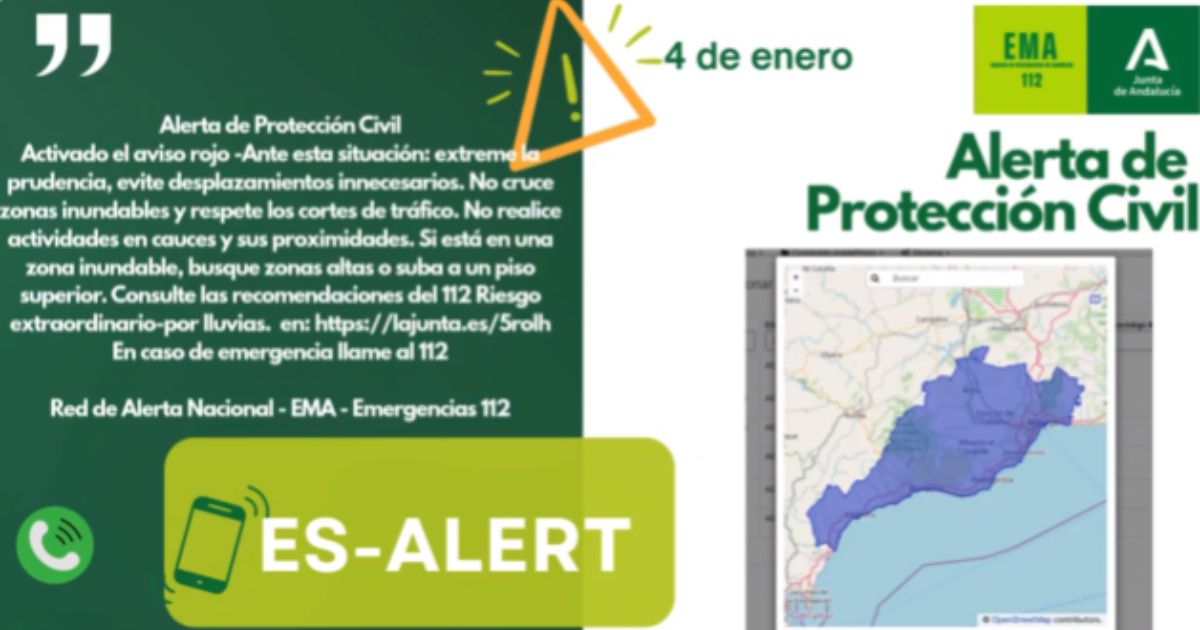
At around 2.40 pm today, the sound was impossible to ignore. Phones across Marbella, Málaga city, and the wider Costa del Sol blared with an ES-Alert warning of “extreme risk” from torrential rain. In many homes, even the dog looked at the door and chose to stay put.
The Málaga red rain alert was triggered by AEMET for the Costa del Sol and the Guadalhorce area, with forecasts of up to 120 litres per square metre in 12 hours. The warning was in force through the evening, as Storm Francis pushed in heavy, persistent rain and raised fears of flash flooding and fast-rising rivers.
ES-Alert sent to 27 municipalities
The ES-Alert message went out to 27 municipalities in the affected zones, including Marbella, Málaga, Estepona, Fuengirola, Mijas, Torremolinos and Benalmádena, as well as towns inland across the Guadalhorce valley.
It is the second time in recent weeks that many residents have received an ES-Alert during a spell of severe weather. Unlike standard weather notifications, this system is designed for immediate civil protection warnings, and it is meant to cut through the usual Sunday noise.
Last-minute Three Kings shopping disrupted
Sunday, 4 January, is one of those dates that normally feels like a gift to retailers. It is a special opening day in many areas, and it lands right in the frantic run-up to Three Kings. This year, the weather won.
In Marbella, La Cañada shopping centre closed, and in Málaga city, Plaza Mayor also shut its doors, with cars filmed streaming out of car parks as customers and staff cleared the buildings.
For families, it is a practical blow. Many were planning final purchases for Monday night’s preparations and Tuesday’s celebrations. For businesses, it is a lost trading window. For emergency planners, it is a risk reduced: fewer people on the roads, fewer cars in low-lying car parks, and fewer “quick trips” that end in trouble.
Why the west of the Costa del Sol mattered most
AEMET and regional updates pointed to the western half of the warning area as the most likely hotspot. That matters because the western Costa del Sol combines steep terrain, short river catchments and urban areas that can flood quickly when intense rain hits hard surfaces.
On social media and in local reports, places such as Casares and inland valleys were already seeing the kind of rainfall totals that change the mood from inconvenience to danger.
Rivers rising, travel disrupted
Beyond the headline rainfall numbers, the bigger worry was what happens next: water finding its quickest route downhill.
Regional monitoring showed pressure building on key rivers. RTVE reported Río Grande at red-level danger for overflow in the wider area, and the Guadalhorce under heightened concern after reaching extreme levels during the previous week’s storms.
Transport also took a hit. Services were interrupted after weather-related incidents, including disruption on the Málaga Cercanías network and impacts on metro operations, as crews dealt with fallen trees and flooding risk.
In Málaga city, officials urged extra caution in vulnerable areas such as Campanillas, advising residents to relocate if they could, or to move to upper floors as a precaution.
What the ES-Alert message told people to do
The wording was blunt for a reason. The advice focused on the behaviours that lead to the worst outcomes in Mediterranean flash-flood events:
Avoid unnecessary travel. Do not cross flooded areas. Stay away from riverbeds, streams and arroyos, even if they look dry. If you are in a flood-prone spot, move to higher ground or upstairs.
It is familiar guidance, but it is repeated because it works. Many serious incidents happen when people attempt short drives through water or park in places that turn into traps when drainage fails.
Junta de Andalucia: “maximum caution”
As the alert landed, the president of the Junta de Andalucia, Juanma Moreno, used social media to urge “maximum caution”, warning residents not to cross flooded zones and to avoid unnecessary travel.
Separately, Canal Sur reported that Andalucia elevated its flood risk planning to an emergency operational phase in response to the forecasts and conditions.
What to watch for as the rain continues
If you live in Marbella, Málaga city, or the wider Costa del Sol and Guadalhorce area, the safest assumption is that conditions can change fast. Heavy rain does not always feel dramatic until it suddenly does.
The key risks are not only surface flooding. They include:
- Water rushing through underpasses and dips in roads.
- Rivers and arroyos rising faster than expected.
- Localised flooding around shopping centres, car parks and low-lying estates.
The most sensible plan for the evening is simple: stay put if you can, keep updated through official channels, and treat every flooded stretch of road as a hard no.