 Lorraine Williamson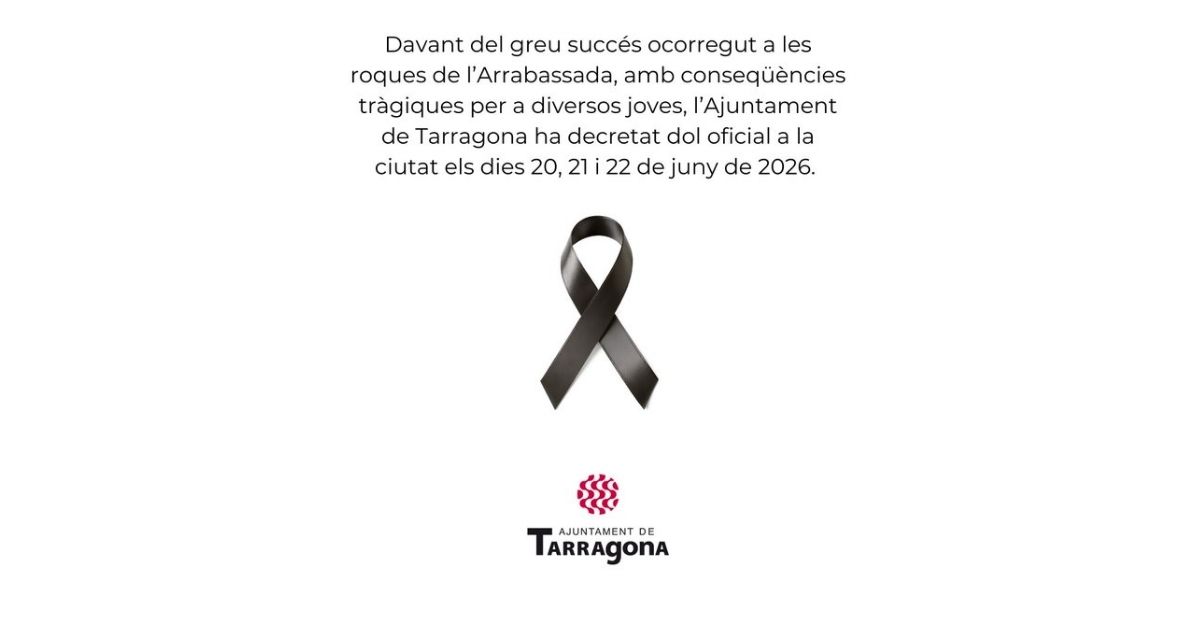
A beach safety warning in Spain has become tragically urgent after two minors died following a drowning incident at L’Arrabassada beach in Tarragona.
The accident happened on Friday afternoon in a rocky area between L’Arrabassada and El Miracle, known locally as the Cova del Gos or Morrot area. A group of six young people got into difficulty in the water, with three able to get out unaided and three needing rescue.
One 12-year-old boy died at the scene. A second minor later died in hospital, Tarragona City Council confirmed on Saturday. Another young person remains in critical condition, according to Spanish media reports.
The tragedy comes at the start of Spain’s peak beach season, just days before San Juan, when thousands of people are expected to gather on beaches across the country.
What happened at L’Arrabassada beach?
Emergency services were alerted at around 3.30 pm on Friday after several young people were unable to get out of the water near the rocks.
According to the Tarragona City Council, the accident happened in the rocky Morrot area between L’Arrabassada and El Miracle. The council has declared three days of official mourning on 20, 21 and 22 June. Flags will fly at half-mast, and official institutional events organised by the council have been suspended. A minute’s silence is planned at Tarragona City Hall on Sunday at 12 noon.
Spanish media reported that emergency teams, including lifeguards, firefighters, maritime rescue, medical services and police, were involved in the response. One of the rescues reportedly required a Salvamento Marítimo helicopter because of the difficulty of reaching the swimmer from the sea.
The Catalan beach season had only recently begun, making the incident a devastating early warning of how quickly conditions can change.
Yellow flag does not mean safe
Reports from the scene said a yellow flag was flying on the beach at the time.
A yellow flag does not mean swimming is risk-free. It means bathing is allowed, but conditions require caution. That may be because of waves, currents, wind, limited visibility, jellyfish or other hazards.
The Spanish Red Cross warns that people should always follow lifeguard instructions and respect beach flags. Green means bathing is allowed, yellow means caution, and red means bathing is prohibited.
The danger is that many people treat a yellow flag as “almost normal”. In reality, it can mark conditions that are difficult for children, weak swimmers, tired swimmers or anyone near rocks and breakwaters.
Why rocky areas are especially dangerous
Rocky stretches of coastline can look calm from the shore but behave very differently in the water.
Waves may rebound from rocks and create backwash. Currents can pull swimmers away from the point where they entered. A person who jumps into the sea from rocks may also find it hard to climb back out if the water becomes rough or the swell rises.
This can be particularly dangerous for teenagers, who may be confident swimmers but underestimate currents, depth, fatigue and the force of waves.
The Tarragona incident happened in an area known locally for young people gathering near the rocks. That does not mean the victims did anything unusual. It does show why familiar local spots can still become dangerous very quickly.
Three deaths on Catalan beaches in two days
The Tarragona tragedy was followed by another fatal drowning in Barcelona on Saturday morning.
El País reported that three people have died on Catalan beaches in two days: the two minors linked to the Tarragona incident and a man found dead at Sant Miquel beach in Barcelona before lifeguard surveillance began for the day.
Cadena SER also reported that the Barcelona drowning happened shortly before 7.00 am, outside lifeguard patrol hours, with emergency services, Mossos d’Esquadra and Guardia Urbana attending the scene.
The incidents underline a wider summer risk, not only in Catalonia but across Spain’s beaches, rivers, pools and reservoirs.
Drownings are already a concern across Spain
Spain entered the summer season with a worrying number of drowning deaths already recorded.
The Real Federación Española de Salvamento y Socorrismo, which produces Spain’s National Drowning Report, said 125 people had died by drowning in Spain between 1 January and 31 May 2026.
By mid-June, Spanish reports citing RFESS data said the total had risen to 157 deaths, including 32 deaths during the first 15 days of June.
The figures cover beaches and other aquatic spaces, not only the sea. But the message is the same: early summer is already proving dangerous.
What to do if you see someone in trouble
The instinct to jump in and help is powerful, but it can put more lives at risk. If someone is struggling in the water, alert a lifeguard immediately if there is one nearby. If not, call 112, Spain’s emergency number, and give the clearest possible location.
Try to keep the person in sight. If there is rescue equipment nearby, such as a buoy or flotation device, throw it towards them rather than entering the water yourself.
Entering rough water without training can lead to a second or third victim. That is why emergency services often stress the same advice: call for help, alert professionals and avoid putting yourself in danger.
How to reduce the risk this summer
The safest approach is to swim where there are lifeguards and to avoid bathing outside patrol hours.
Parents and guardians should keep children and teenagers within sight, even if they are strong swimmers. Groups of young people should avoid jumping from rocks, swimming near breakwaters or entering the sea when there are waves, strong currents or a yellow or red flag.
It is also worth remembering that alcohol, heat, tiredness and overconfidence can all increase risk.
For San Juan, when many people gather on beaches at night, the danger can be even greater. Darkness makes it harder to judge the sea, spot currents, see rocks or notice someone in trouble.
San Juan beach gatherings need extra caution
San Juan is one of Spain’s most atmospheric nights of the year, but it also brings crowds, late-night swimming, alcohol, fireworks and unfamiliar beach conditions.
Anyone heading to the coast for San Juan should check local council rules, respect beach closures, and avoid swimming if there is no lifeguard service, poor visibility or rough water.
Midnight swims are part of the tradition in many places, but they should never override basic safety. A ritual is not worth entering dangerous water.
If conditions are poor, people can still enjoy the night from the shore.
A summer warning no family should need
The deaths in Tarragona have left two families grieving and a community in mourning.
Tarragona’s mayor, Rubén Viñuales, said there were no words for a tragedy that had broken the lives of the young people, their families and friends.
For the rest of Spain, the lesson is painful but clear. A yellow flag is a warning. Rocks and currents can be deadly. The sea can change faster than people expect.
As summer begins, Spain’s beaches will fill with families, teenagers, tourists and late-night celebrations. Enjoy them — but respect the water.